
Problem solving
How Fast Can Mold Grow After a Leak?
By Dal Beggs, founder and owner of 1 Call Restoration. Published November 1, 2026. Updated November 1, 2026.
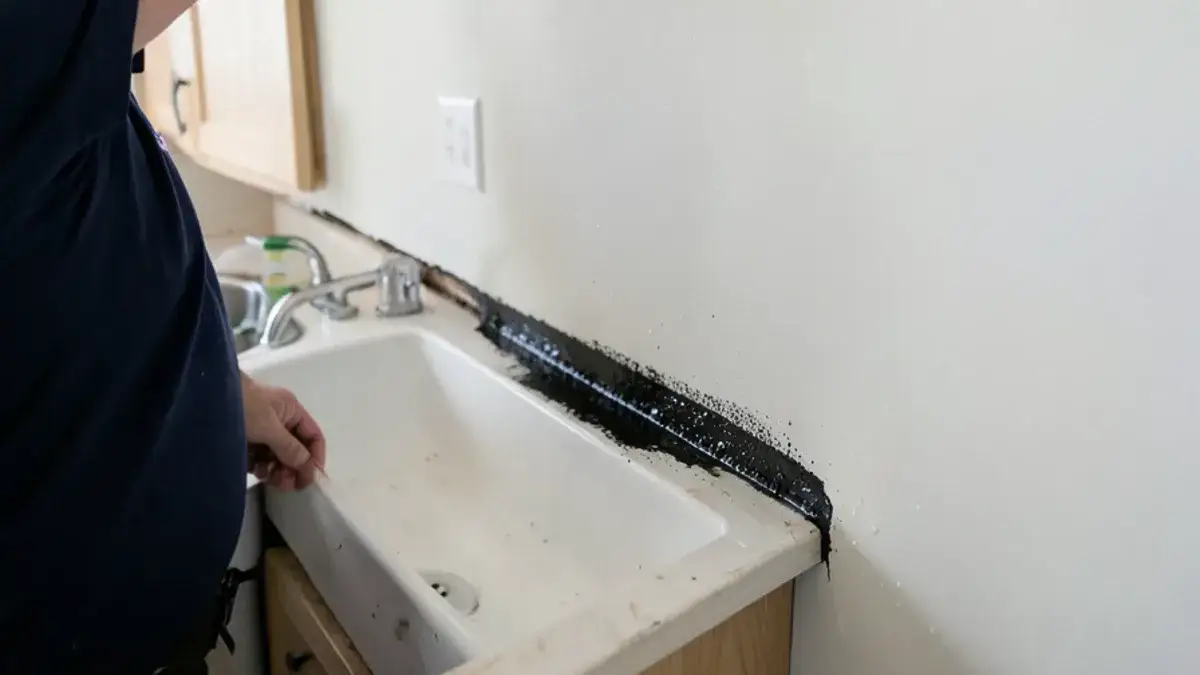
How fast mold grows after a leak comes down to one working number: FEMA says colonies can start on a damp surface within 24 to 48 hours, and EPA says to dry wet areas in that same window. Treat it as a planning number and not a stopwatch. Mold may start sooner or later, so get things dry now.
How fast can mold grow?
Plan on 24 to 48 hours from the moment a material gets wet. FEMA's flood guidance says mold colonies can start to grow on a damp surface in that time, and EPA advises drying water-damaged areas and items within that same window. Those two statements are the reason restoration work feels urgent even when the water looks minor.
Notice what starts the clock. It is when the drywall got wet, not when you noticed. A supply line that dripped overnight has a head start on you by morning, and a slow leak behind a vanity may have been running for weeks.
Leak in the last two days? Call now while the window is open
Open 24 hours for emergencies. Non-emergency calls are best between 7am and 7pm.
- 5.0 on Google, 8 reviews
- Family owned since 2020
- Calls go straight to the owner
- Free assessments and estimates
What does the 24 to 48 hour figure really mean?
It is a guideline, and EPA says so. In its guide for schools and commercial buildings, EPA writes that mold growth will not always occur after 48 hours. It also warns that materials dried within 48 hours may still have growth. So the window cuts both ways: missing it does not guarantee mold, and hitting it does not guarantee a clean wall.
You may have seen more exact claims online, such as a specific humidity and day count. We only quote figures we can trace to the original, so we leave those out. Temperature, material, humidity and how wet things got all shift the timing.
Visible growth is also a later stage than first growth. By the time a spot shows through paint, the job has been going on for a while. That is why looking is a poor test and measuring is a good one. A wall can look perfect with wet paper behind it.
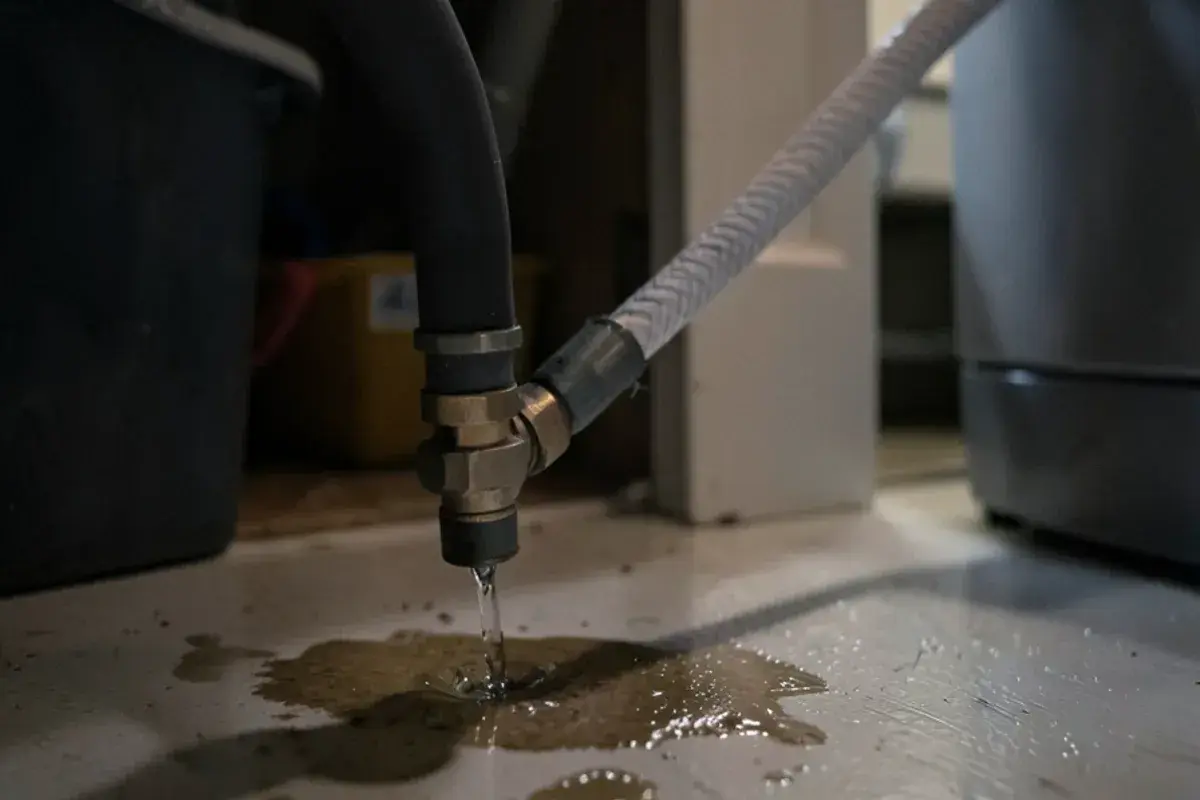
When did your clock really start?
Work backward from the last day you know the spot was dry. Most people date a leak from the day they saw it, and that is usually too late to be useful. These clues narrow it down:
- Water bill: a jump on a recent bill can show roughly when a supply leak began.
- Last use: note when the guest bath, tub or appliance last ran.
- Weather: a stain under a window after a wet week points to that rain.
- Cabinet contents: swollen shelves or warped paper mean wet for more than a day.
- Stain rings: several rings suggest repeat wetting, not one event.
The answer changes our plan. A line that failed this morning gets extraction and drying first. A leak with no start date gets planned as past 48 hours, on the assumption that the finish may be hiding growth.
Write down the day you found it and what you know about when it began, with photos. Your insurer will ask, and your policy wording and adjuster decide what that date means for a claim.
What should you do at each stage?
Match your action to the time since the water started. The table below assumes clean water. If you are dealing with sewage or flood water, skip to the last row, since Category 3 water carries its own rules.
| Time since water started | What matters most | What to do |
|---|---|---|
| Under 24 hours | Getting water out | Stop the source, extract, start drying |
| 24 to 48 hours | Reaching hidden layers | Pull wet pad, get air and dehumidifiers on walls |
| 2 to 7 days | Finding what stayed wet | Meter walls and subfloor, open what will not dry |
| More than a week | Finding growth and the source | Look behind finishes, contain before disturbing anything |
| Any time, Category 3 | Safety first | Stay out, keep kids and pets away, call |
EPA's guide treats anything wet for more than 48 hours, or with visible growth, as a different case from a fresh spill. We do the same. After two days we plan for what may be behind the finish instead of assuming it is clean.
What makes mold move faster or slower?
Three conditions set the pace. None is something you can do much about once the leak has happened, except the last one.
- Food: drywall paper, wood, carpet backing and dust all feed it.
- Warmth: comfortable indoor temperatures suit many molds, and EPA says temperature is rarely the limit.
- Moisture: this is the one variable you control, and the one that matters most.
That is why fixing the water fixes the mold risk. EPA's first tip for cleanup is to fix plumbing leaks and other water problems as soon as possible and dry everything completely. Older houses in a place like St. Augustine Shores, with aging plumbing tucked behind walls and cabinets, are where a small drip can run past both days before anyone sees it.
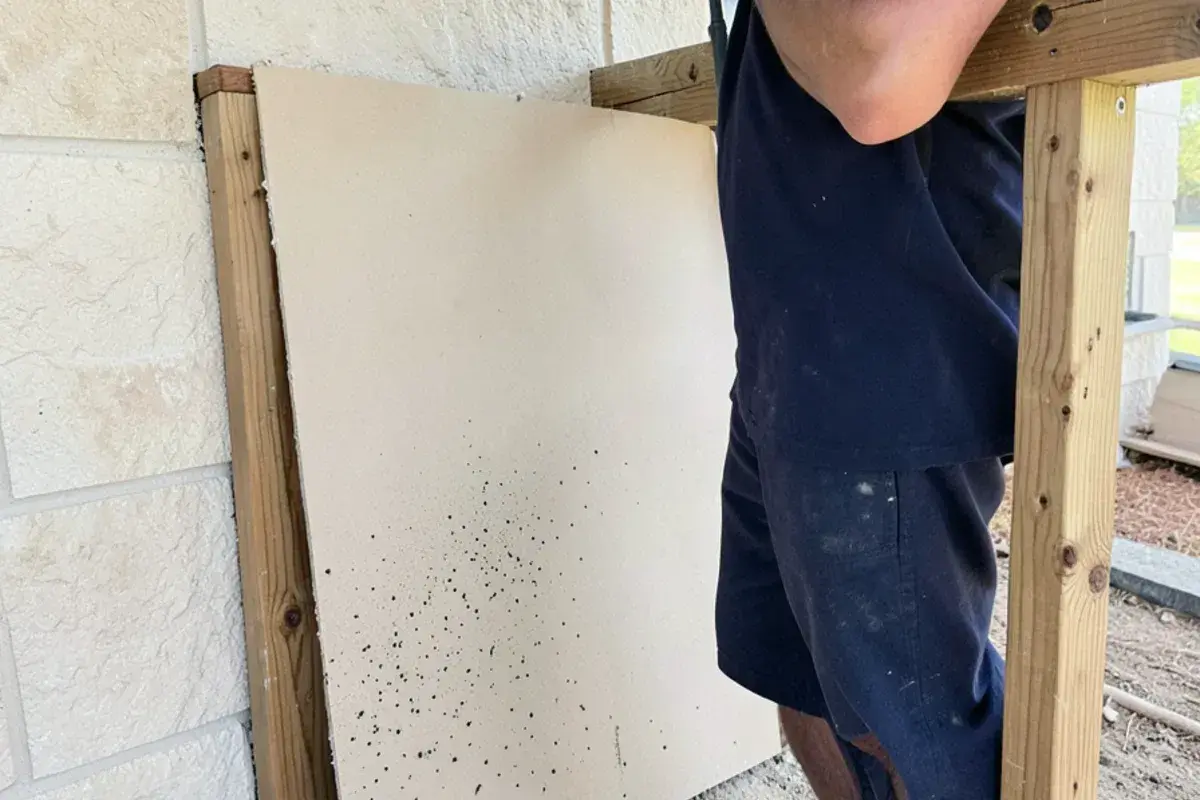
Why a slow drip can outrun a burst line
A burst line gets noticed and shut off. A drip at a valve or drain connection keeps one spot wet for weeks, so the material never gets a chance to dry, and nothing in the room looks wrong. That is why a small leak can end up the bigger mold job.
The work starts in a different place too. A sudden loss is a volume problem, so removing water comes first. A drip is a time problem, so we find the edge of the damp area and check the back of the finishes.
Humidity sets the background. In a Florida home the air gives drying little help, which we explain in why Florida humidity speeds up mold. Even so, the same 24 to 48 hour planning number applies. We do not claim a shorter one, because the public sources do not.
How we check a house after a leak
We start with moisture, because that is what mold follows. Our mold inspection work is built around finding where the water went, and we are upfront about what we do and do not do.
- Ask when the water started and when it stopped.
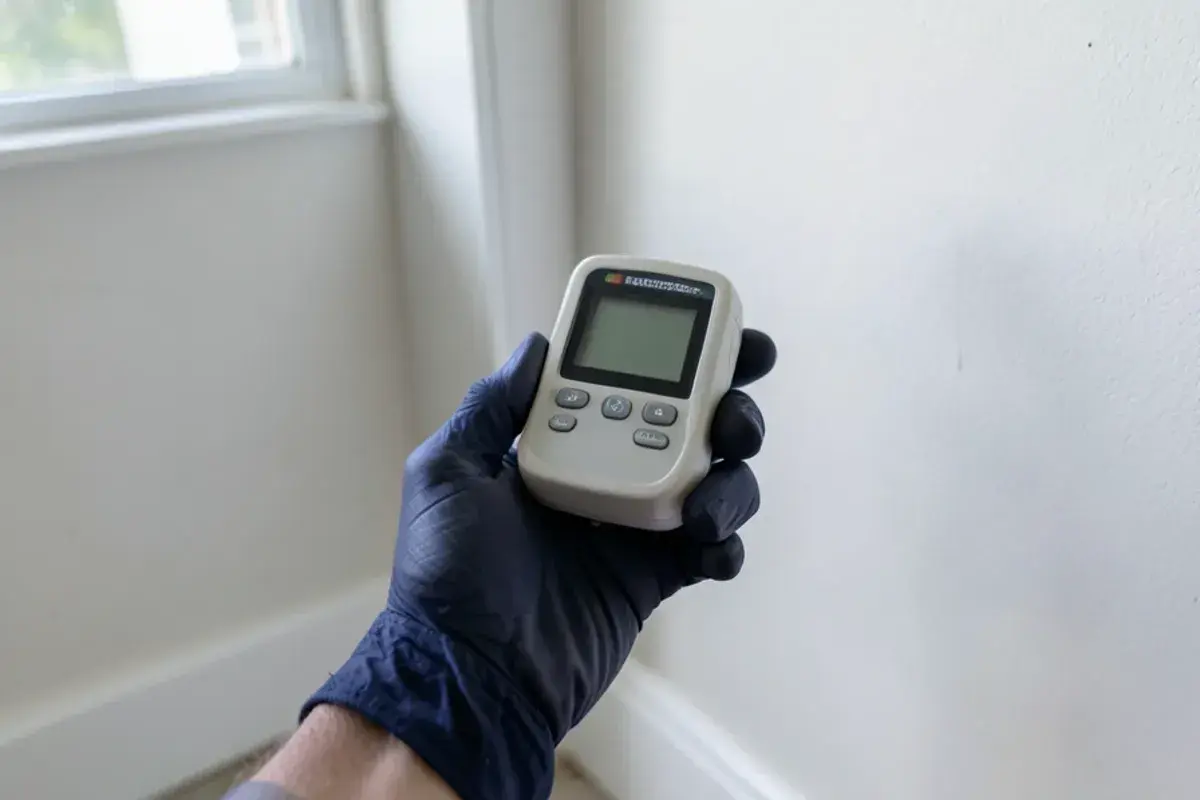
- Read walls, floors and cabinets with moisture meters.
- Scan with thermal imaging to find spots worth metering.
- Look at visible growth and measure how much there is.
- Give you a written scope before heavy work starts.
We do not sell lab testing or formal mold assessment on a job we would remediate. Florida law keeps those roles apart, and sampling should come from an independent licensed mold assessor. Under Florida statute, mold work over 10 square feet is licensed by DBPR, and EPA suggests a professional for larger areas. Ask any company for its license number and check it on the DBPR site, ours included.
If the wall is still wet, water extraction and drying come first. If growth is already there, our page on mold after water damage explains what happens next.
Open the wall now or keep drying?
Neither choice is free, so readings decide. Opening a wall adds a repair to the job, and EPA warns that disturbing moldy areas may spread mold through a building. Leaving it shut can trap wet paper and framing behind a finish that looks fine.
We keep a wall closed when the leak is recent, the water was clean, the board shows no swelling or broken seams and readings fall from one visit to the next. EPA's table for fresh water damage allows wallboard to dry in place on those terms. We open it when readings stall, when nobody can date the leak, or when insulation in the cavity got wet, since the same table lists wet insulation for discard. If growth may sit behind the finish, containment goes up before the cut.
Two facts decide your next move
Everything here comes down to when the material got wet and whether it is still wet. If you can date the leak inside 48 hours, stop the source and start drying now. If it is older, or you cannot date it, measure before anyone paints, patches or reinstalls.
Do not wait to see whether something shows up. If a leak happened in the last two days, or you have no idea when it started, call us now. We will measure it and tell you where you stand, and the assessment is free.
Frequently asked questions
It has been a week since the leak and I see nothing. Am I in the clear?
Not yet. EPA lists the backside of drywall, wallpaper and paneling and the underside of carpet and pad among places mold can grow out of sight, so a clean surface does not settle it. A moisture reading is more useful than a look. If the material behind the finish is dry, that is good news. If it is still wet, the clock is still running.
Who should test for mold if I want proof?
An independent licensed mold assessor, since Florida licenses mold assessment through DBPR and keeps assessment and remediation separate on the same structure, with narrow exceptions. Check any license on the DBPR site. EPA also notes that testing is often unnecessary when growth is visible, since the response is the same: fix the water and clean up the mold. We find moisture and scope visible growth.
If the wall dried on its own, can mold still be there?
Yes. EPA says that even when materials dry within 48 hours, growth may have occurred, and drying does not undo what has already started. Dry mold can stay in place on the paper of a wall. Watch for a musty smell, spotting or staining, and do not paint over any of it. If the leak ran for days, have the back of the wall checked.
Past the 48-hour mark? Call us to find what stayed wet
Open 24 hours for emergencies. Non-emergency calls are best between 7am and 7pm.
- 5.0 on Google, 8 reviews
- Family owned since 2020
- Calls go straight to the owner
- Free assessments and estimates
1 Call Restoration, Saint Augustine, FL. (208) 464-4194.
Related services: Mold Inspection and Assessment, Mold After Water Damage, Water Extraction. Serving St. Augustine Shores and the rest of our service area.
Sources
- FEMA, Dealing with Mold and Mildew in Your Flood Damaged Home
- EPA, A Brief Guide to Mold, Moisture and Your Home
- EPA, Mold Remediation in Schools and Commercial Buildings Guide, Chapter 4
- EPA, Mold Course Chapter 1
- EPA, Mold Course Chapter 3
- EPA, Mold Cleanup in Your Home
- Florida Statutes 2025, Section 468.8419, Prohibitions; penalties