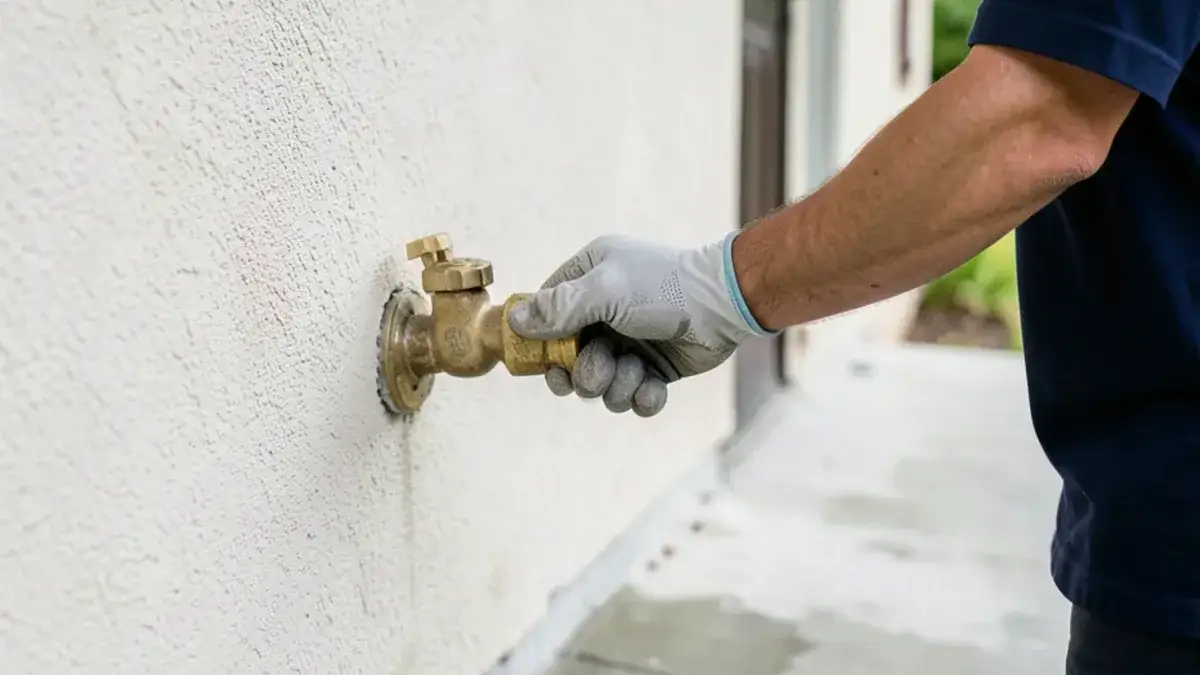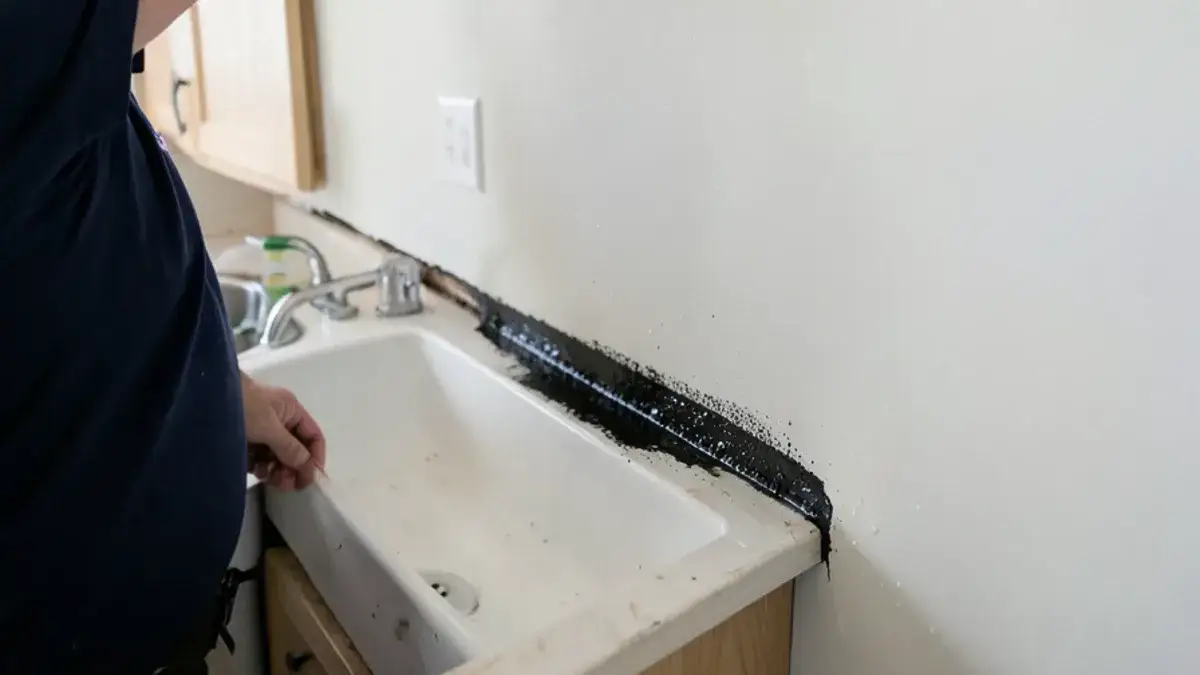
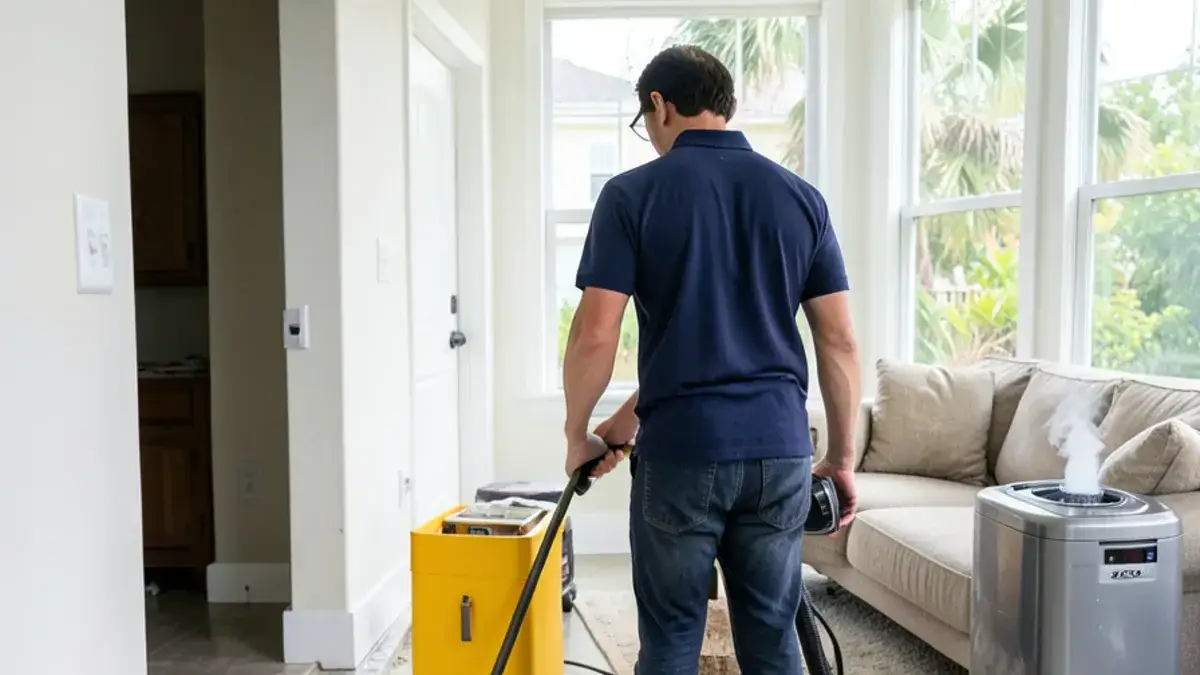
What does water damage restoration in St. Augustine include?
Water damage restoration in St. Augustine, also called water damage remediation, is extraction, structural drying and moisture monitoring, and it covers seven jobs from the first hour to the put-back. Water does not wait. Within hours it wicks into baseboards, subfloor and wall cavities, and in our humidity wet drywall can begin to grow mold in 24 to 48 hours, according to FEMA.
Every extra hour adds demolition and cost. We start with extraction, because removing standing water stops the spread.
- Emergency water extraction from floors, carpet and subfloor
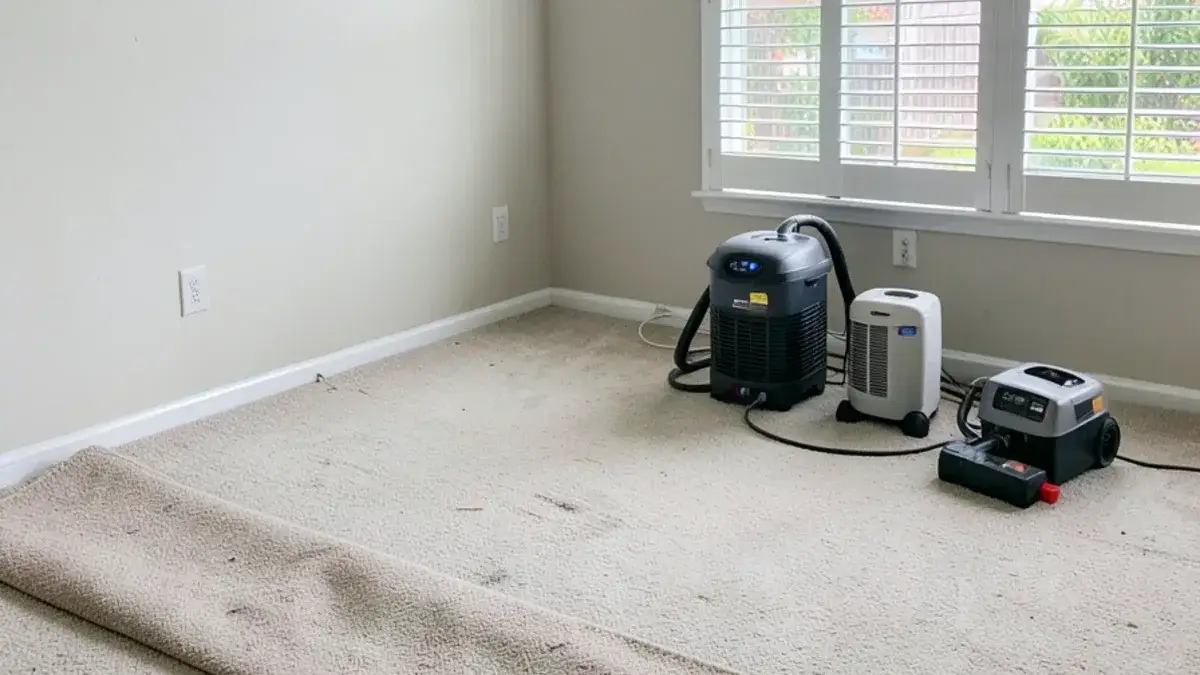
- Structural drying with air movers and LGR dehumidifiers
- Moisture mapping and daily moisture monitoring
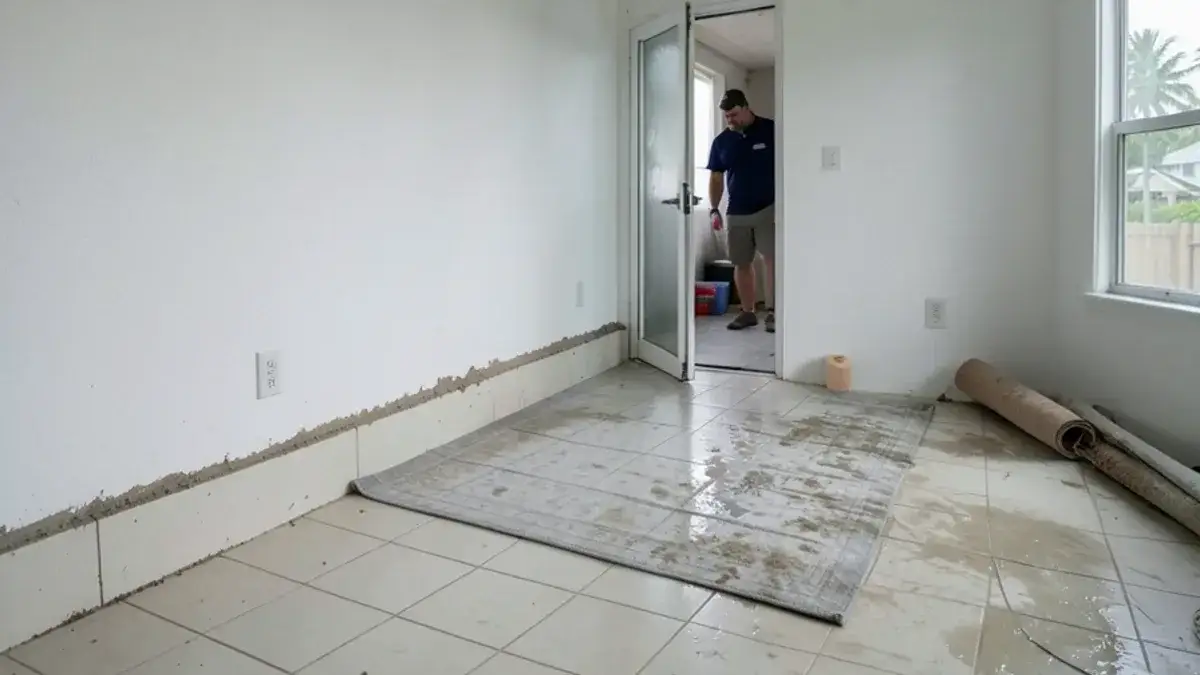
- Demolition of wet drywall, insulation and flooring, including the flood cut
- Sewage cleanup and flood damage cleanup with disinfection
- Contents moved out of harm's way and protected
- Put-back planning and documentation for your insurance claim
We dry to the same goal ANSI/IICRC S500 describes, the standard the IICRC publishes and ANSI approves.
Which causes of water damage are most common in St. Augustine homes?
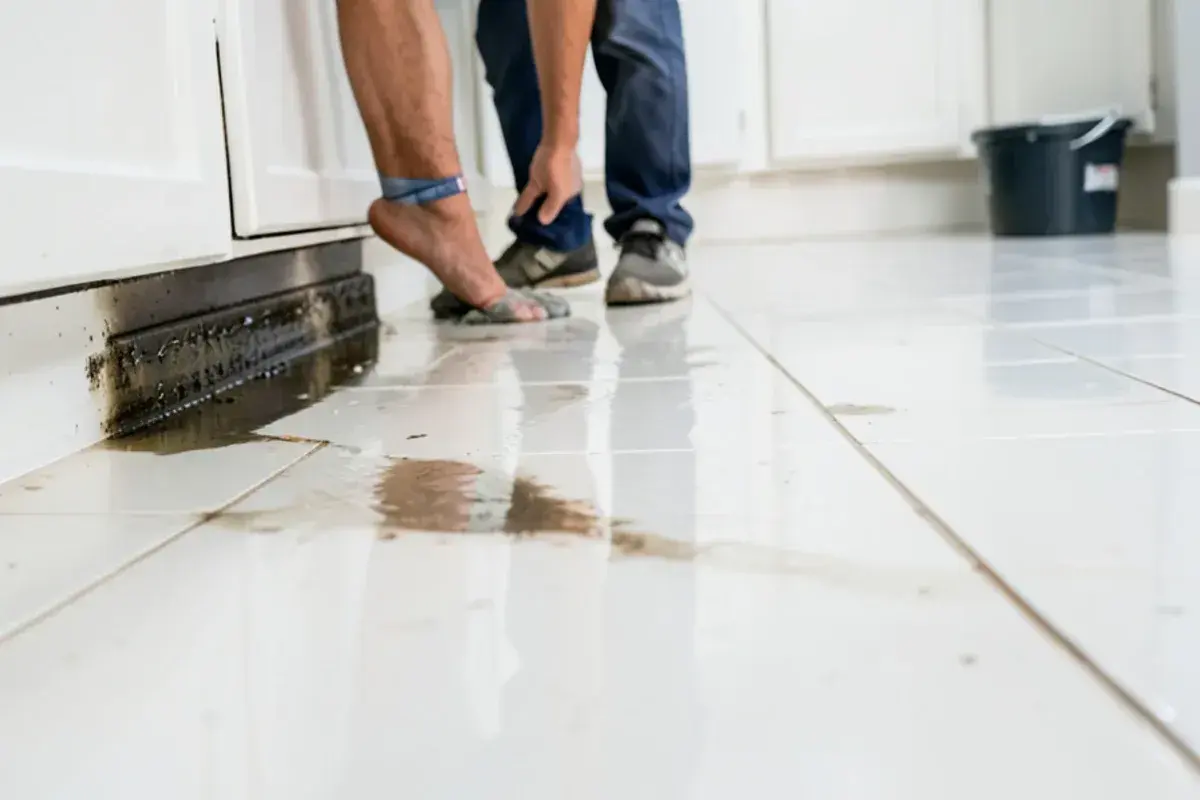
Five causes do most of the damage here: hurricane flooding, tropical storms, heavy rain and roof leaks, burst pipes, sewage backups and appliance leaks. Each one changes the job. Hurricane flood cleanup starts from Category 3 rules, because floodwater is contaminated. Burst pipe cleanup starts at the shutoff valve, because a supply line keeps feeding the wall until someone closes it. Roof leak water damage repair starts with emergency tarping, because drying a ceiling under an open roof wastes equipment days. An appliance leak often hides under flooring until the baseboards warp.
Match your situation to a row, then call.
| Cause | Warning signs | Do this now | Drying concern |
|---|---|---|---|
| Hurricane or tropical storm flooding | Water at doors, musty smell in closets after heavy rain | Stay out of water near live circuits, photograph, call a crew | Category 3 water, disinfection and flood cut likely |
| Heavy rain or roof leak | Water stain spreading on the ceiling, bubbling or peeling paint | Contain the leak, move contents, photograph | Wet insulation and drywall hold moisture in cavities |
| Burst pipe | Hissing or running water inside a wall, squishy carpet | Shut off the main or the affected breaker if safe | Clean water at first, degrades if left |
| Sewage backup | Sewage smell from a floor drain | Avoid contact, no DIY cleanup | Category 3 water, porous materials usually removed |
| Appliance or fixture leak | Warped baseboards, buckling hardwood floors | Close the supply valve, photograph | Hidden moisture under flooring and behind cabinets |
Sewage and floodwater are Category 3 water and never a DIY job.
Is it safe to wait?
Three quick questions. This is general guidance, not an inspection.
How does the water damage restoration process work?
The process runs in four stages: inspection and moisture mapping, extraction and demolition, the structural drying process, then monitoring and put-back.
Inspection and moisture mapping
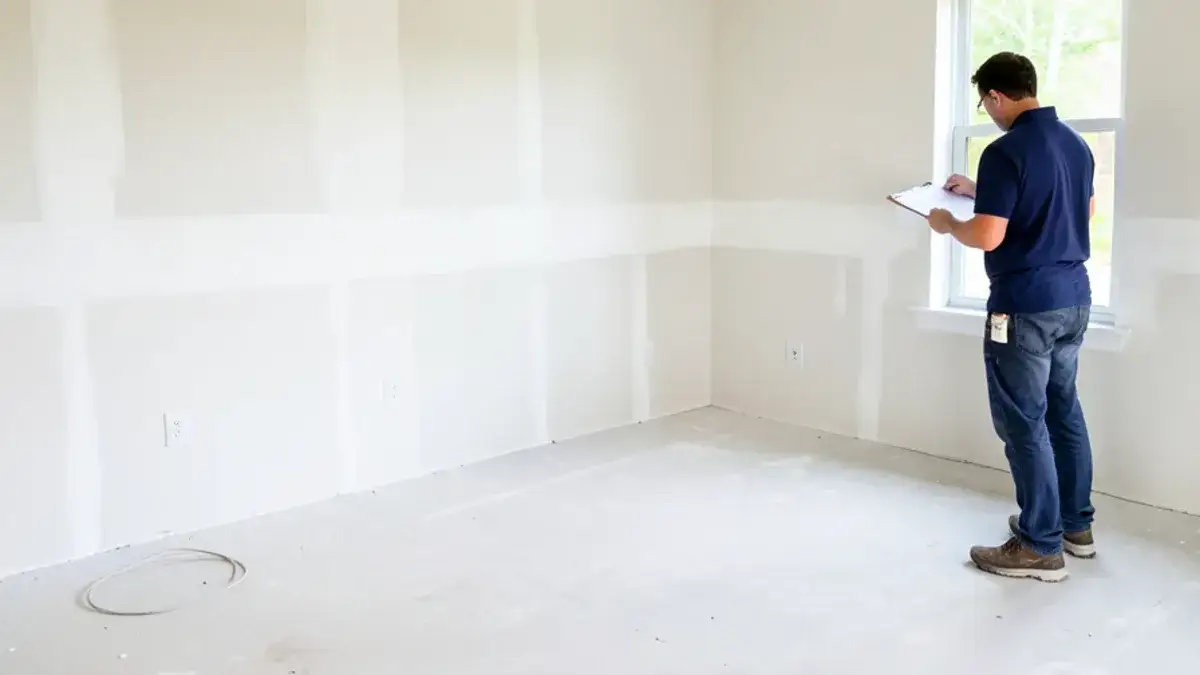
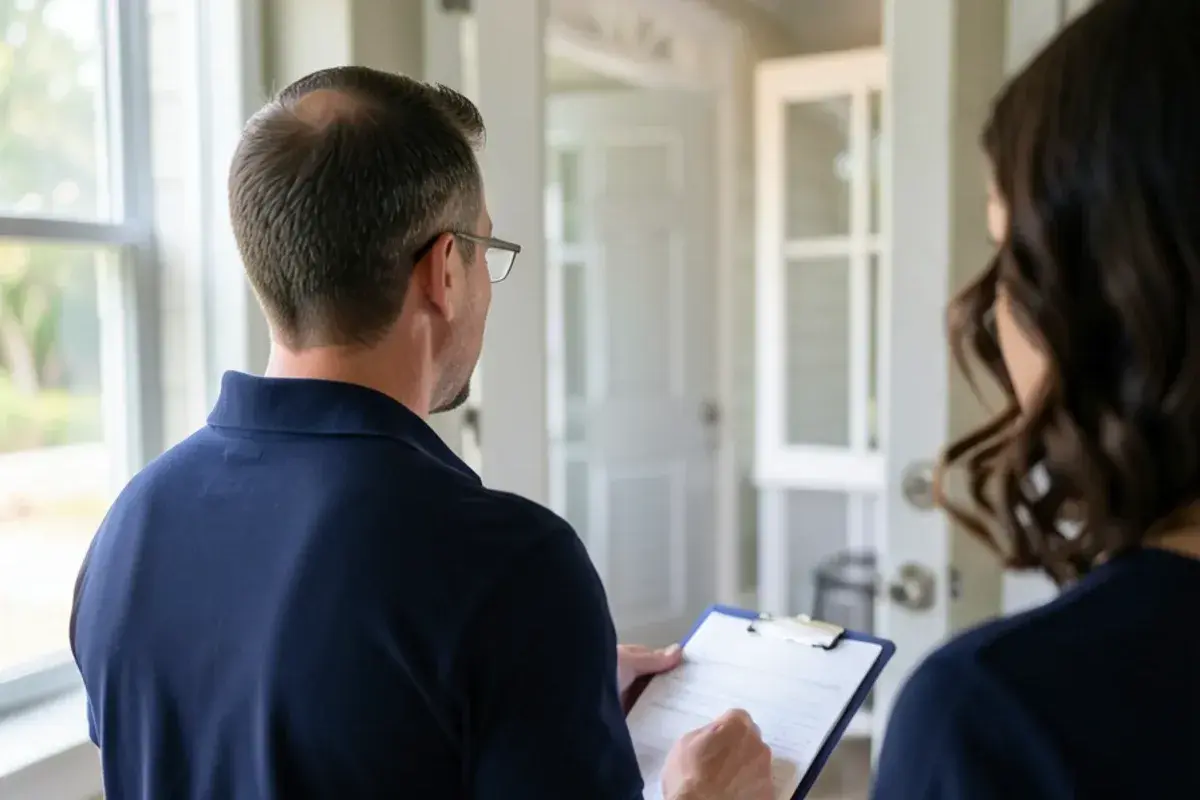
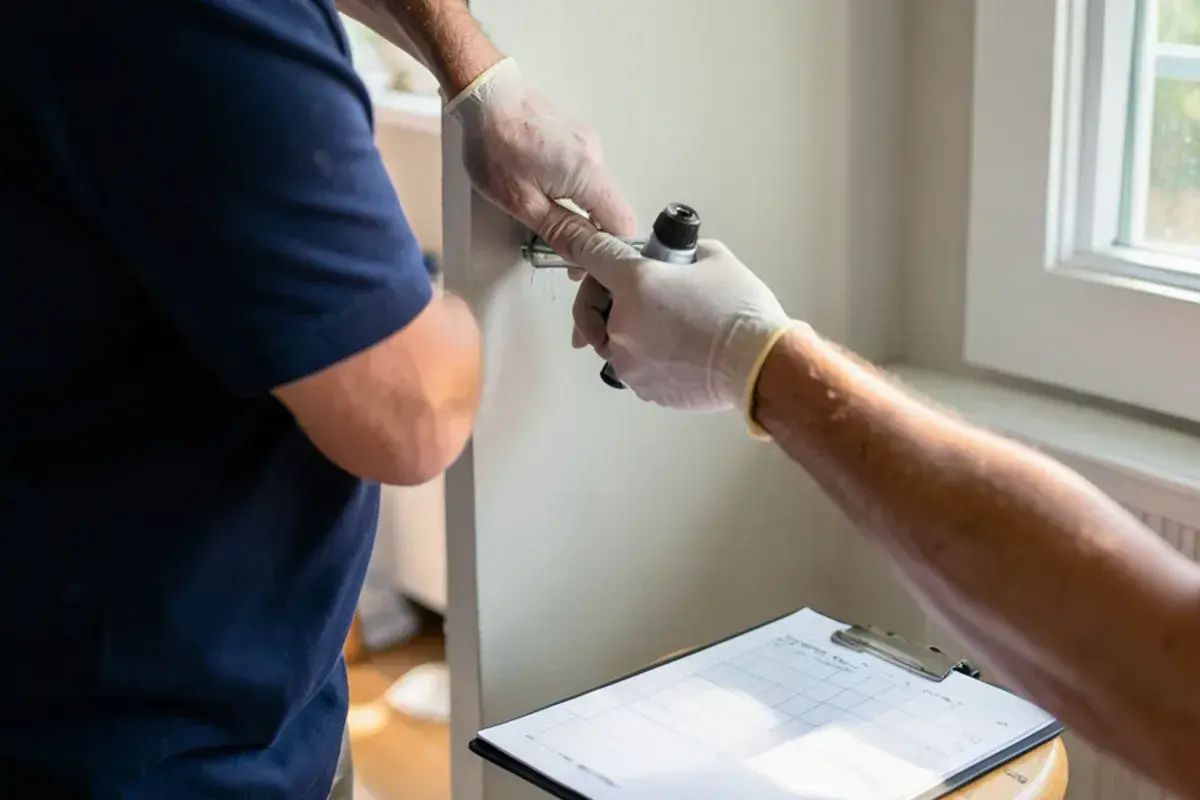
We walk the property and chart every wet wall, floor and ceiling. A moisture meter and a thermal imaging camera find wet material you cannot see. The moisture map becomes the baseline for the whole job.
We then classify the water as Category 1, 2 or 3 (clean, gray or contaminated). The category decides what dries in place and what must come out. You get a written scope before heavy work starts, and the assessment itself is free. Ask for the free moisture assessment. Meter readings and thermal images show how far the water traveled before a wall opens.
Water extraction and demolition
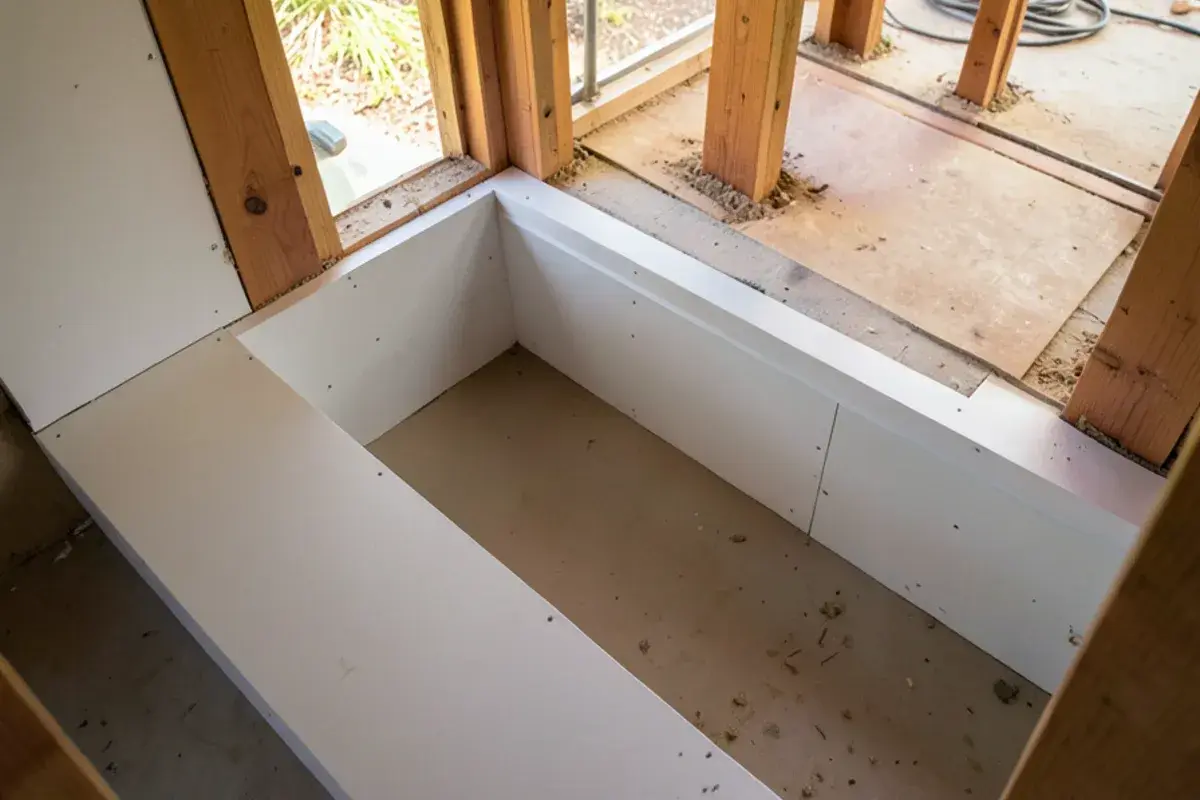
We pull standing water from floors, carpet and padding before any drying equipment runs. Saturated drywall, insulation and padding that cannot reach the dry standard come out. A flood cut is a horizontal cut made above the wet line, so the wet section leaves with the damaged material. HEPA air scrubbers clean the air while demolition runs, and we photograph first so the adjuster sees the loss as it was.
Structural drying and dehumidification
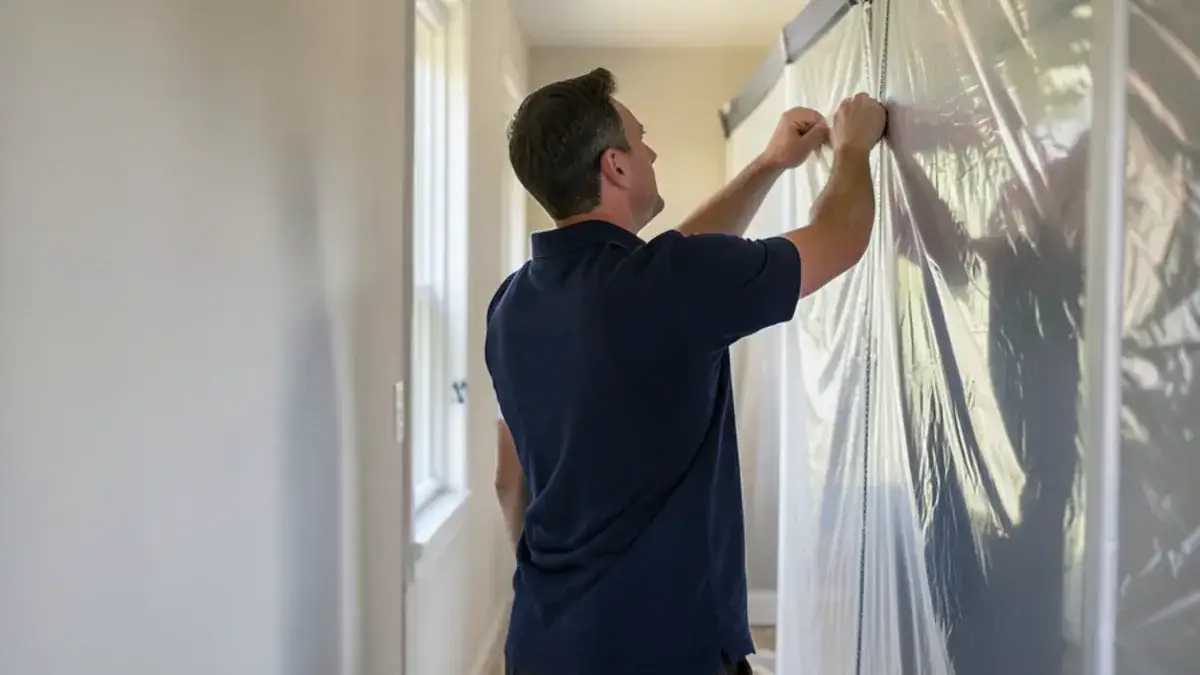
Air movers push moisture off surfaces and LGR dehumidifiers pull it out of the air. LGR means low grain refrigerant, a dehumidifier type that keeps working when the air is already damp. We close the space so the equipment works on that room's air alone.
In a St. Augustine Beach home the outdoor air is already wet, so we run LGR dehumidifiers with the doors closed and never rely on fans alone. Water removal and dehumidification work as a pair: extraction takes out the liquid, and dehumidification takes out the vapor left in the structure.
Moisture monitoring and the put-back
We return daily to log readings, move equipment and test the same materials again. Equipment leaves only when affected materials match the dry standard, the reading of unaffected materials in the same home. Then we sanitize, apply antimicrobial where needed and plan the drywall, flooring and paint. Structural rebuilding goes to a suitable licensed contractor, and whoever does permitted work pulls the permit, never the homeowner.
Ask any crew whether it works toward the goals in ANSI/IICRC S500 and logs daily readings until materials reach the dry standard. S500 is the industry's reference standard, and the IICRC published the ANSI/IICRC S500 5th edition in May 2021, replacing the 2015 4th edition. A crew that cannot answer is not tracking the job.
Water still moving? Call before the next hour adds to the damage
Open 24 hours for emergencies. Non-emergency calls are best between 7am and 7pm.
- 5.0 on Google, 8 reviews
- Family owned since 2020
- Calls go straight to the owner
- Free assessments and estimates
How much does water damage restoration cost in St. Augustine, FL?
Third-party figures put St. Augustine remediation around $1,926 to $2,035 and flood repair around $3,162 to $3,407, according to Homeyou (43 local quotes for remediation in 2026, 34 completed flood projects as of February 2026). Forbes Home's national benchmark, quoted secondhand, is $1,300 to $5,600. These are other people's ranges, not our prices. Your water damage cleanup cost comes from your job, and our free water damage estimate shows it.
| Job type | Typical range | Basis | Source |
|---|---|---|---|
| Water damage remediation, St. Augustine | $1,926 to $2,035 | 43 local quotes | Homeyou, 2026 |
| Flood repair, St. Augustine | $3,162 to $3,407 | 34 completed projects | Homeyou, Feb 2026 |
| National benchmark | $1,300 to $5,600 | Nationwide, quoted secondhand | Forbes Home |
| Cost per sq ft | Varies, get a written local quote | No confirmed local figure | Not published |
Every job needs a written estimate. That is upfront pricing you can check: get at least two and compare them line by line.
Five line items move a quote. Ask for each one in writing, and read our full water damage restoration cost guide.
- Equipment days: each air mover and dehumidifier is billed for every day it runs
- Demolition: wet drywall, insulation and flooring removed
- Water category: Category 3 adds disinfection and more removal
- Affected area: the number of rooms and floors that got wet
- Put-back: priced separately from mitigation, and often higher here, where the median owner-occupied home in St. Johns County is worth $547,600 (Census Reporter, ACS 2024) and finishes tend to cost more
How is flood damage cleanup different from standard water damage restoration?
Flood damage restoration costs more because floodwater is Category 3 water that can carry sewage. Porous materials usually come out and surfaces get disinfected. A supply line leak starts as clean water, so more materials dry in place. That gap is why Homeyou's flood repair range sits above its remediation range, and sewage backup cleanup follows the same contaminated-water rules.
Why does water damage get worse faster in St. Augustine's humid climate?
Water damage gets worse faster here because the outdoor air is already wet, so materials dry slowly and the mold window tightens. St. Augustine averages about 50 inches of rain a year against a U.S. average of 38, on about 116 rain days, with August the wettest month at about 7.4 inches.
Dehumidification, not fans alone, is the core of drying on this coast. A fan moves wet air across a wall. An LGR dehumidifier removes the water from that air and lowers the relative humidity in the closed room. Structural drying time follows the readings, not the calendar, and the equipment-day count varies with the materials, the water category and the humidity that week. Ask for a projected count in writing and for the daily readings that confirm it. How long a house takes to dry has its own guide.
How long does structural drying take in a St. Augustine home?
Structural drying takes as long as the readings say, and no reliable source gives a fixed day count. It should start within 48 hours of the water release, per NIH guidance, and it ends at the dry standard. August is the hard month, because peak rain keeps the outdoor air wet.
What is the dry standard, and how do crews measure it?
The dry standard is the moisture reading of unaffected materials in the same home. We log each moisture reading daily with a moisture meter and check hidden areas with thermal imaging, and those logs double as moisture records for your adjuster.
When does mold start growing after water damage?
Mold can begin developing on damp materials within 24 to 48 hours of water exposure, per FEMA, and NIH guidance is to dry or remove wet building materials within 48 hours. People expect several days because visible growth lags the colonization that comes first. By the time you see or smell it, drying is already late. With about 116 rain days a year, the St. Augustine humidity mold timeline leaves little slack before mold growth starts.
Can a water damage restoration company also remove mold in Florida?
Yes, when it holds the state license, so ask to see the number.
Removing more than 10 square feet of mold-contaminated material requires a Florida DBPR license, not a county one, under Florida Statutes Chapter 468. Mold work falls under ANSI/IICRC S520, not S500. Formal mold assessment is a separate licensed job, and Florida bars the same company from assessing and remediating one structure within 12 months, with a narrow contractor exception. See mold after water damage and mold remediation for what we do.
What should you do in the first 48 hours after water damage?
In the first 48 hours, make the structure safe, document the loss, call a crew and start the paperwork. The first-hour guide goes deeper. Before the crew arrives, do these in order:
- Stop the source only if it is safe: the water main, or the breaker for the affected area
- Stay out of standing water near outlets, appliances or live circuits
- Photograph and video every wet room and item before cleanup
- Lift valuables, electronics and documents above the waterline
- Switch off the breaker for any ceiling fixture holding water
- Call a restoration crew and your insurer, and note the date and time of loss
- Keep damaged items until the adjuster has seen them
Water dripping from a light fixture means water is sitting in the ceiling cavity. Cut that breaker first.
Filing and documenting the claim
Your insurer runs the claim, and Florida Statute 627.70132 gives you one year from the date of loss to give notice of a new claim, and 18 months for a supplemental claim. Record the date and cause in writing, call your insurer, then give the adjuster the crew's moisture logs and equipment records. Those logs prove how wet the structure was and when it reached dry standard. We supply them, and we can walk you through the steps of filing if you decide that is best. Coverage questions belong to your insurer or a licensed public adjuster. See water damage insurance claim help and the water damage insurance claim steps.
Keep one claim file:
- A photo and video inventory of every wet room and item, taken before cleanup
- The date of loss and the cause, in writing
- The claim number and your adjuster's contact details
- The crew's moisture logs and equipment records
- Receipts and the written estimate
Storm repair permits in St. Augustine
The City of St. Augustine storm damage permit covers structural repairs and drywall, plus re-roof, mechanical and electrical permits where they apply, per the storm recovery permitting guide from the City of St. Augustine Planning and Building Department. Applications need an insurance scope, photos of the damage and, if the owner applies, an owner-builder affidavit. St. Johns County says a licensed contractor obtains their own permits, so treat any contractor who asks you to pull one as a warning sign. The City's guide lists removing wet materials, temporary roof tarping and debris removal as work that needs no permit, and the department has the final say.
How do flood zones and local risk change the job around St. Augustine?
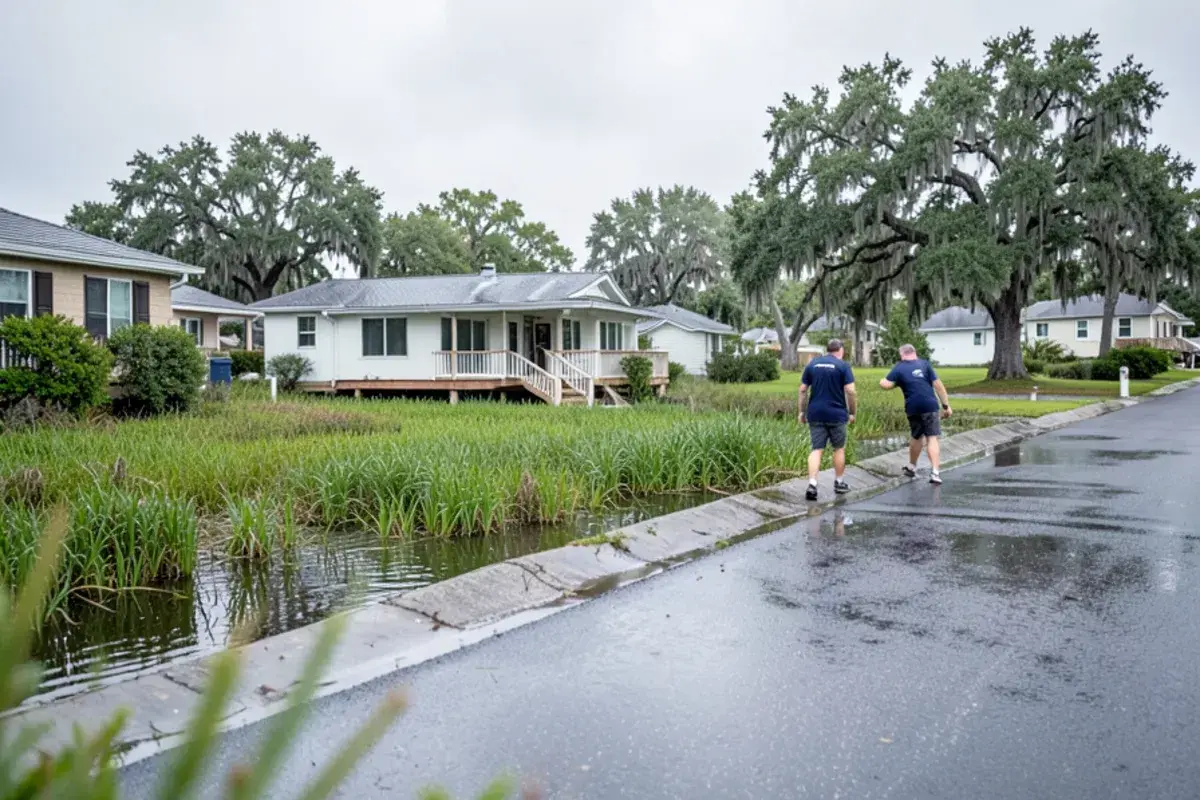
Your address changes the plan. A Special Flood Hazard Area is land FEMA maps with a 1 percent annual chance of flooding, shown as Zones A, AE, AH, AO and VE. Look up your parcel with St. Johns County Floodplain Management before you plan repairs.
| Area | What the water usually does | What it changes |
|---|---|---|
| Downtown St. Augustine | King tides push river water over low ground, and old masonry holds it | Historic home water damage restoration needs a drying plan that protects the walls |
| St. Augustine Beach | Storm surge has reached the sea walls, and salt air works on sliders and flashing | The city runs its own building department |
| Vilano Beach | Low ground with water on two sides | Salt comes out before drying, because it keeps pulling moisture from the air |
| World Golf Village | Plumbing, appliances and storm rain, not tides | County Building Services takes permits |
| Nocatee | Young homes, with leaks behind finished walls | Start the record early in case a builder's warranty is open |
The county reports a CRS Class 5 NFIP discount of 25 percent under the Community Rating System, and the City reports Class 4, worth 30 percent on most policies issued or renewed since April 1, 2026. Your declaration page shows which one you have.
Not sure what your address means for repairs? Call and ask
Open 24 hours for emergencies. Non-emergency calls are best between 7am and 7pm.
- 5.0 on Google, 8 reviews
- Family owned since 2020
- Calls go straight to the owner
- Free assessments and estimates
How do you check a restoration contractor before you sign?
Check the paperwork first, then the price. Our guide to choosing a restoration company goes further.
- Ask for the restoration contractor license number, then look it up on the Florida DBPR site
- For DBPR mold remediation over 10 sq ft, ask for the remediator license number
- If a company says it is IICRC certified, ask for the certificate number and who holds it
- Let the contractor obtain any permit, never you