
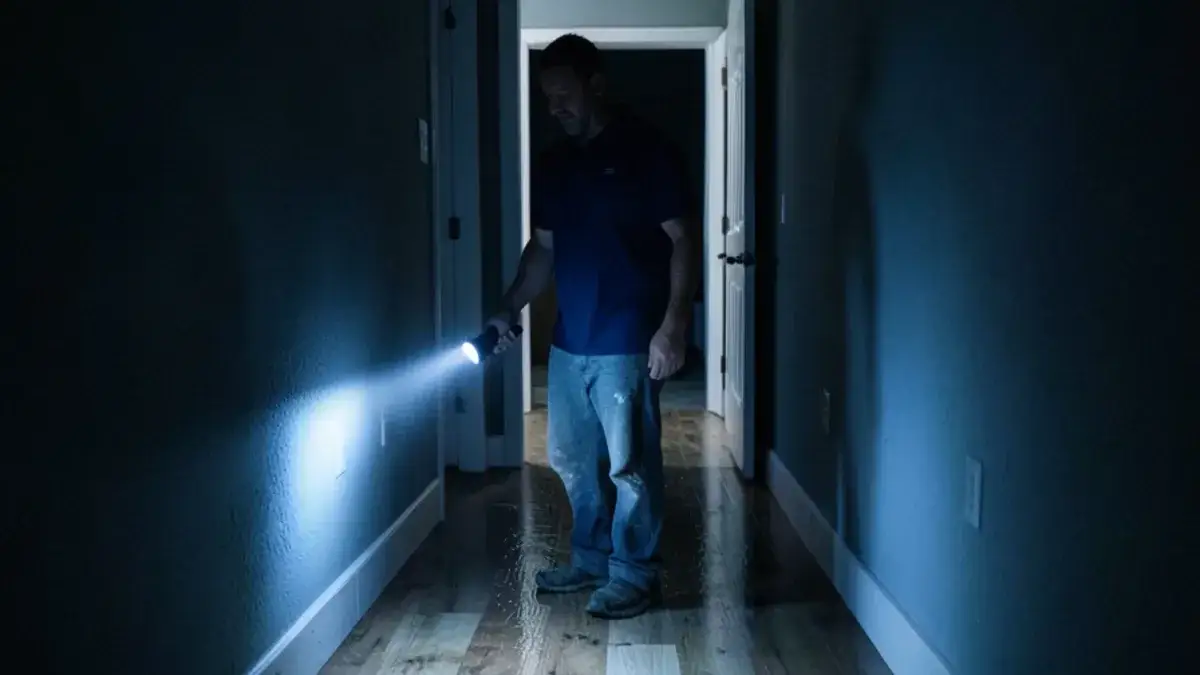
What counts as emergency water damage?
If water is moving, near electricity or spreading into walls, it is an emergency. Call now if any of these are true:
- A pipe, supply line or water heater is still running
- Water has reached outlets, cords or the electrical panel
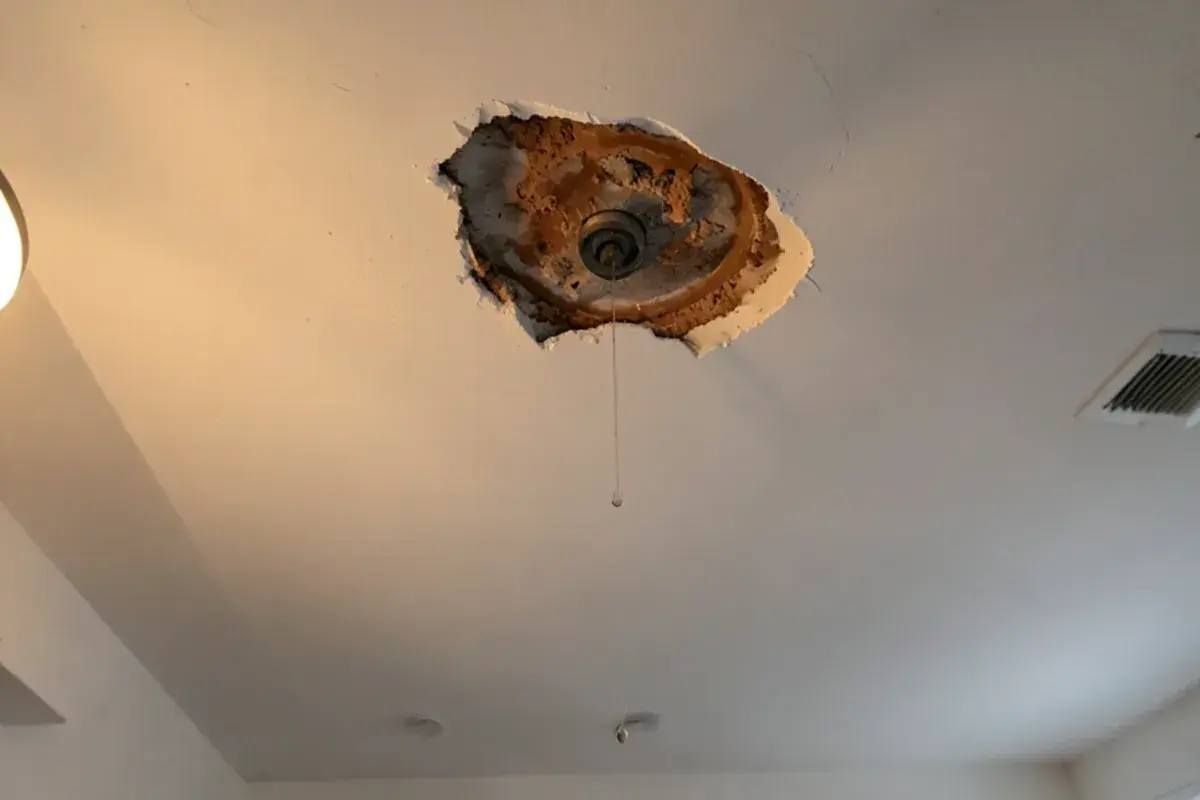
- A ceiling is sagging, bulging or dripping through a light
- Water is spreading to other rooms or to the floor below
- The water came from a sewer, a flood or a storm
- Nobody is home to stop it, such as a vacation house
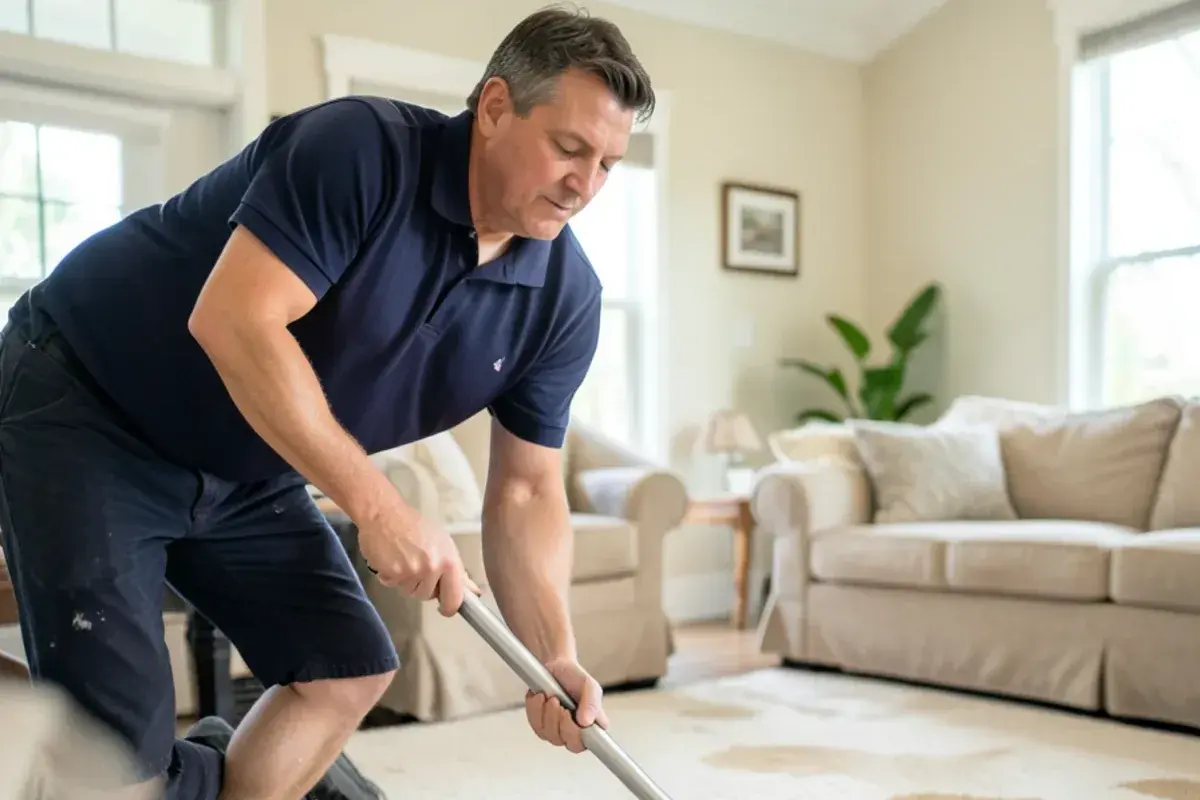
Smaller problems can often wait for daylight. A slow drip with a dry floor, or an old stain that is not growing, is a call for between 7am and 7pm.
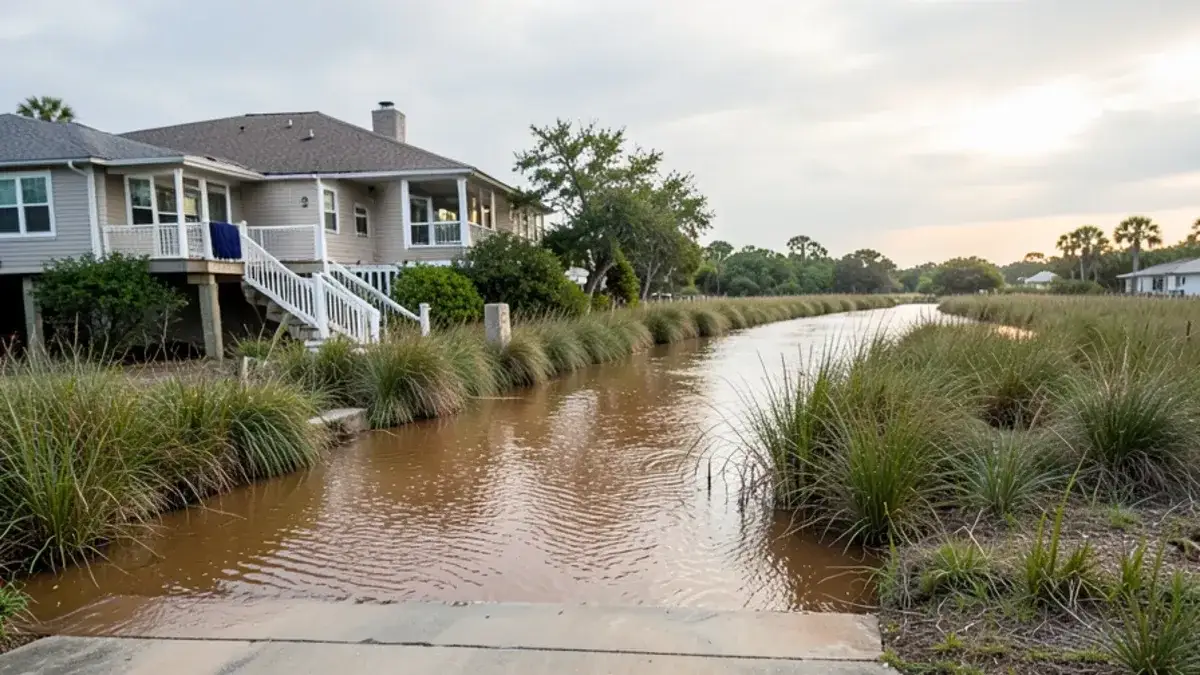
Around St. Augustine the usual starters are a supply line, a water heater, an AC drain line or a storm. Tides and nor'easters can add water from outside, and a seasonal home can run a leak for days before anyone sees it.
What to do while you wait
Do these in order, and skip anything that puts you near live electricity. Your safety comes before the floor.
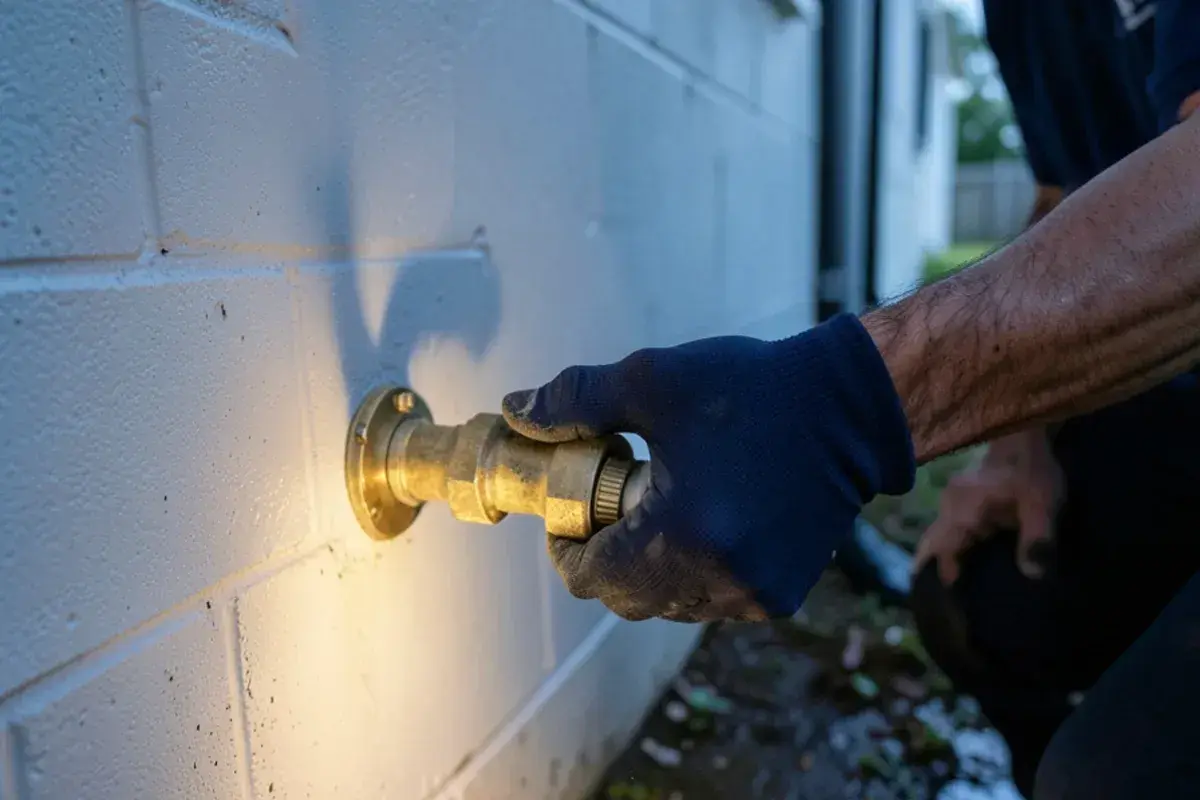
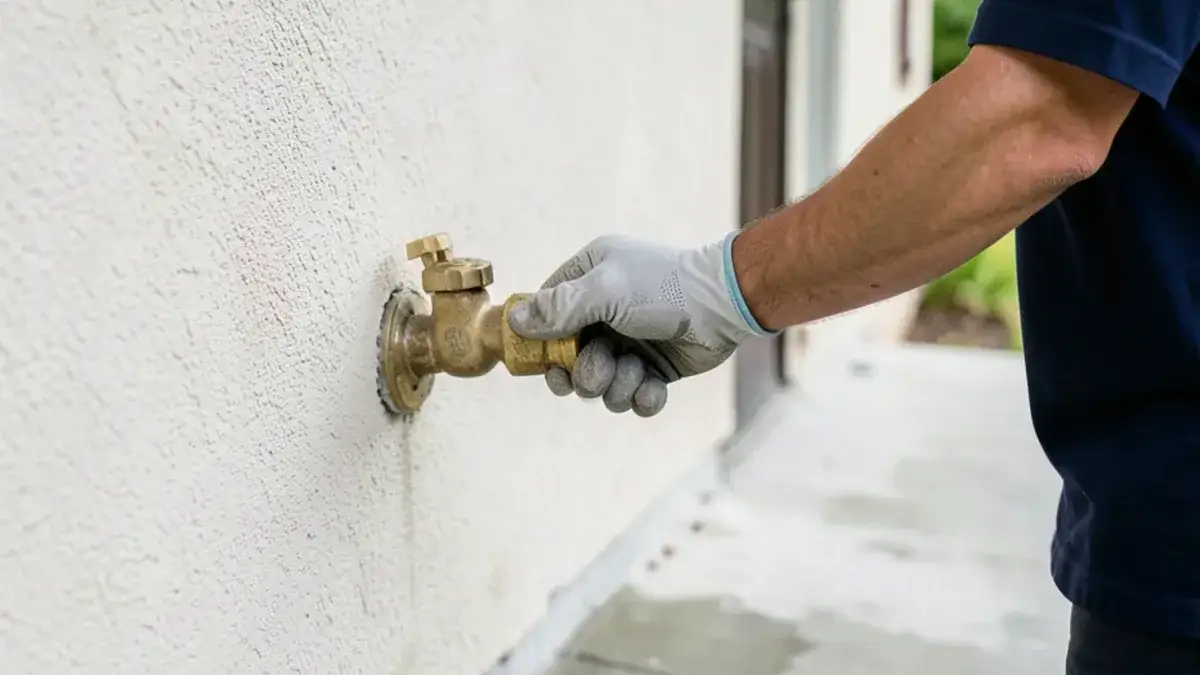
- Stop the water. Close the fixture valve or the main shutoff.
- Cut the power. Switch off the circuit for wet rooms, only from a dry place. The CDC warns never to touch power while standing in water.
- Stay clear of a sagging ceiling. It can hold more water than you think, so do not poke it.
- Get out of the way of bad water. Flood water or sewage means leave the room.
- Take photos. Wide shots and close shots, before anything moves.
- Lift what you can. Move electronics, papers and rugs to a dry room.
Keep your fans off for now. Moving air over contaminated water spreads it, and fans alone do little in humid air.
Water still moving? Call now and the owner picks up
Open 24 hours for emergencies. Non-emergency calls are best between 7am and 7pm.
- 5.0 on Google, 8 reviews
- Family owned since 2020
- Calls go straight to the owner
- Free assessments and estimates
Request a free estimate
Not an emergency? Send the details and we will call you back. If water is still moving, call instead.
Which emergency water damage service do you need?
Most emergency calls land in one of two places. Tell us what you see and we will sort it out on the phone.
- 24 hour water removal is for standing water, soaked carpet and anything that cannot wait until morning.
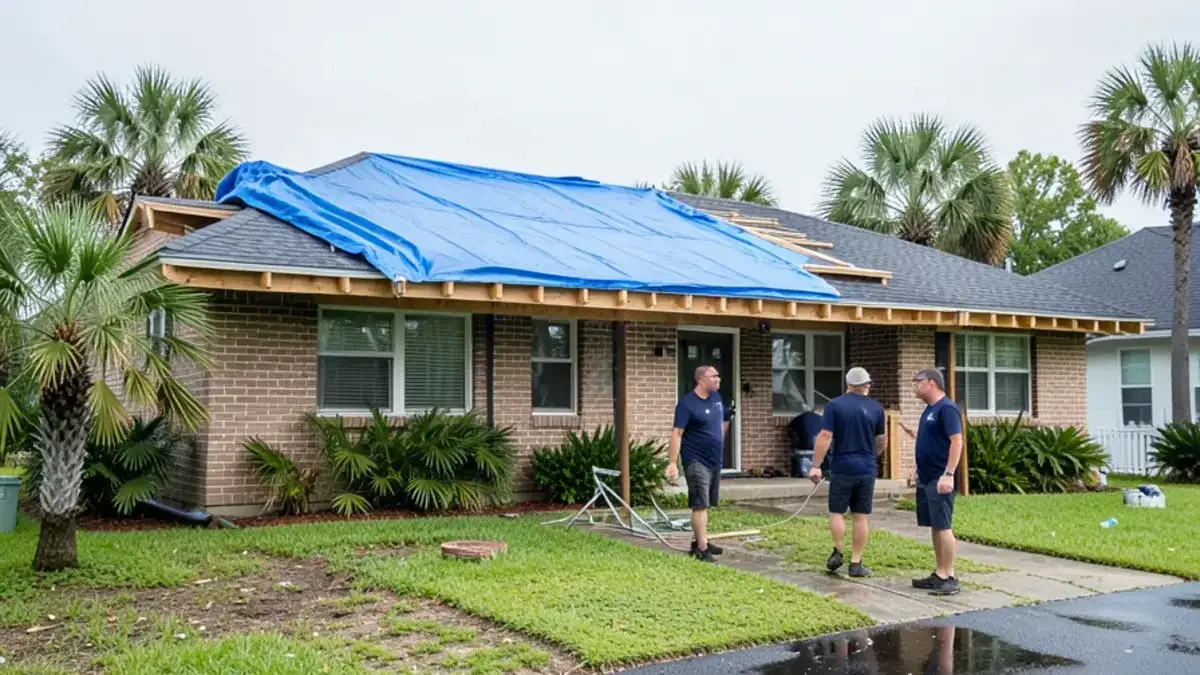
- Emergency board up and tarping is for broken windows, damaged doors and openings that let rain in.
Once the emergency is under control, the work moves to water extraction and structural drying. Water that came from outside moves to flood and storm damage, and sewage to sewage cleanup.
What an emergency visit covers
An emergency visit stabilizes the house, and it does not finish the job. We stop the spread, make the space safe to work in and start the record. Drying then runs on its own schedule. A plumber repairs the pipe, and we deal with the water it released.
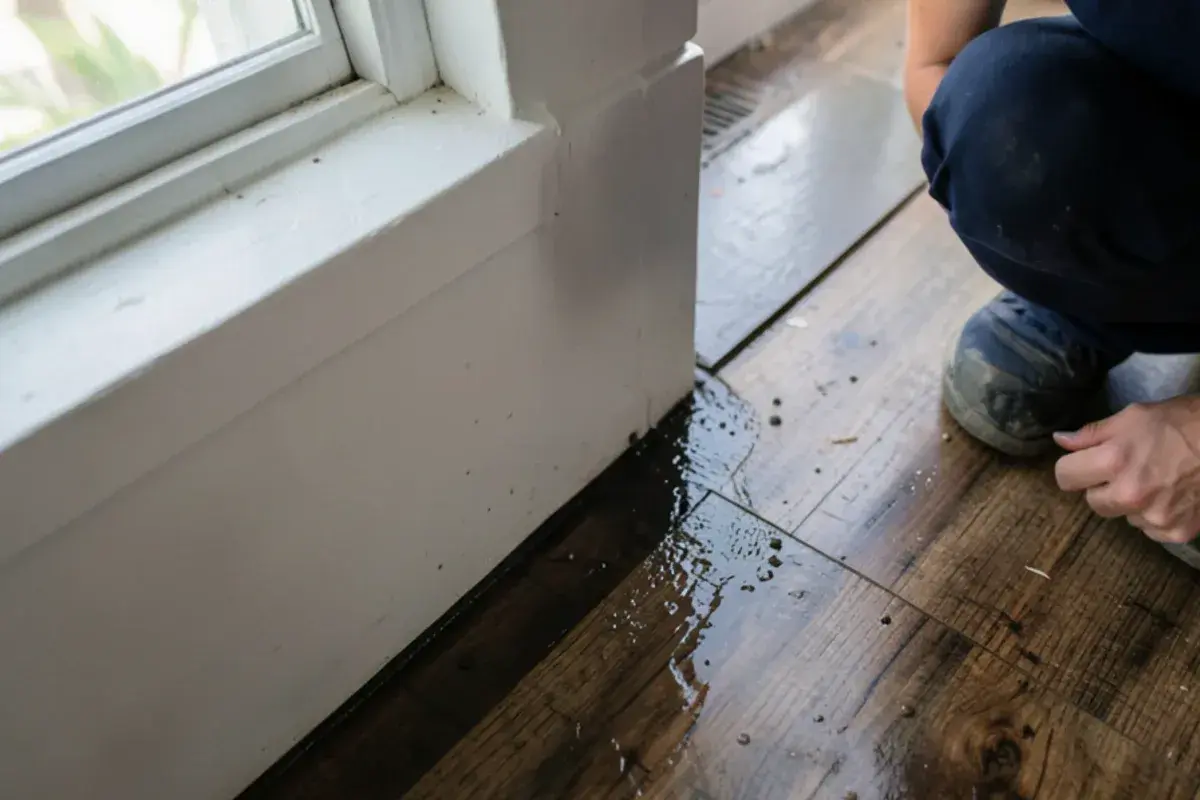
- Standing water pulled from floors, carpet and pad
- A check for electrical and ceiling hazards
- Moisture meters and thermal imaging to find the edges
- Temporary cover where an opening lets rain in
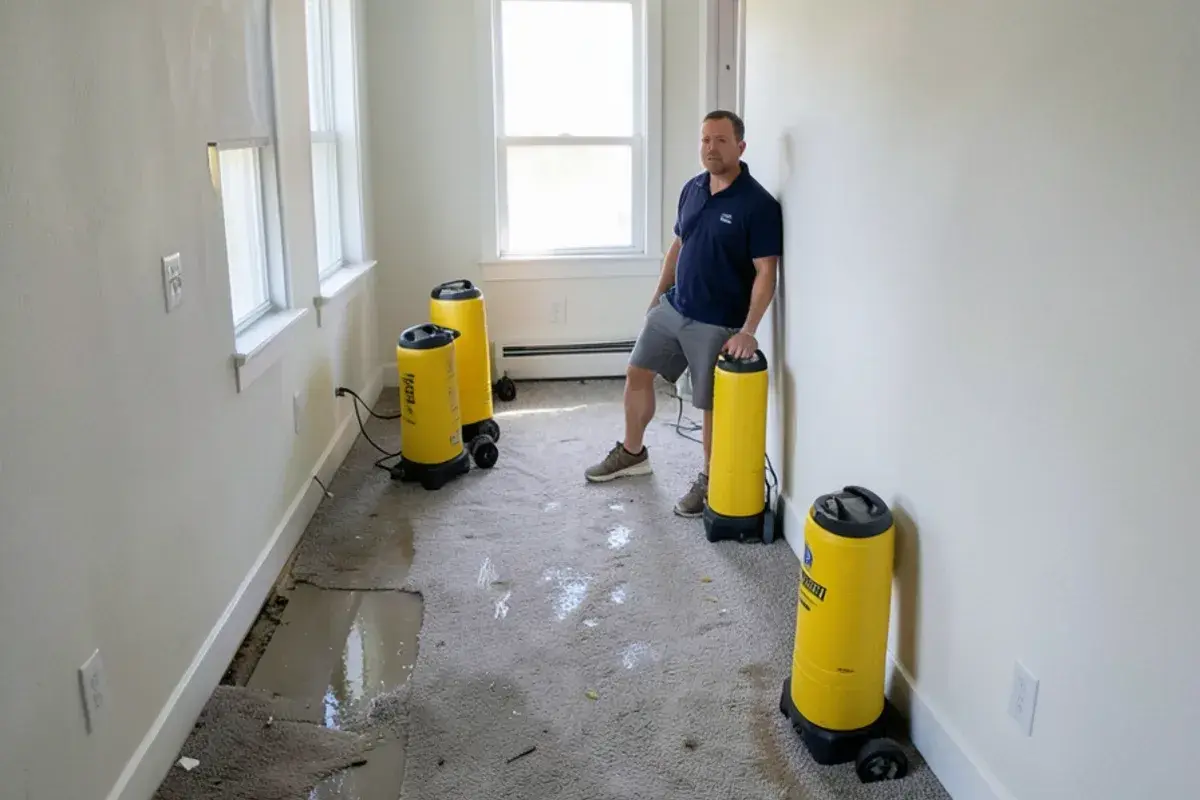
- Air movers and LGR dehumidifiers set after extraction
- Photos and a written scope before heavy work
What we do when we get there
The first job is making sure the house is safe to work in. Then we find out how far the water went, not just where you can see it.
- Confirm the source is off and check for electrical and ceiling hazards.
- Photograph the damage before demolition, then read walls, floors and ceilings with moisture meters and thermal imaging.
- Set the water category, from clean to contaminated, and walk you through the estimate and written scope before heavy work.
- Extract the water, then remove what cannot be dried.
- Set air movers and LGR dehumidifiers with the doors closed.
- Return daily to take readings until materials reach the dry standard.
How is after-hours pricing handled?
The estimate comes first. You see it before the work starts, whatever time you call.
Assessments and estimates are free on water and mold projects, and we do not use high-pressure sales. The total depends on how much is wet, the water category, what has to come out and how many equipment days the drying takes. Should you decide to file a claim, we can explain the steps and hand over the job records. Your insurer and your policy decide the rest.
Four local conditions tend to widen a scope: a leak that ran for days in an empty seasonal home, a slab holding water under tile, a second floor dripping into the room below, and tide or flood water, which is Category 3.
Where we respond in Northeast Florida
Our six-county area runs from Duval and Clay through St. Johns and Putnam to Flagler and Volusia. That takes in St. Augustine Beach, World Golf Village, Nocatee, Palm Coast and the towns between them.
We do not publish an arrival time, because it would not be honest. Traffic, closed bridges, high tide and the job we are on all change the answer. You get the real answer on the phone, from the person who knows.
Rules worth knowing in the first days
Three rules can shape the week ahead, so note them early. Florida's claim statute, F.S. 627.70132, gives a policyholder 1 year from the date of loss to give notice of a claim, and 18 months for a supplemental claim. Your policy wording and your adjuster decide how that applies to you, and coverage questions belong with your insurer.
Mold can change the job. DBPR licenses mold assessment and remediation of more than 10 square feet, so a wet wall left too long can turn a drying job into mold remediation under different rules.
The last one is about method. ANSI/IICRC S500 is the industry's reference standard for water damage, a consensus document and not a law. We dry to the same goal S500 describes, and our daily readings show the progress.
An emergency does not change the paperwork. Ask any company for its license number and check it on the DBPR site, ours included.
Why an owner on the phone helps at 2am
An emergency call should reach someone who can make a decision. That is why homeowners call us:
- Calls go straight to the owner, Dal Beggs
- Family owned and locally owned since 2020
- Open 24 hours, for emergencies at any time
- Quick response, with a straight answer on timing
- No pressure: we show up, assess the damage, give an estimate
At that hour you need a decision, not a ticket number. Dal can tell you what to shut off, whether it can wait and what the visit will involve. If morning is fine, he will say so.
What customers say
5.0 stars on Google from 8 reviews. Quoted as written.
“Very impressive service. Dal and his team responded to our call immediately and were out the same day to begin the remediation process. Would highly recommend 1Call Restoration.”
Inside emergency water damage
Frequently asked questions
What happens when I call after hours?
You reach the owner, not a call center. We ask what happened, whether the water has stopped and whether the power is safe, and we tell you what to do next. Then you hear when we can get there, based on where we are and what roads and tides are doing. Nothing starts until you have seen the estimate.
Where is my main water shutoff?
Look where the water line enters the house, often on the outside wall facing the street, or in the garage near the water heater. Many homes also have a curb valve in a box near the meter. Turn the house valve clockwise until it stops. If it will not move, do not force it, and call your utility or a plumber.
Can it wait until morning?
Yes, if it is clean water that has stopped, on a small hard-floor area you have already dried. Anything that is still running, sits on carpet, has reached a wall or came from a sewer or flood should not wait. Call and describe it. If morning is fine, we will say so and you can get some rest.
What should I have ready when I call?
Have your address, what started the water, when you found it and which rooms are wet. Tell us whether the water has stopped and whether the breakers are off. Photos help if you can take them safely. Have your insurer's name handy too, in case you decide to file a claim. None of this needs to be perfect.
Is it safe to use the lights in a wet room?
No, not if water has reached outlets, cords or a ceiling fixture. Shut off that circuit at the panel if you can stand somewhere dry to do it. The CDC warns against touching power while standing in water, and an electrician should check the system before it goes back on. Use a flashlight in the meantime.
I am a tenant and water is coming in. What do I do?
Stop the water if you can reach a valve safely, then call your landlord or property manager and put it in writing. If nobody answers and the water is still spreading, call us so we can tell you what is safe to do. The owner normally authorizes work on the building, so keep trying to reach them.
Do not sit up all night with a wet floor. Call the owner
Open 24 hours for emergencies. Non-emergency calls are best between 7am and 7pm.
- 5.0 on Google, 8 reviews
- Family owned since 2020
- Calls go straight to the owner
- Free assessments and estimates
1 Call Restoration, Saint Augustine, FL. (208) 464-4194.
Related services
Worth reading
Where we handle emergency water damage
See all of our service areas.