
Local angles
Florida's Insurance Rules for Water Claims: What Changed
By Dal Beggs, founder and owner of 1 Call Restoration. Published November 1, 2026. Updated November 1, 2026.

Florida water damage insurance rules changed when Senate Bill 2-A was signed on December 16, 2022. It cut the time to report a claim from 2 years to 1, shortened insurer deadlines and barred assignment of post-loss benefits on policies issued from 2023 on. This is general education on Florida law. Your policy wording and adjuster decide.
What changed, side by side?
The clocks got shorter on both sides. SB 2-A, Chapter 2022-271, amended the Florida Statutes during a December 2022 special session. The table below compares the old and new rules as described in the Florida Senate's bill summary and the enrolled bill. The insurer deadlines in section 627.70131 took effect March 1, 2023.
| Rule | Before SB 2-A | After SB 2-A | Statute |
|---|---|---|---|
| Notice of a new or reopened claim | 2 years | 1 year after date of loss | 627.70132 |
| Notice of a supplemental claim | 3 years | 18 months after date of loss | 627.70132 |
| Insurer acknowledges your communication | 14 calendar days | 7 calendar days | 627.70131 |
| Insurer starts investigating after proof of loss | 14 days | 7 days | 627.70131 |
| Physical inspection after proof of loss | 45 days | 30 days | 627.70131 |
| Copy of a detailed estimate | Sent on your request | Sent within 7 days after it is generated | 627.70131 |
| Insurer pays or denies | 90 days | 60 days after notice | 627.70131 |
Those insurer deadlines carry exceptions, including factors beyond the insurer's control. The Senate summary says the Office of Insurance Regulation can add up to 30 days in an emergency or a system failure.
Need the damage documented before the clock runs? Call us
Open 24 hours for emergencies. Non-emergency calls are best between 7am and 7pm.
- 5.0 on Google, 8 reviews
- Family owned since 2020
- Calls go straight to the owner
- Free assessments and estimates
Why the date of loss matters more now
You have half the time you used to have. Section 627.70132 requires notice within 1 year after the date of loss for an initial or reopened claim, under the terms of your policy. A supplemental claim gets 18 months.
Weather has its own rule. For a hurricane, tornado, windstorm, severe rain or other weather event, the statute ties the date of loss to the date of landfall or the date NOAA verifies the event. On Vilano Beach, that means the clock on a storm can start before the day you find a stain in a closet. Write the date down on the day it happens, and report promptly either way.
For the steps of opening a claim, read how to file a water damage insurance claim. What your policy requires is between you, your insurer and your adjuster.
Condo loss assessments run on their own date
Section 627.70132 gives loss assessment coverage under section 627.714 a separate rule. Notice is due by the later of 1 year after the date of loss or 90 days after the association votes to levy the assessment, and never later than 3 years after the date of loss. Whether your unit owner policy carries that coverage is a question for your agent.
What stops or stretches the insurer's clock?
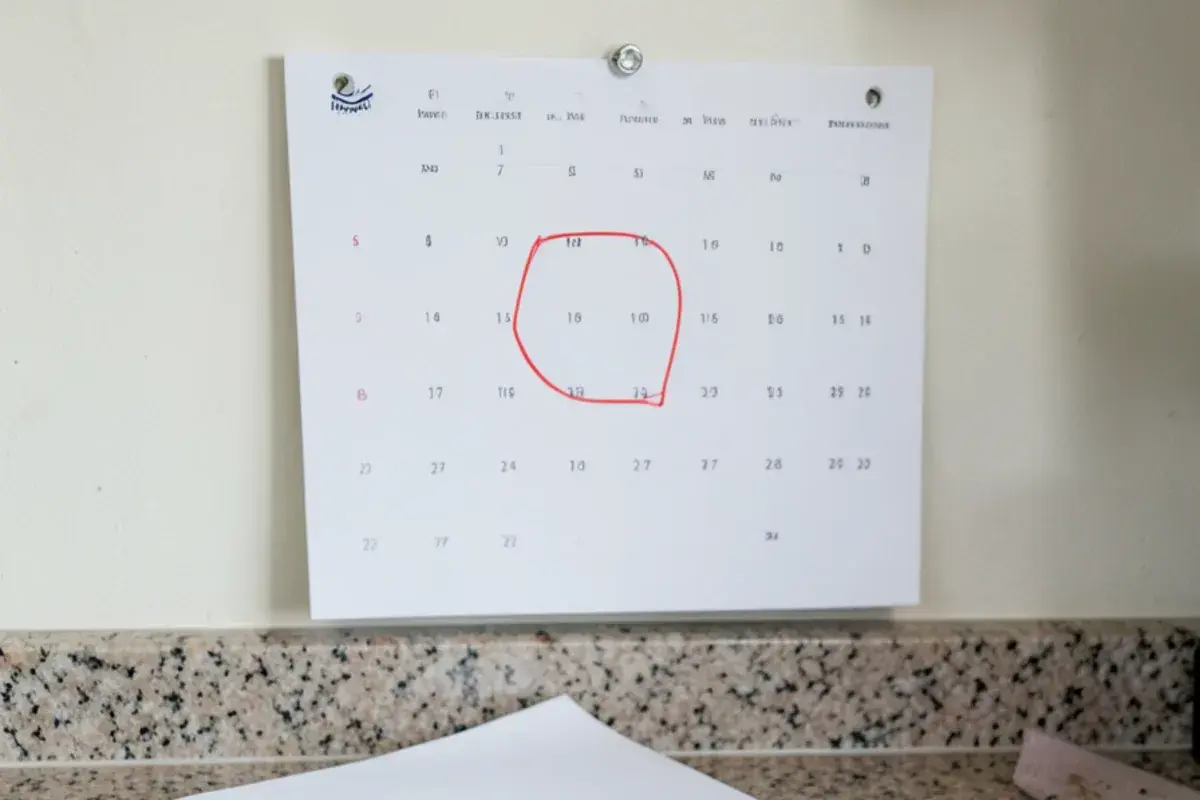
The dates in the table are not fixed calendar days. Section 627.70131 builds in pauses, and how each one applies to a claim is for your insurer, a licensed public adjuster or an attorney to say.
- Information requests: deadlines are tolled if a policyholder does not provide requested material claim information within 10 days after receiving the request. The Senate summary places that request in the first 45 days.
- Mediation: deadlines are also tolled during mediation under section 627.7015 or another alternative dispute process.
- Emergencies: the extra time noted above can follow a state of emergency, a reportable security breach or an information technology problem, as ordered by the Office of Insurance Regulation.
The same section sets a few things worth watching for. An adjuster assigned to a physical inspection must provide a document with a name and state license number. Insurers may investigate by electronic methods such as photos, video or drone footage. And an insurer must give a reasonable written explanation of the basis in the policy for a payment, denial or partial denial.
Can you still sign your benefits over?
Not on a policy issued on or after January 1, 2023. Section 627.7152(13) says a policyholder may not assign post-loss insurance benefits, in whole or in part, under a residential or commercial property policy issued from that date. It calls such an attempt void, invalid and unenforceable, and the statute points to a narrow exception in subsection (11).
Before this change, contractors could ask for an assignment and deal with the claim themselves. Today you remain the one making the claim. If any contractor hands you paperwork that looks like an assignment, stop and ask an attorney or your insurer before signing.
What else did the law change?
Several things affect homeowners indirectly. The Senate summary lists these, and each one has conditions worth reading in the statute.
- One-way attorney fees no longer apply to suits under property policies.
- Insurers may offer mandatory binding arbitration, under set conditions, with a choice of policy and a premium discount.
- Citizens gained a stricter renewal eligibility test for customers with a comparable offer.
- Citizens personal lines policies picked up a phased flood coverage requirement.
Citizens now says most new and renewing wind policies must carry flood coverage by January 1, 2027, with exemptions such as condo unit owner policies. Later laws have also touched these sections, which is why a 2023 article may not match today's statute.
What this means for the paperwork on a water job
Shorter clocks reward a good record made early. We do not interpret policies, advise on coverage or adjust claims. Section 489.147 bars a contractor from doing that without a public adjuster license. For coverage answers, ask your insurer, a licensed public adjuster or a lawyer.
Here is what we can put in your hands, and what each item shows. All of it comes from the job itself.
- Photos taken before demolition, so the loss is on record as it was.
- A moisture map showing where the water went.
- Daily moisture logs showing the drying from first reading to dry standard.
- Equipment records showing what ran, where and for how long.
- An itemized estimate, which we will explain line by line.
Our claim documentation page describes the set in more detail, and insurance claim help explains how we can walk you through the steps of filing, if you decide that is the right move. We never negotiate with an insurer or promise a payment. A free damage assessment stands on its own, whether or not you ever file.
Early records are partial, and we mark them that way
A short clock tempts people to treat a day-two file as the finished story. It is not. Early on you can have photos, the first moisture map and readings to date, while closing readings do not exist until materials reach the dry standard. Ask for the current set at any point, and we will label what is still running.
Scope can move too. Opening a wall sometimes shows wet material that no meter reading could confirm from the room side. When that happens we date the new photos and readings and revise our own estimate, so the record shows what was found and when. Whether a change like that belongs in an open claim or a supplemental claim is your insurer's call, or a question for a public adjuster.
Check the law before you rely on this post
Florida changes these rules often, so check the current statute before you act on anything here. This post reflects the 2026 Florida Statutes as we read them in November 2026, and the 2022 session law as enrolled. The tolling and loss assessment details came from a public copy of the 2024 text, because the Senate site would not load at our last check, so confirm those first. Read sections 627.70131, 627.70132 and 627.7152 on the Florida Legislature or Florida Senate site, or ask a licensed professional.
The short version: the clocks are shorter, the claim stays yours, and the record of the damage is the part you can control. If you have water in the house today, deal with the water first. Call us any time with an emergency. We will measure the damage, record it and give you an estimate, and what you do with that record is your decision.
Frequently asked questions
If a leak was hidden for months, when does the 1-year notice period start?
The statute runs from the date of loss, and it spells that out only for weather events. How a date of loss is set for a hidden leak is a question for your insurer, a licensed public adjuster or an attorney. What you can do is record when you found it, how you found it and what it looked like, and report it promptly.
What is a supplemental claim under Florida law?
Section 627.70132 describes it as a claim for additional loss from the same peril that the insurer has already adjusted, or for which it received timely notice. A reopened claim is different: it is a closed claim the insured reopens for additional costs on loss already disclosed. Whether your situation fits either one is for your insurer or a licensed professional to say.
Did SB 2-A change how long I have to file a lawsuit?
Section 627.70132 says it does not change the civil action limits in section 95.11, so the notice deadlines and the time to sue are separate questions. SB 2-A did add other changes to litigation, including the end of one-way attorney fees in property suits. Talk to a Florida attorney about any deadline to sue, because the answer depends on your facts and dates.
Need photos and moisture logs for your file? Call us
Open 24 hours for emergencies. Non-emergency calls are best between 7am and 7pm.
- 5.0 on Google, 8 reviews
- Family owned since 2020
- Calls go straight to the owner
- Free assessments and estimates
1 Call Restoration, Saint Augustine, FL. (208) 464-4194.
Related services: Insurance Claim Help, Water Damage Documentation, Free Damage Assessment. Serving Vilano Beach and the rest of our service area.
Sources
- The Florida Senate, 2022A Bill Summaries, CS/SB 2-A Property Insurance
- The Florida Senate, CS/SB 2-A Enrolled Text, Chapter 2022-271
- Florida Statutes 2026, Section 627.70132, Notice of property insurance claim
- Florida Statutes 2026, Section 627.70131, Insurer's duty to acknowledge communications and pay or deny claims
- Florida Statutes 2026, Section 627.7152, Assignment agreements
- Florida Statutes 2025, Section 489.147, Prohibited property insurance practices
- Citizens Property Insurance Corporation, Flood Insurance Requirement
- Clyde & Co, Historic Florida Insurance Reforms Under SB 2-A, March 2023
- Florida Statutes, Section 627.70131, public copy of the 2024 text
- Florida Statutes, Section 627.70132, public copy of the 2024 text