
Problem solving
Signs of Hidden Water Damage Behind Walls
By Dal Beggs, founder and owner of 1 Call Restoration. Published November 1, 2026. Updated November 1, 2026.
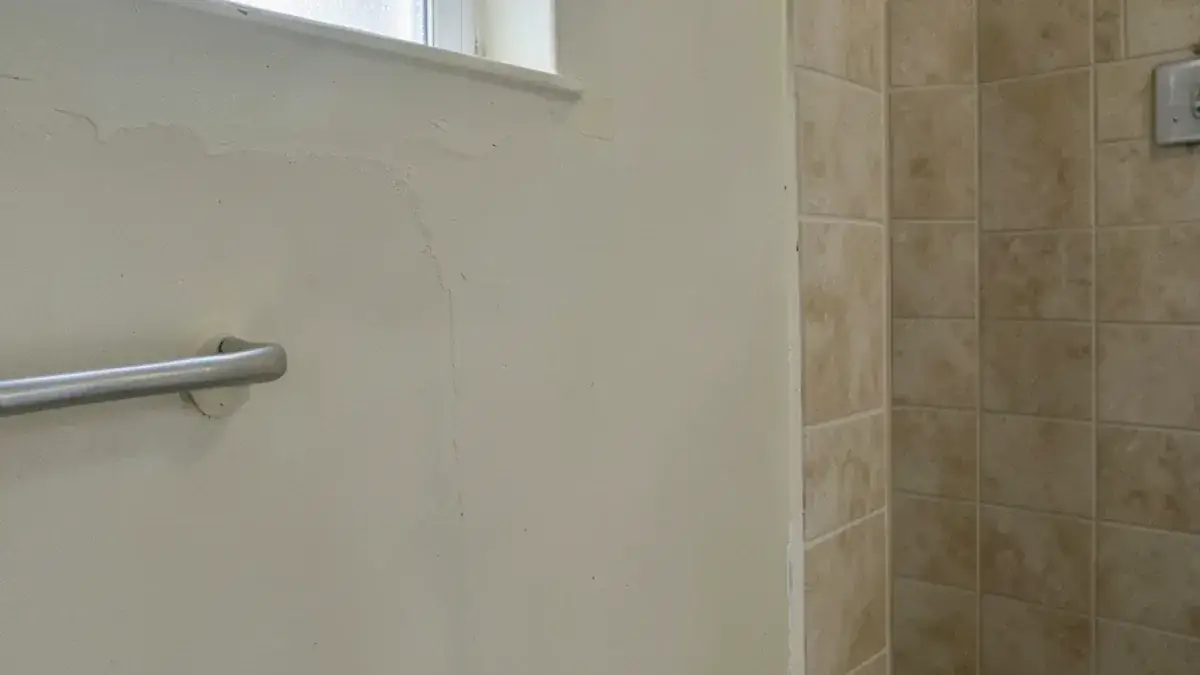
The signs of water damage behind walls are usually small: a stain that grows, paint that bubbles, a baseboard that swells, soft drywall or a musty smell with no visible source. One sign can be nothing, and two together usually are not. Run the two-hour meter test below, then get the wall measured before anyone cuts it.
What are the signs of hidden water behind a wall?
Water behind a wall tends to show itself at the edges. Look low, look at the corners and look near anything with a pipe in it. These are the signs worth taking seriously.
- A stain that is new, growing or ringed.
- Paint or wallpaper that bubbles, peels or lifts.
- Drywall that feels soft or gives under a thumb.
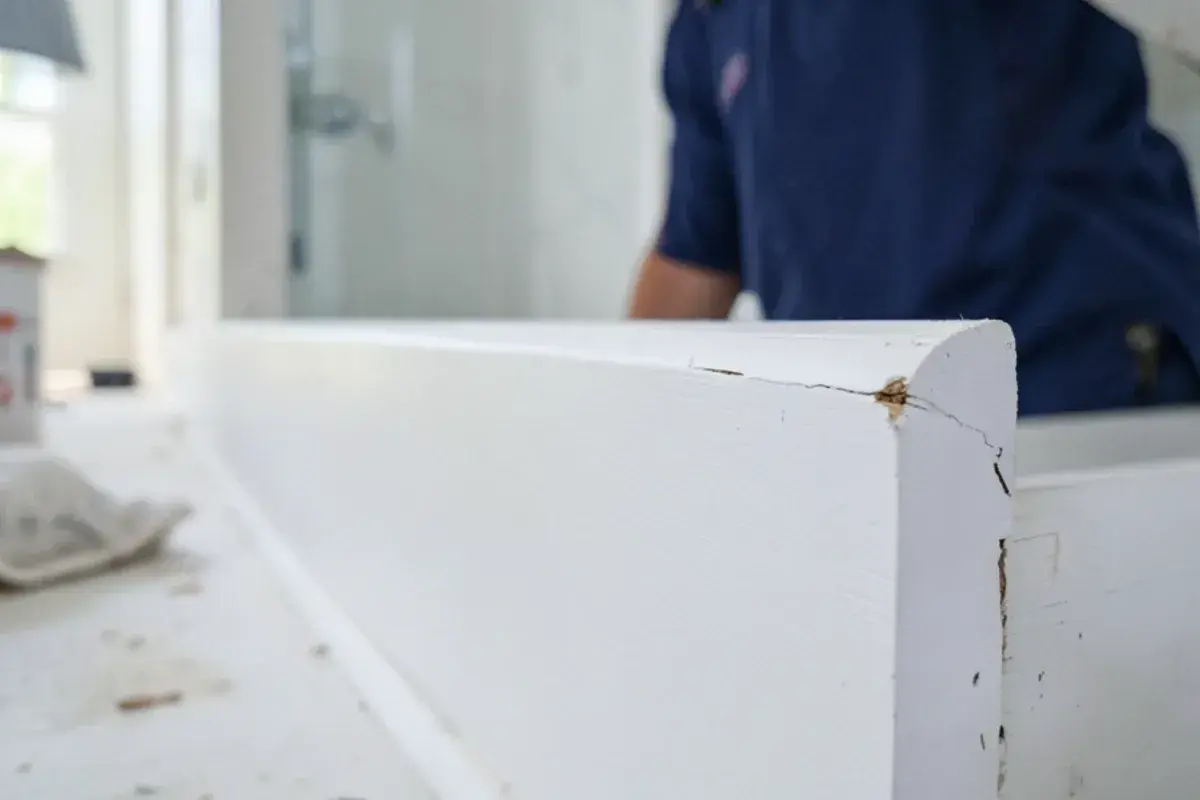
- A baseboard that swells, splits or pulls from the wall.
- Dark specks or staining along a seam or corner.
- A musty smell with no source you can find.
- Flooring that cups or lifts at the wall.
- A water bill or meter that does not add up.
EPA's list of hidden spots includes the back of drywall, wallpaper and paneling, plus damp areas behind walls. So the surface you see may be the last thing to change, and the wall may have been wet for some time before any of this appears.
Something off about that wall? Call us to measure it
Open 24 hours for emergencies. Non-emergency calls are best between 7am and 7pm.
- 5.0 on Google, 8 reviews
- Family owned since 2020
- Calls go straight to the owner
- Free assessments and estimates
What does each sign point to?
Work back from the symptom. Water runs down and sideways along framing, so a stain is usually below or downhill of the leak, not level with it. Start your search above where you see the mark.
| What you see | Often points to | Check this first |
|---|---|---|
| Stain high on a wall | Roof, window or upstairs plumbing | Does it change after rain or a shower? |
| Bubbled paint low on a wall | Shower pan, supply line or slab moisture | What sits on the other side of the wall? |
| Swollen baseboard | Water at floor level | Is the floor wet or cupped nearby? |
| Damp around a window corner | Flashing or a failed seal | Does it follow wind-driven rain? |
| Musty closet on an outside wall | Long-term moisture or condensation | Is the air stuck, or the wall wet? |
| Mark near the AC closet | Drain line or sweating duct | Is the drain pan dry? |
Timing is your best clue. A wall that gets worse after rain points outside. One that gets worse after showers or laundry points to plumbing or drains. One that stays the same every day may be a supply line, which runs under pressure all the time.
Which walls deserve the first look?
Walk the house the way water travels, from the highest plumbing down. Hold a flashlight flat against the wall, because raking light shows ripples and bubbles that a ceiling light hides. Lay an open hand on the suspect spot, then compare it with the same wall a few feet away.
- The wall behind the shower or tub, from the room on the other side.
- Any ceiling or wall below an upstairs bath or laundry.
- The wall behind the washer and the one beside the water heater.
- The back panel of sink cabinets, where the pipes come through.
- The base of the wall beside the AC drain pan.
- Window corners on the side of the house that takes the weather.
Walk it again the morning after a hard rain, since a wall that only leaks in storms can look fine a few days later. Around St. Augustine, about 116 rain days a year give you plenty of chances.
What a hardware-store moisture meter can tell you
Use it to compare, not to diagnose. Read a wall you know is dry, then the suspect wall at the same height. A much higher number is worth a call. A low number proves less, because the tip may not reach a wet back side, and metal corner bead, foil backing or salt can push a reading up falsely. Keep the pins away from outlets and switches.
How do you run a two-hour meter test?
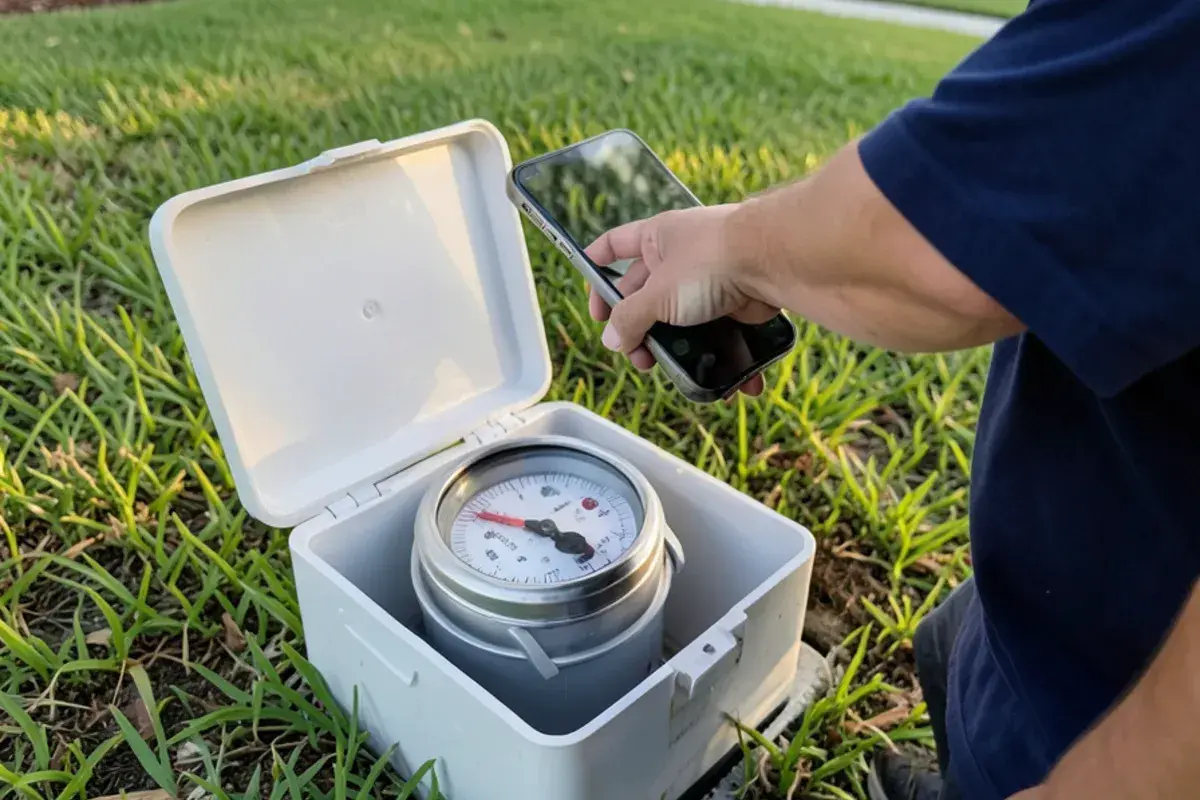
This takes almost no effort, and it splits the problem in half. EPA's WaterSense program suggests checking your water meter before and after a two-hour period with no water use. If the meter moves, you probably have a leak.
- Turn off every fixture and appliance, and any irrigation timer.
- Write down the meter reading, or photograph the dial.
- Use no water at all for two hours.
- Read it again and compare.
- If it moved, close the house valve and check it once more.
If the meter stops with the house valve closed, the leak is inside the house. If it keeps moving, look between the meter and the valve. A meter that does not move does not clear the wall, because roof, window and drain leaks never pass through it.
Rural homes may have no meter at all. Out toward Hastings, a house on a private well has a different tell: listen for the pump kicking on when nothing is running.
Why should you leave the wall closed for now?
Because cutting blind can spread the problem. EPA cautions that disturbing moldy areas may spread mold, and it says protective equipment should be used if mold may become airborne. A hole in the wrong place also tells you very little, since the water may be a stud bay away.
Hold off on these too.
- Do not paint over a stain or spray it with a sealer.
- Do not run a fan at a wall you think may have mold on it.
- Do not push on soft drywall near a light switch or outlet.
In a rental or condo, tell the landlord or association manager when you find the sign, because that wall may not be yours to open.
If water is actively showing, shut off the supply, turn off the breaker for that area if it is safe, and call. Burst pipe water damage inside a wall does not wait for a scheduled visit.
Which signs turn out to be false alarms?
Plenty of marks on a wall have no leak behind them, and we will tell you when yours is one. These are the usual look-alikes.
- Condensation: EPA lists it among common moisture sources, and a cold wall in humid Florida air can grow spots with no pipe nearby. The fix is airflow.
- Nail pops and tape seams: raised lines that follow the framing in a straight pattern and read dry.
- Steam damage: peeling high near a bathroom ceiling, while the wall below stays firm.
- A repaired old leak: a ring that never changes and reads dry after rain.
- White powder on block or a slab edge: salts left as moisture moved through masonry. That is rarely a pipe, but the wall is still taking on water.
A dry reading has limits. It clears that spot on that day, and a leak that runs only in storms or with one fixture can read dry in between. So we note the weather and recent water use beside every reading, and we tell you when a second visit after rain would answer the question better than opening the wall.
How we trace water behind a wall
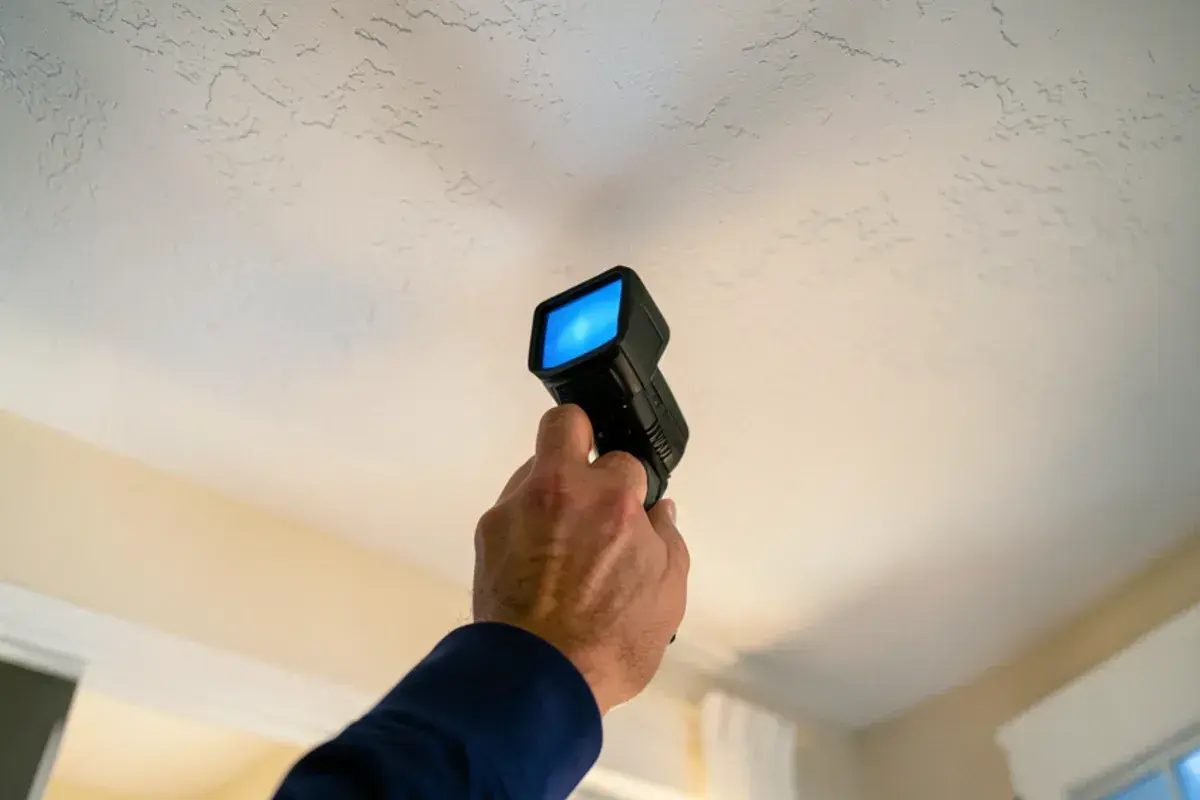
We work from the outside in, and we keep the wall closed as long as we can. Moisture meters and thermal imaging tell us most of what we need before a saw comes out. Here is the order.
- Listen to what changed, when it started and what makes it worse.
- Scan the wall and the rooms around it with thermal imaging.
- Confirm with moisture meters, and mark readings on a map.
- Check what is on the other side, above and below.
- Open the wall only where the readings say to, with containment if needed.
If the wall behind a bath or shower has growth, our bathroom and wall mold page explains how we handle it. If you want to understand the moisture map first, see mold inspection. For sampling or a formal assessment, use an independent licensed mold assessor, separate from whoever would remediate.
Call now, call this week or keep watching?
Sort what you found into one of three groups, and let the worst sign decide.
- Call now: moving water, soft drywall, a wet wall near an outlet or any sewage smell.
- Call this week: two signs together, a stain that grew, or a meter that moved with everything off.
- Keep watching: one dry, unchanged old stain. Recheck it after the next hard rain.
A plumber fixes the pipe. We find out where the water went and dry it out. If something about a wall has been bothering you, trust that and call us. A free assessment with a moisture meter can answer in one visit what weeks of watching a stain cannot.
Frequently asked questions
I only have a musty smell and nothing to see. Is that enough to call?
Yes. EPA says to suspect hidden mold when a building smells moldy and you cannot see the source, and it treats damp or musty odors as a sign that water is or was present. Note which room is strongest and when it is worse, such as after rain or a shower. That detail helps narrow it down before anyone puts a meter on the wall.
Can a thermal camera see water through a wall?
Not directly. A thermal camera shows surface temperature, and wet drywall often reads cooler, so it points to places worth checking. It can also be fooled by insulation gaps, air leaks or a recent AC cycle, which is why we confirm with a moisture meter. A scan that shows nothing during dry weather does not clear a wall that only leaks in rain.
An old stain has been there for years. Do I need to worry about it?
Mark it and watch it. Draw a light pencil line around the edge, and take a dated photo. If it grows, darkens or feels damp after rain, the source is still active. A stain that stays the same may be from a problem already fixed, but a moisture reading settles it. Do not paint over one until you know, since that hides your only evidence.
Musty smell or soft wall? Call for a free assessment
Open 24 hours for emergencies. Non-emergency calls are best between 7am and 7pm.
- 5.0 on Google, 8 reviews
- Family owned since 2020
- Calls go straight to the owner
- Free assessments and estimates
1 Call Restoration, Saint Augustine, FL. (208) 464-4194.
Related services: Bathroom and Wall Mold, Mold Inspection and Assessment, Burst Pipe Water Damage. Serving Hastings and the rest of our service area.