

Is It Surface Mildew or Mold Behind the Wall?
Start with what you can see and how it behaves. The table covers the usual patterns.
| What you see | Likely cause | Next step |
|---|---|---|
| Spots on grout or caulk that wipe off | Surface growth, poor ventilation | Clean, then improve airflow |
| Spots that return within weeks | Damp caulk or water behind it | Meter the wall |
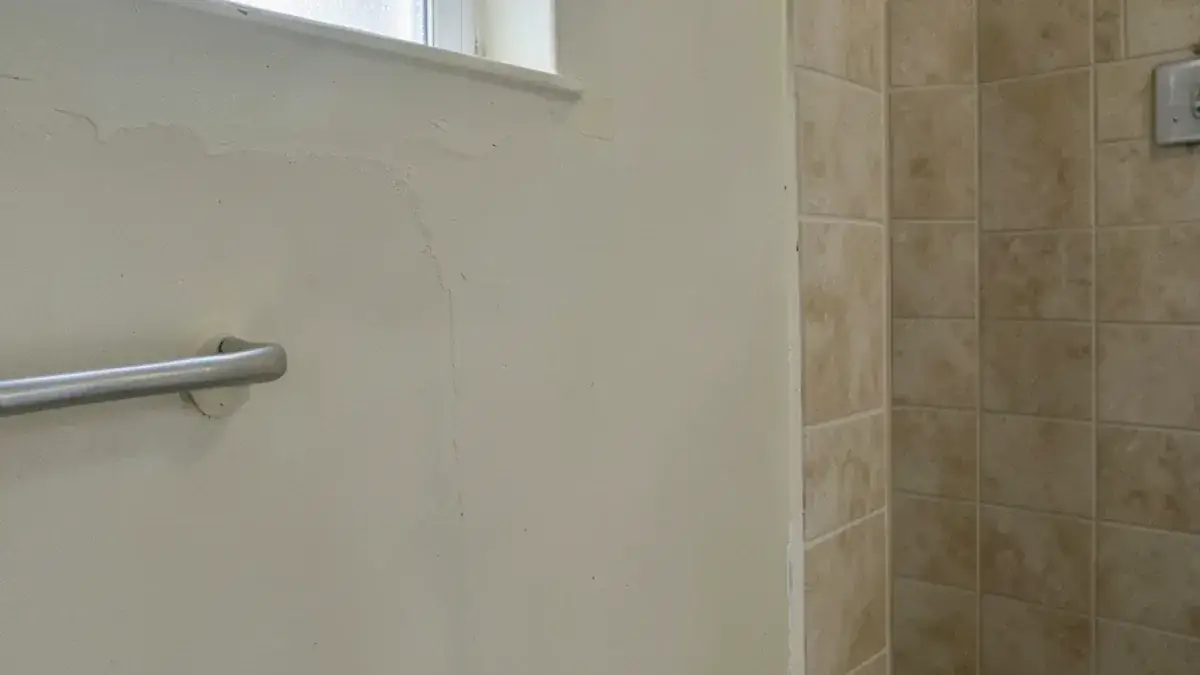
| Bubbling paint low on a wall | Water coming up or across | Check nearby plumbing |
| Stained or soft baseboard | Leak at floor level | Pull the baseboard |
| Loose tile or soft shower wall | Water behind the tile | Stop using the shower, call |
| Growth on a wall behind furniture | Condensation on a cold surface | Add airflow, meter to confirm |
Some signs point past the surface. Tile that sounds hollow or flexes under your thumb has often lost its bond to the board behind it. A musty smell that survives cleaning, or growth confined to the lowest grout lines, suggests water working in from behind.
If the wall reads dry and the mold wipes away, you may not need us at all. We will tell you that.
Why Bathrooms and Outside Walls Stay Wet in Northeast Florida
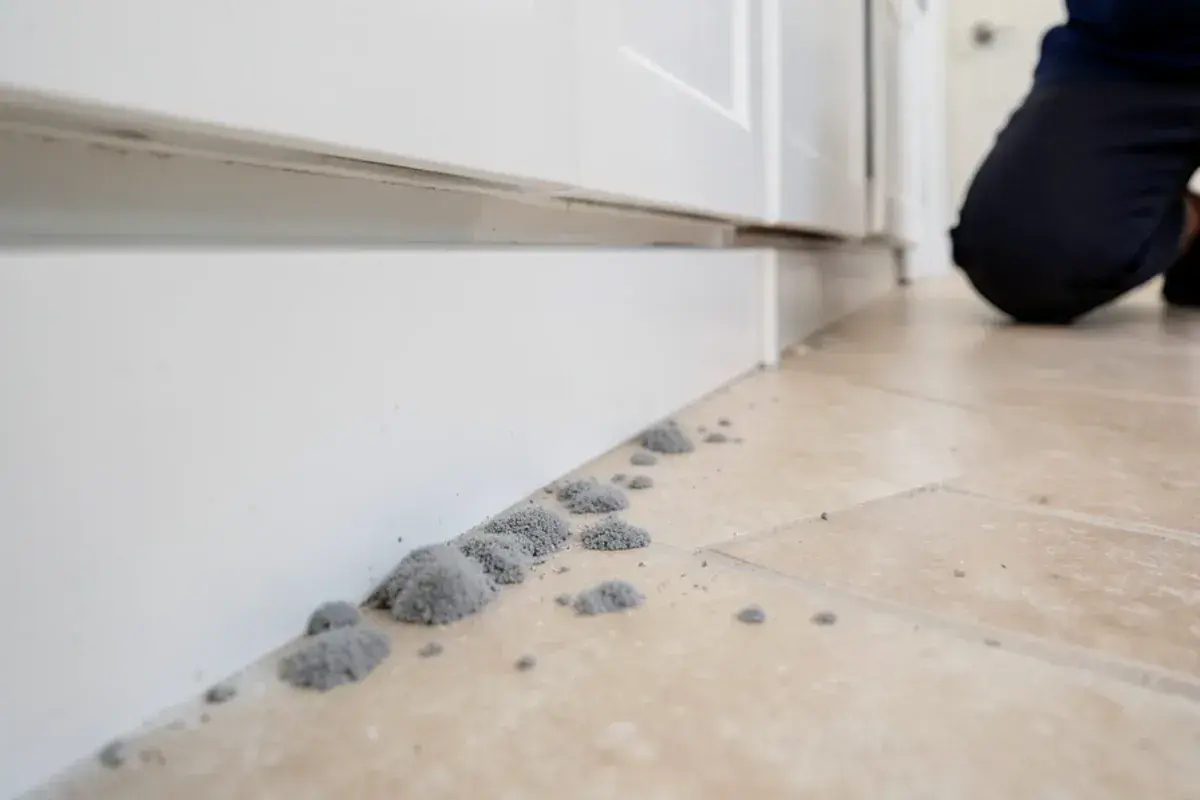
Bathrooms add steam to air that is already humid, and fans in many older homes are undersized or ignored. In a place with about 116 rain days a year, the room may never fully dry out between showers in summer. August is the hardest month, with about 7.4 inches of rain keeping the outdoor air wet.
The hidden causes are often more important:
- Pinhole leaks and supply lines inside the wall
- Shower pan failure under tile
- Failed caulk at the tub or window
- Rain getting past stucco or window lines
- AC-cooled walls meeting humid air
Older homes add their own quirks. In 1970s block homes, drywall sits on furring strips over the block, leaving a gap where moisture can travel. EPA warns that vinyl wallpaper and wood paneling can trap moisture, which makes older bathrooms and hallways worth a closer look.
What You Can Safely Clean Yourself
Small surface patches on tile and grout are usually a homeowner job. EPA says patches under about 10 square feet can usually be handled without hiring anyone, using detergent and water on hard surfaces.
Dry the area fully, and open a window or run the fan. Never mix bleach with ammonia products, which EPA warns can produce toxic fumes. Leave it alone and call if the drywall is soft, if the growth runs behind a finish, or if anyone in the home has asthma or a mold allergy, since CDC notes they may react more strongly.
Do not paint or caulk over it. That only hides the wet spot and makes the next repair larger.
How We Open a Wall Without Wrecking the Room
We open as little as possible, in the cheapest place possible, after we know where to cut.
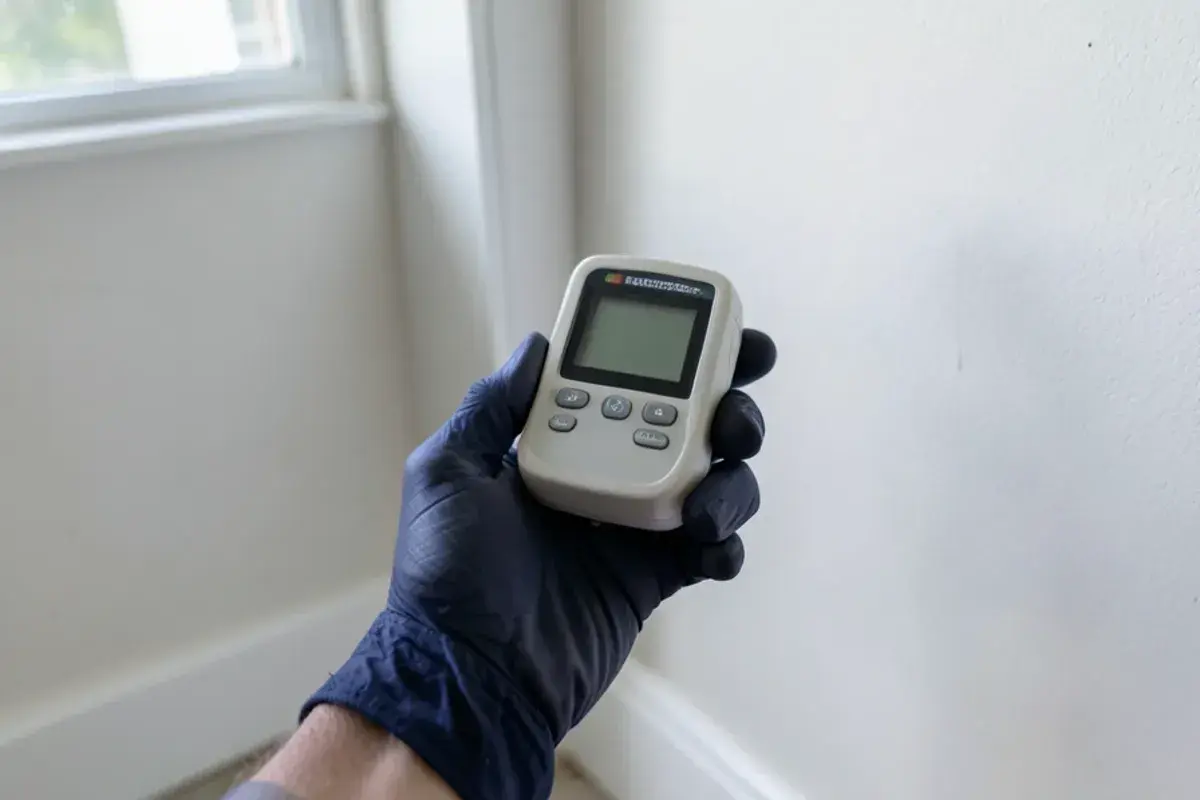
- Read the wall. Moisture meters and thermal imaging locate moisture before any cutting.
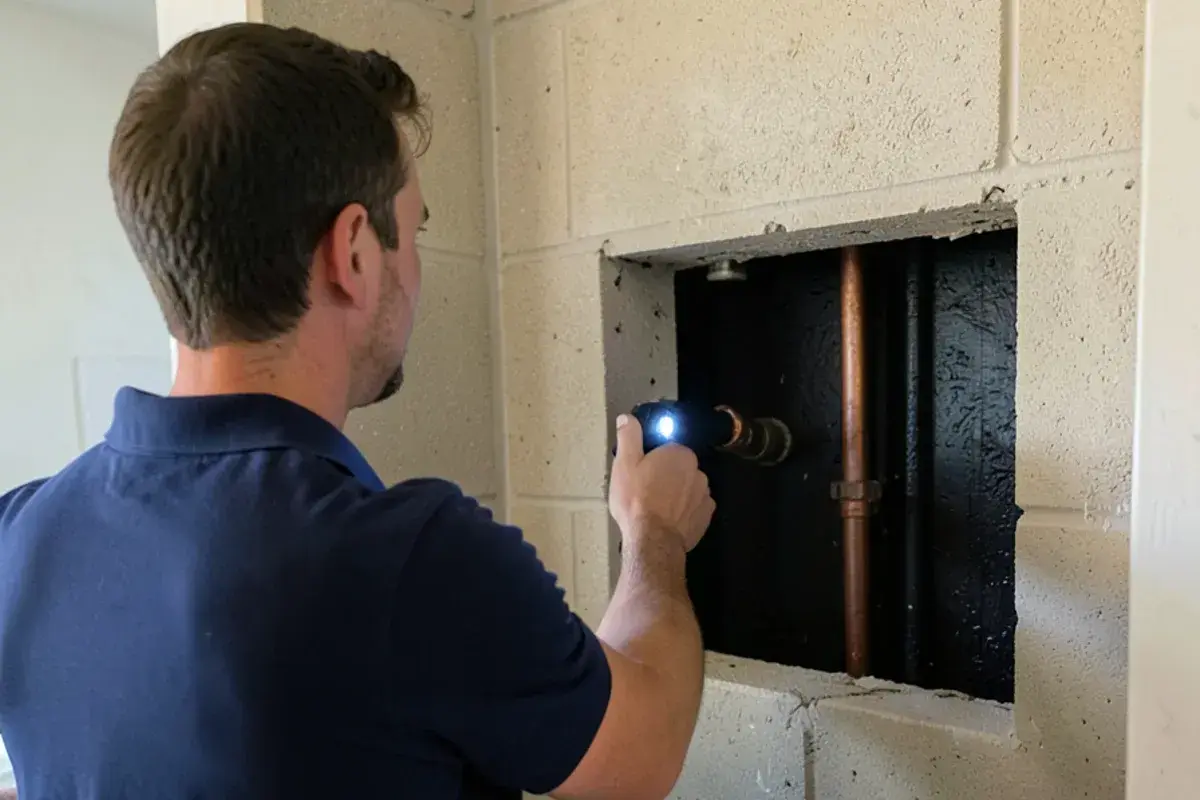
- Pick the access point and photograph it. A closet or hallway side often saves your tile, and conditions are recorded before demolition, for you and your records.
- Contain the room. Plastic and a HEPA air scrubber protect the rest of the house.
- Cut and inspect. We remove the baseboard or a section of drywall and check the cavity.
- Hand off the leak. A plumber repairs the source while the wall is open.
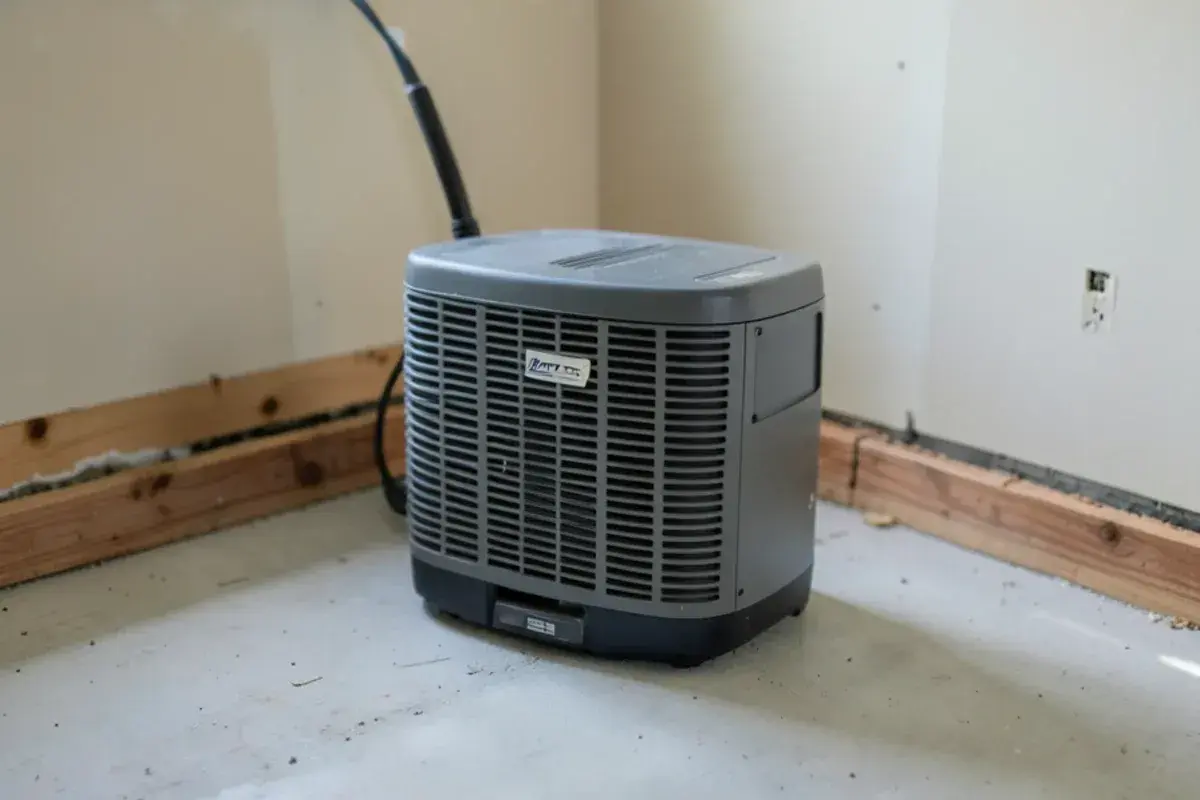
- Remove and dry. Affected board and insulation come out, then air movers and an LGR dehumidifier bring the studs to the dry standard.
Mold back on the same wall? Find out what is behind it.
Open 24 hours for emergencies. Non-emergency calls are best between 7am and 7pm.
- 5.0 on Google, 8 reviews
- Family owned since 2020
- Calls go straight to the owner
- Free assessments and estimates
Request a free estimate
Not an emergency? Send the details and we will call you back. If water is still moving, call instead.
Mold Behind Tile and Drywall: What Has to Come Out
Drywall with growth goes. EPA notes that gypsum board can be penetrated by mold and is hard to clean fully, so we cut past the affected area rather than scrub it.
Tile is harder to call. Tile on cement board may survive if the wet area can be reached from behind, while tile on greenboard or a failed shower pan often means the whole shower needs replacing. You see the trade-off in writing: saving the tile versus a repair that cannot be fully checked.
Studs and block usually stay. We clean them, dry them and apply antimicrobial where needed.
What a Wall Mold Job Covers
A job covers the water source, the visible growth and the wall it grew on. We do not sell lab testing or formal mold assessment on a job we would remediate. If you want sampling, it comes from an independent licensed mold assessor. Bigger losses follow our mold remediation process.
- Meter and thermal survey of the wall and the rooms that share it
- Photos before demolition and a written scope before heavy work
- Containment and a HEPA air scrubber while the wall is open
- Removal of affected drywall, baseboard and insulation
- Cleaning and drying of studs and block
- Put-back planning once the wall reads dry
Florida Rules on Mold Work and Plumbing Permits
Florida draws its line at 10 square feet. Under F.S. 468.8411, removing or treating more than that is mold remediation, and DBPR licenses it. Ask any company for its license number and check it on the DBPR site, ours included. Under F.S. 468.8419, one company may not assess and remediate a structure within 12 months, with an exception for certified Division I contractors. We use S520 as the reference standard for that work. It is an industry standard, not a law.
Permits follow the plumbing. The City of St. Augustine says plumbing work still needs a permit under its under-$7,500 single-family exemption. EPA also requires lead-safe certification for paid work that disturbs paint in housing built before 1978.
How Bathroom and Wall Mold Work Is Priced
Tile, plumbing and finish matching move the price more than the size of the stain.
- Whether the wall opens from the tiled side or the back side
- How far growth runs along studs and insulation
- Vanity, tub or cabinet removal for access
- Containment and air filtration
- Wall coverings, since vinyl wallpaper or paneling has to come off before we can read behind it
- Put-back of drywall and paint
St. Augustine homes add their own variables. A block home has that furring gap to trace, so the opening can run longer than the stain. In a pre-1978 home, lead-safe practices add steps once paint gets disturbed. Time wet matters too: a leak found this week usually takes less board out than one that fed a wall through a wet summer.
The estimate is free and it is itemized, so you can see what each part of the job costs. Plumbing is normally a separate price from the plumber.
How Do You Stop Bathroom Mold From Returning?
Keep the room dry after every shower. Run the fan during the shower and for a while afterward, wipe down glass and tile if you can, and leave the door open when you finish.
Other habits that help:
- Replace cracked caulk before it fails
- Check under sinks when you clean them
- Pull furniture a few inches off outside walls
- Keep indoor humidity under 60 percent, as EPA suggests
Why Call a Family Company for a Bathroom Problem
Small jobs still get the owner. Your call goes to Dal Beggs, who runs the company with his son, and there is no sales script, just a look at the wall, a reading and an honest estimate. Call any time if water is moving through a wall.
We serve St. Augustine Shores, where homes run from 1972 builds to new infill, and go south to Palm Coast and north to Fruit Cove. If you are not sure whether the problem is a leak at all, our mold inspection page explains what a visit covers.
What customers say
5.0 stars on Google from 8 reviews. Quoted as written.
“Very impressive service. Dal and his team responded to our call immediately and were out the same day to begin the remediation process. Would highly recommend 1Call Restoration.”
“I work with these guys all of the time. They are a very ethical group, really good guys. Call Dal for water damage restoration or mold clean up.”
“I needed a second opinion on my water damage cleanup but about 5 minutes after Dal showed up I realized I should have contacted 1 Call FIRST. They immediately got to work drying out my house and explained everything so well which helped relieve so much of the anxiety I was feeling. The communication and work was all top notch. HIGHLY RECOMMEND!”
Frequently asked questions
Why does mold keep coming back on my shower caulk?
Usually because the caulk stays damp, or water has got behind it. EPA notes showers are hard to keep fully mold free and suggests more ventilation and more frequent cleaning. If new caulk darkens within weeks, or the tile feels loose, have the wall checked with a moisture meter. A hidden shower leak needs a plumber, not more caulk.
Can I paint over mold on a bathroom wall?
No. EPA says not to paint or caulk over moldy surfaces, because paint on top of mold is likely to peel and hides the problem. Clean the surface, dry it completely, and find out why it was wet. Mold-resistant paint helps on a clean, dry wall. It does not treat growth that is already there.
How do you check behind tile without tearing it out?
We start from the outside of the wall. Thermal imaging shows temperature patterns across the tile, and a moisture meter reads the wall from the far side, such as a closet or hallway. If the readings point to a wet cavity, we open the least expensive surface first, which is often the drywall on the back side.
Is mold on a bedroom wall a sign of a leak?
Not always. Growth on an outside wall behind a dresser can come from condensation, since EPA notes moisture collects on cold surfaces with poor airflow. A leak usually shows up near plumbing or window lines and reads wet deep in the wall. A meter separates the two quickly, and the fix is very different for each.
Who fixes the plumbing leak behind the wall?
A licensed plumber fixes the leak, and that work comes before any mold cleanup closes the wall. The City of St. Augustine notes plumbing work still needs a permit even under the under-$7,500 single-family exemption. We open what is needed for access, coordinate timing, and confirm the area is dry before the put-back begins.
Stop cleaning the same spot. Call for a free estimate.
Open 24 hours for emergencies. Non-emergency calls are best between 7am and 7pm.
- 5.0 on Google, 8 reviews
- Family owned since 2020
- Calls go straight to the owner
- Free assessments and estimates
1 Call Restoration, Saint Augustine, FL. (208) 464-4194.
Related services
Worth reading
Where we handle bathroom and wall mold
See all of our service areas.