
Problem solving
Can Wet Hardwood Floors Be Saved?
By Dal Beggs, founder and owner of 1 Call Restoration. Published November 1, 2026. Updated November 1, 2026.
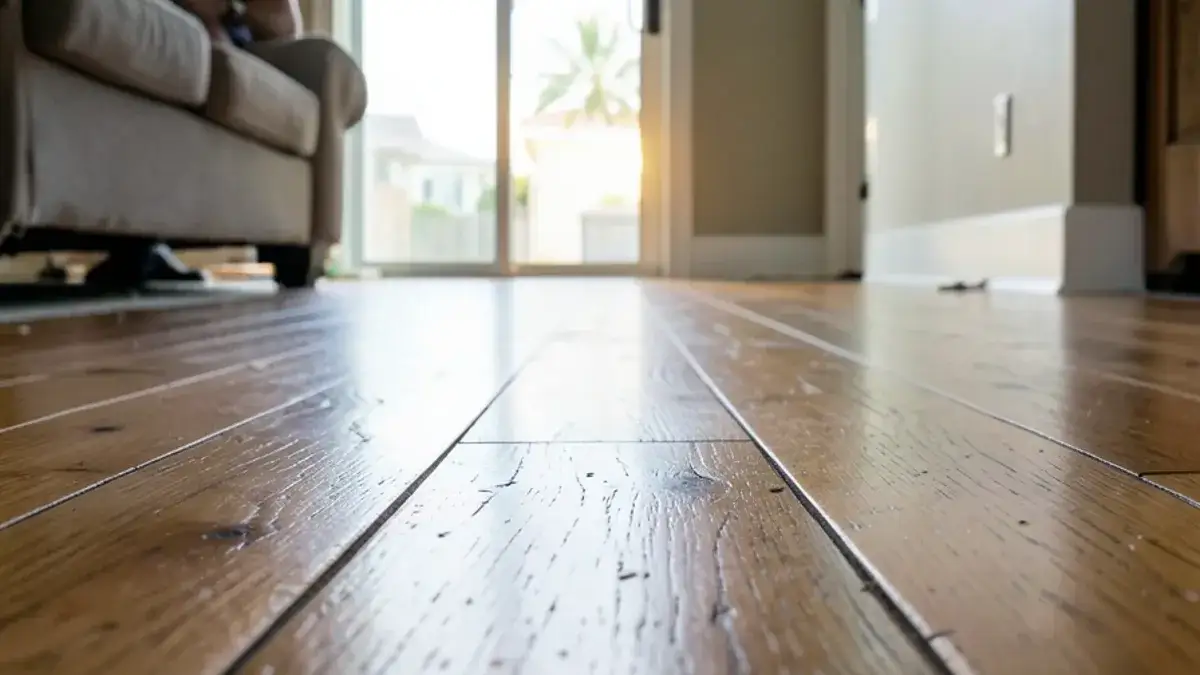
Water damaged hardwood can often be saved when the water was clean, the floor was caught early and the subfloor below can be dried. It usually cannot be saved after sewage or flood water, or once boards have lifted free. The floor also needs patience, because sanding before it finishes moving is the most common way to lose it.
Can wet hardwood floors really be saved?
Often, yes, and the first hour shapes the answer. EPA's guidance for wet wood is direct: remove moisture immediately and dry with dehumidifiers, gentle heat and fans. It also says the subfloor under a floor must be dried too. Solid wood is a forgiving material when it gets that help.
What it does not forgive is two things. Contaminated water, and impatience. Sewage and flood water are Category 3, and porous materials they soak into usually come out. Everything else depends on how the floor behaves as it dries, which you can only learn by measuring.
Wet wood floor? Call before the boards take a set
Open 24 hours for emergencies. Non-emergency calls are best between 7am and 7pm.
- 5.0 on Google, 8 reviews
- Family owned since 2020
- Calls go straight to the owner
- Free assessments and estimates
Which four questions decide it?
Ask these in order, because a bad answer at the top ends the discussion. Our hardwood floor water damage work runs through the same list on every visit.
| Question | Points toward saving | Points toward replacing |
|---|---|---|
| What kind of water was it? | Clean supply water | Sewage or flood water |
| How long was it wet? | Hours, with drying started fast | Days or weeks unnoticed |
| What is underneath? | Subfloor that can be dried | Soaked subfloor or wet slab with no way to dry it |
| What is the floor doing? | Mild, even cupping | Boards lifted loose, or black staining |
Floor type matters too. Solid boards have thickness to spare for a later sand. Engineered flooring has a limited wear layer and a layered core that can come apart, so it gets a more careful call. Laminate is a different material altogether, and its core usually does not recover.
Age and rarity count. If the floor is original to an older house, or wide boards you could not easily match, it deserves more time than a stock floor you could replace next week.
Why does early sanding ruin a floor that could be saved?
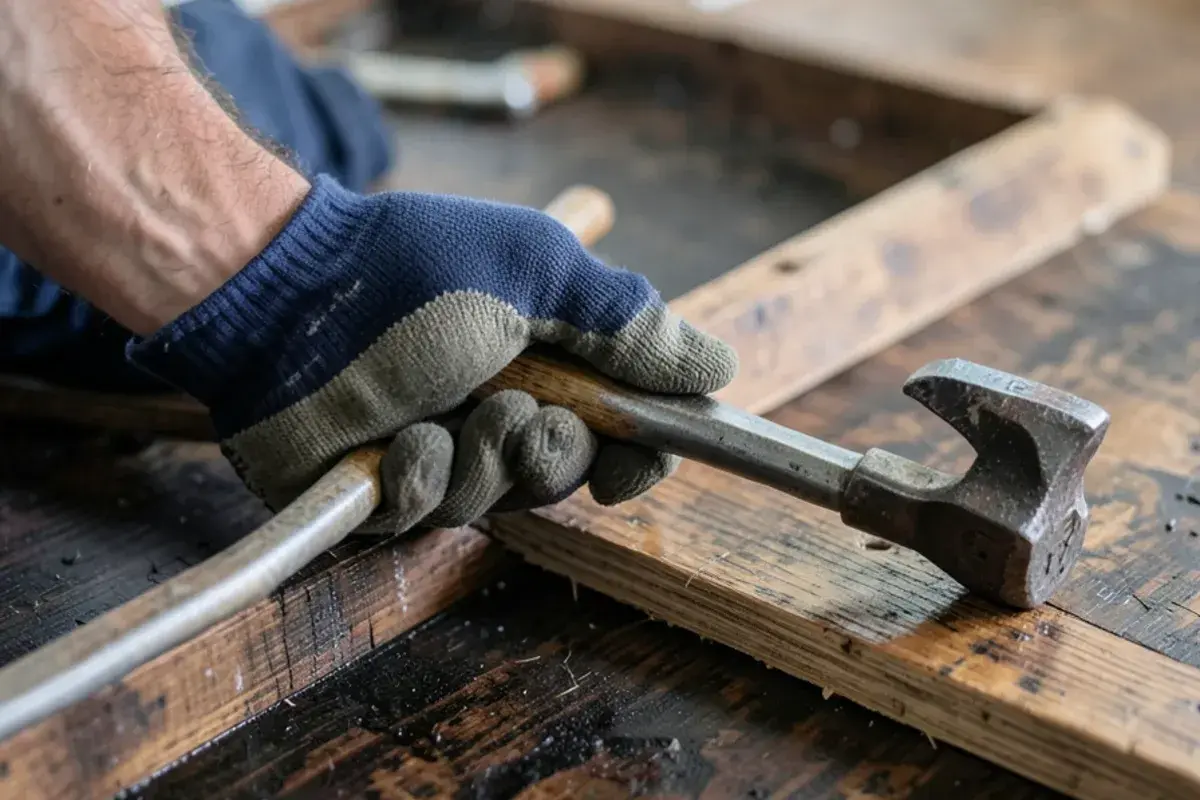
Because a cupped board is still moving. NOFMA, the flooring manufacturers' group, explains that cupping comes from one side of a board gaining or losing moisture faster than the other. The wet underside swells, and the edges rise.
Sand it then and you cut off those high edges while the board is still swollen. When the board dries and flattens, those edges are now thin. They sink below the center, and the floor comes out crowned. A homeowner who sanded early has paid for a refinish and a problem, in that order.
So the risky day is the day it looks close enough. Boards can settle a long way on their own as moisture leaves, and NOFMA also notes that some cupping is normal, especially in wide plain-sawn planks. Most of what looks like damage in the first week is not yet final.
Rules for a floor that is still wet
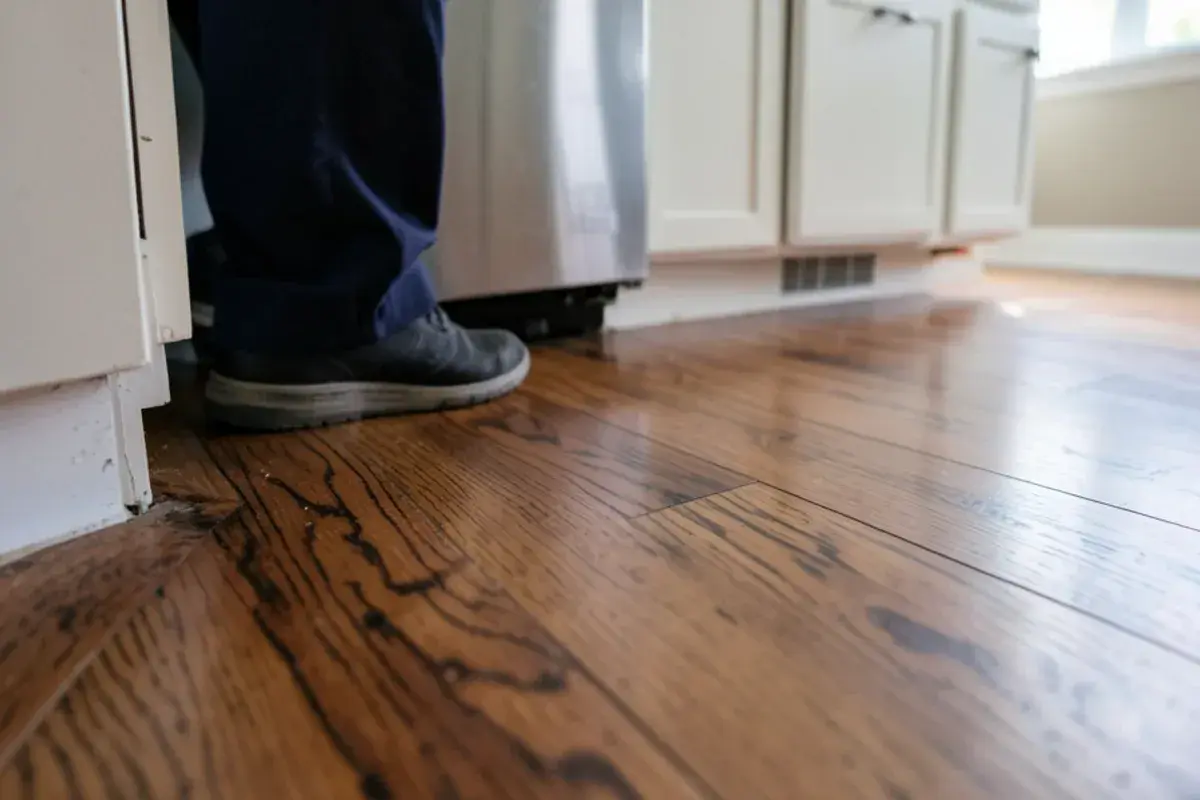
Keep it simple until the floor has been read. Each of these rules protects the option of saving it. Do the first two yourself if you can.
- Stop the source and pull up wet rugs, pads and anything sitting on the wood.
- Wipe up surface water, then leave the room closed.
- Skip the sander, the nail gun and the fresh coat of finish.
- Keep heat gentle, since fast drying can split boards.
- Dry from below as well as above, or the underside keeps feeding the cup.
- Read boards in the wet area against boards outside it, daily.
We run structural drying on the room and the subfloor together, with air movers and an LGR dehumidifier. In a home like the ones around World Golf Village, where many units share walls and sit over someone else's ceiling, we also check where the water went next. It rarely stops at the edge of the floor.
Our dry standard for wood is the same as for any other material: the reading of unaffected boards in the same home. Floors in humid Florida air do not sit at the numbers you may see from colder regions, so we compare with your own floor instead of a chart.
How do you know the floor has stopped moving?
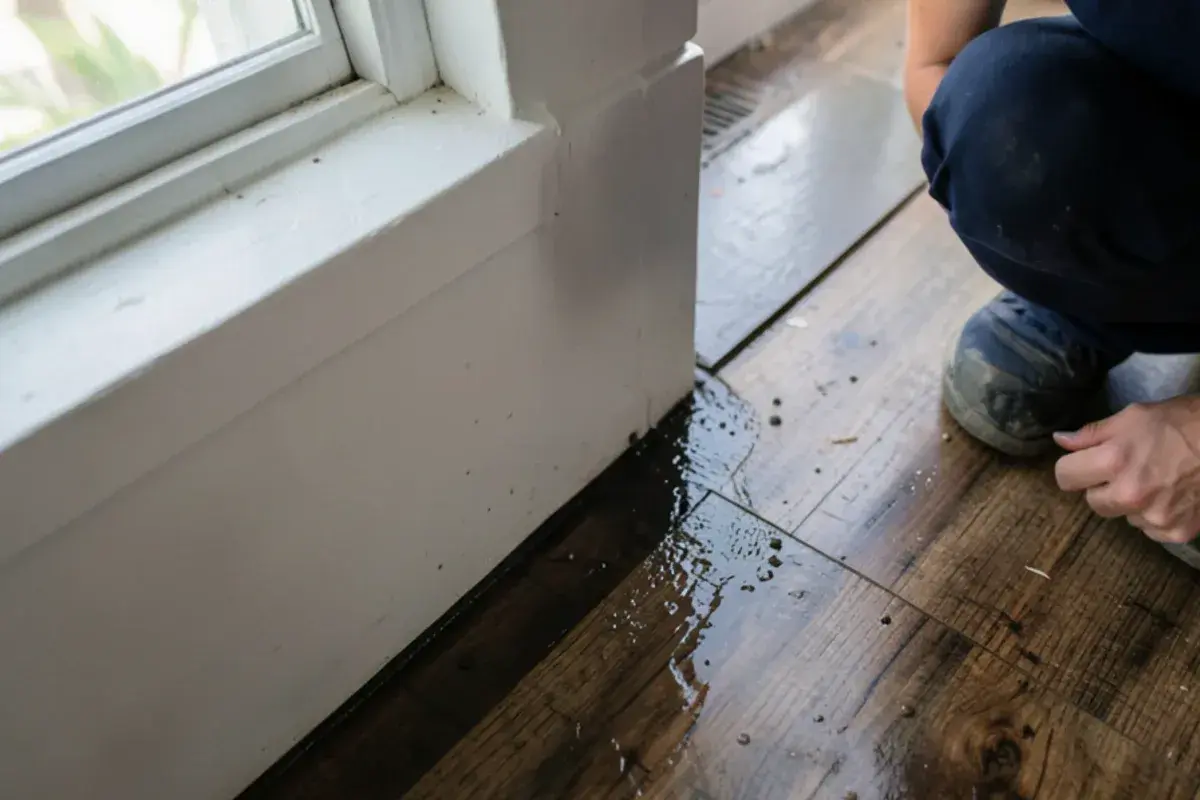
Four checks have to agree before a sander comes near the room. One good morning is not enough, because a board can read well while the subfloor under it is still wet.
- Boards in the wet area match boards the water never reached.
- The subfloor or slab has come down to its own dry reference.
- Those numbers hold across repeated visits and do not just dip once.
- A straightedge across the cupped boards shows the same gap at the same marks a week apart.
Take the last reading on the room's normal air. Drying equipment can pull a room drier than the house will sit in daily life, so a floor read under a dehumidifier may shift once the machines leave and the AC takes over. That wait costs time, and it is what protects the refinish.
Tracking it yourself between visits
Mark three spots on a sketch of the room, including the worst cup. Photograph each one from the same place with low light from the side, once a week. The series shows you which way the floor is going, and it gives your finisher something better than a memory.
What if the floor does not come back?
Then you have a clear decision, not a failure. If readings have reached the standard and boards stay badly cupped, sanding and refinishing may be the fix. If they have lifted, split or stained black, some or all of the floor needs replacing.
Dark seams deserve a word of warning. Staining at the joints can stay after a sand, so ask to see a test area before paying to refinish a whole room. Replacing a small section means matching species, width and finish, and that is harder than people expect on an older floor.
If it comes to replacement, flooring replacement covers how the put-back is scoped and sequenced. Keep two or three clean boards from the damaged area. They help match new material later.
A smell after the floor looks fine
Meter a musty floor before anyone refinishes it. Growth can sit on the underside of boards and the top of the subfloor, where nobody looks, and a floor that stayed wet well past the 24 to 48 hour mold window gets checked at a lifted board. A fresh coat of finish hides the question without answering it.
When saving the floor is the wrong call
Saving is not always the better deal. A saved floor costs equipment days, a long wait and usually a sand and refinish, and the room stays out of use throughout. We say so when a stock floor in one room would cost less to replace, or when a rental or move-in date cannot absorb the wait.
The sums flip for a floor that runs through the whole house. Replacing one room there leaves a seam or a color change at the doorway, so time spent drying often buys a better result than new boards.
Three answers settle a wet floor
The choice rests on the water, the subfloor and the boards. Was it clean, can what lies underneath be dried, and have the boards stopped moving? The first two can usually be answered on the first visit. The third belongs to the readings, and no calendar can hurry it.
A wet floor on the first day is the cheapest version of this problem. Call us before the boards take a set. We will meter the wood and the subfloor, tell you what we think can be saved and give you an estimate with no pressure either way.
Frequently asked questions
How long should I wait before sanding a cupped floor?
Until the readings say so, not a set number of weeks. We could not find a public standard that gives a fixed wait, and the right time depends on the wood, the subfloor and the season. The floor is ready when boards match unaffected wood in the same home and the readings hold steady over repeated visits. Boards still moving are not ready for a sander.
Should I lay rugs or heavy furniture on boards to flatten them?
No. Weight does not remove water, and a rug traps moisture against the surface you need to dry from. Pull rugs and pad off the wood, and move furniture that can be moved. Slide foil or plastic under any legs that must stay, so finishes and stains do not transfer to the boards. Keep the floor open so air can reach it evenly.
Does a wet wood floor in a condo change the plan?
It adds people, not physics. Water that reached your subfloor may also be in the ceiling of the unit below, and the wall between units may be wet too. Tell your association manager early, since who handles what depends on your documents and Florida condominium law. We can meter your unit and share what we find, and ownership questions go to the association or your insurer.
Cupped boards? Call for a free assessment before you sand
Open 24 hours for emergencies. Non-emergency calls are best between 7am and 7pm.
- 5.0 on Google, 8 reviews
- Family owned since 2020
- Calls go straight to the owner
- Free assessments and estimates
1 Call Restoration, Saint Augustine, FL. (208) 464-4194.
Related services: Hardwood Floor Water Damage, Flooring Replacement, Structural Drying. Serving World Golf Village and the rest of our service area.