
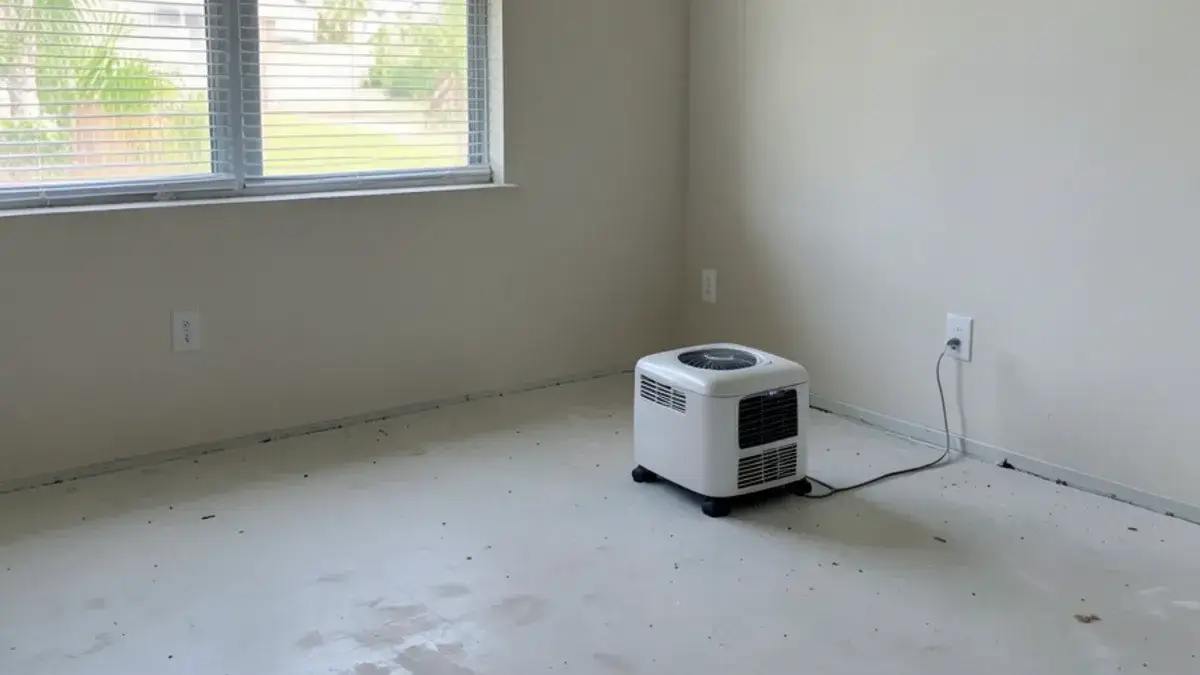
What Is the Dry Standard, and Who Decides We Reached It?
The dry standard is the moisture reading of unaffected materials in your home, and the numbers decide when drying ends. We meter a dry wall and a dry floor on day one, then measure the wet ones against them. When they match, that area is done.
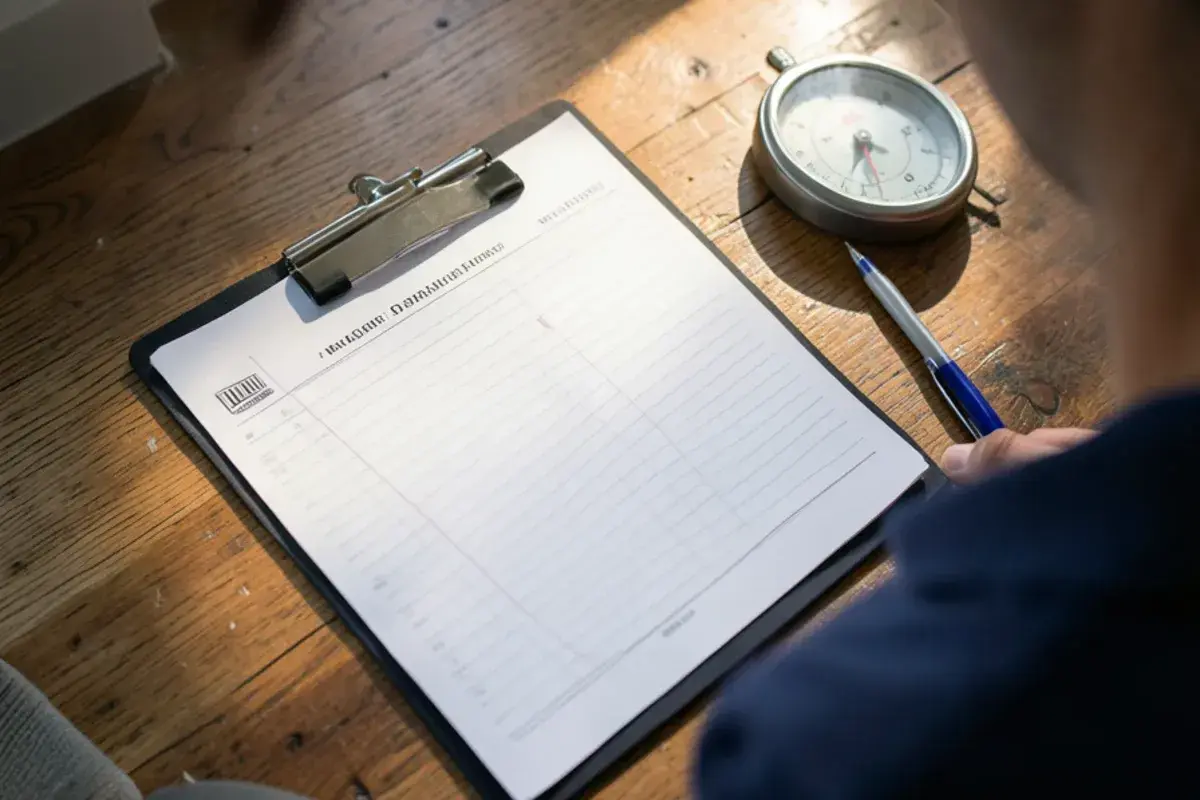
Nobody's opinion finishes the job. You see the same readings we do, on the same marked points, every visit. We dry to the same goal ANSI/IICRC S500 describes. S500 is a consensus standard, not a law.
Here is what you receive from a structural drying job:
- A moisture map of every affected room
- A reference reading from your own unaffected materials
- Daily readings logged on fixed points
- An equipment record showing what ran, where and for how long
- A final log showing each area reached the dry standard
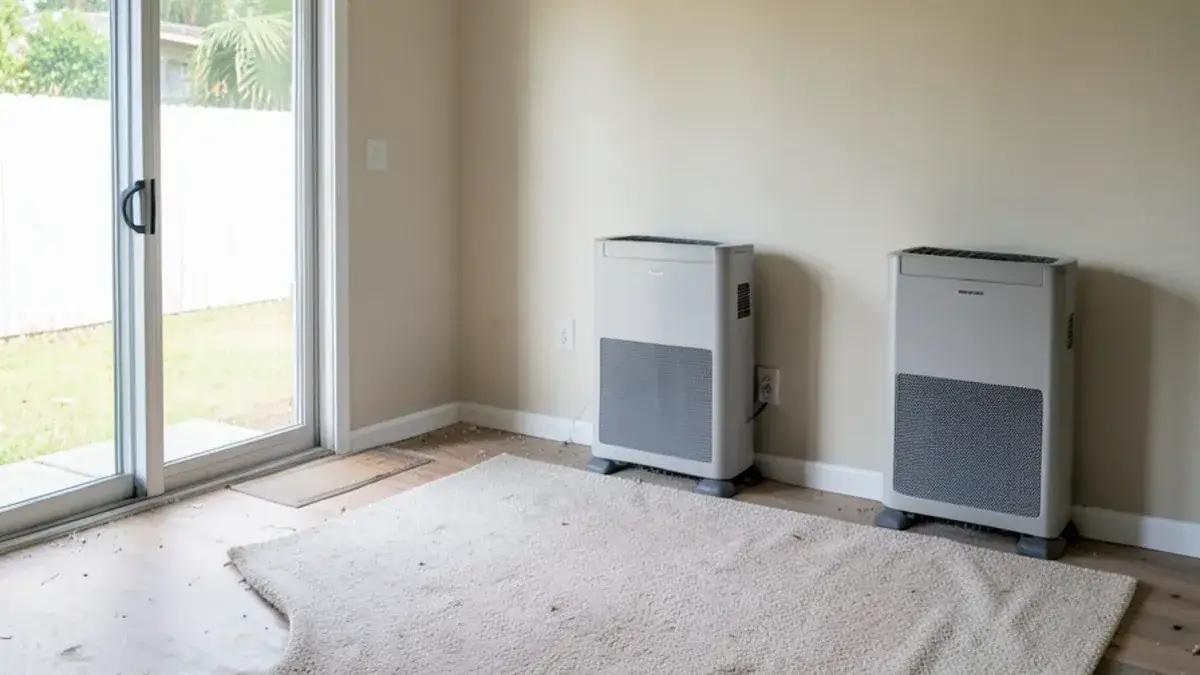
The work behind that paperwork is mostly placement and correction. We set air movers to push moisture off wet surfaces, run LGR dehumidifiers to pull it from the closed room, and add containment when one area has to stay separate. Where a wall cannot dry through its face, a flood cut opens it up. Each visit we adjust the setup to what the readings show.
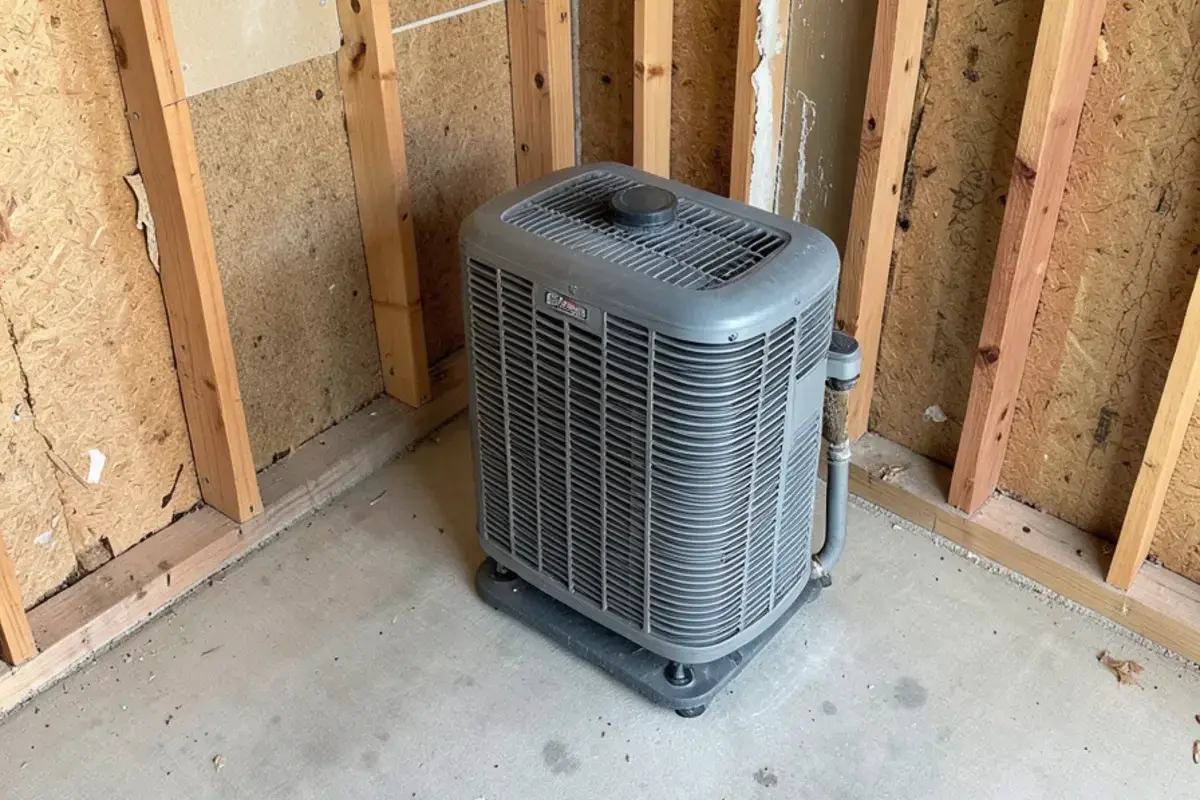
Why Fans Alone Fail in St. Augustine Air
Fans move moisture around and dehumidifiers take it out. In a dry climate you can vent wet air outdoors. Here, with about 50 inches of rain a year and heavy air most of the summer, the air outside is often wetter than the air you are trying to replace.
So we close the space and let the LGR dehumidifier do the removing. LGR means low grain refrigerant, a type of dehumidifier that keeps pulling water from air that a home unit could not touch. Air movers push moisture off the surface and into the air, and then the dehumidifier takes it out.
| Setup | Good for | Limit |
|---|---|---|
| Open windows and box fans | Almost nothing during a Florida summer | Brings wet air in and slows drying |
| Home or rental dehumidifier | A small, clean, open-surface spot | Struggles in cool, damp rooms; no readings |
| Air movers with LGR, closed room | Walls, floors and framing | Noisy, must run continuously |
| Containment with LGR | One wing of a house, or a contaminated area | More setup, more equipment days |
Your air conditioner is not a drying system either. UF/IFAS notes it often does not run long enough to control indoor humidity during rain and humid spells. The EPA's target is indoor relative humidity below 60 percent, ideally 30 to 50 percent, and we watch it alongside the material readings.
Signs a cleanup left water behind
Call for a reading if the floor looks finished but the house does not feel right. These signs often show up days after someone has dried the surface:
- A musty smell in a closet or behind furniture
- Baseboards or trim swelling or pulling away from the wall
- Paint that bubbles low on the wall
- A meter reading high on a wall that feels dry to the touch
Each one points at water held inside the assembly, where room air does not reach it.
How Water Behaves in Each Part of the House
Different materials give up water at different speeds, so one setup never fits every room. This is why we read each material and set equipment around it instead of filling a house with machines.
Drywall
EPA guidance keeps wallboard when the seams hold and nothing has visibly swollen. Otherwise it comes out. Insulation behind it is a separate question, and wet fiberglass or cellulose goes.
Block and slab
Concrete block holds water and releases it slowly. A slab can look dry on top and still feed moisture back up into a baseboard, so we keep reading it after the surface looks fine.
Wood framing and subfloor
Wood dries well when air can reach it. A wet stud behind sealed drywall is a different story, and that is when a flood cut earns its cost.
Plaster and coquina
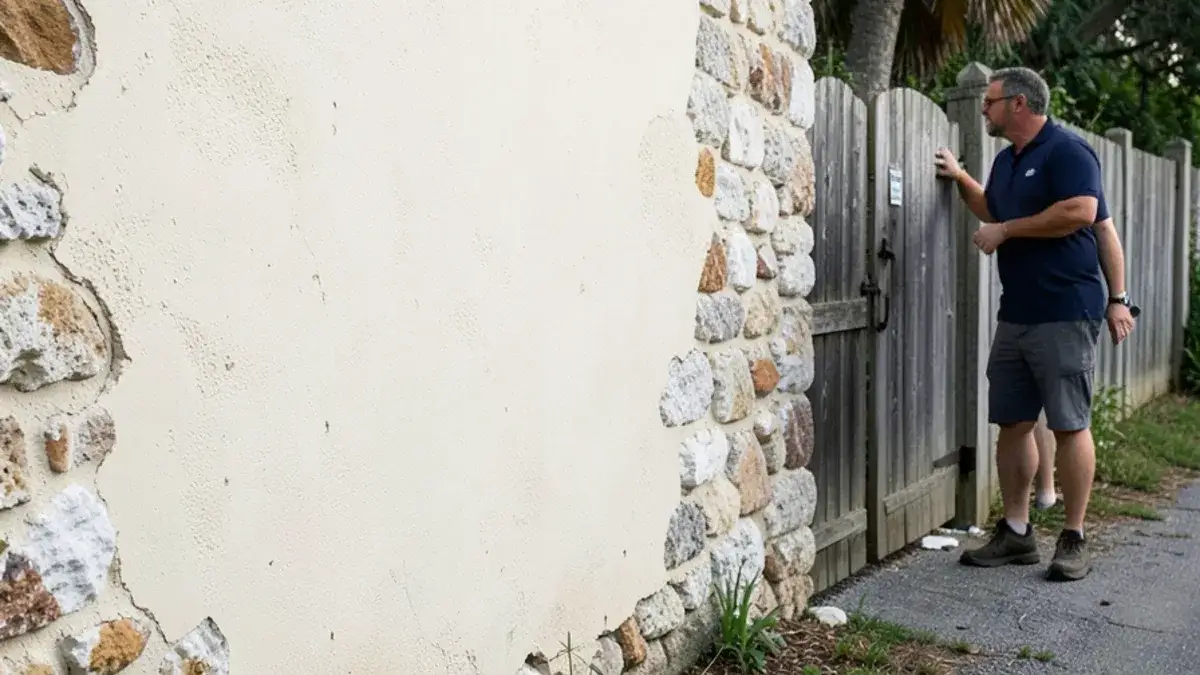
Older walls downtown need patience and their own reference reading. We read them against sound material of the same kind, and we slow the drying rather than rush it.
Walls still reading wet? Get them measured.
Open 24 hours for emergencies. Non-emergency calls are best between 7am and 7pm.
- 5.0 on Google, 8 reviews
- Family owned since 2020
- Calls go straight to the owner
- Free assessments and estimates
Request a free estimate
Not an emergency? Send the details and we will call you back. If water is still moving, call instead.
The Drying Visit, Day by Day
Drying is a process of small corrections, so we keep coming back. Here is how it runs after extraction.
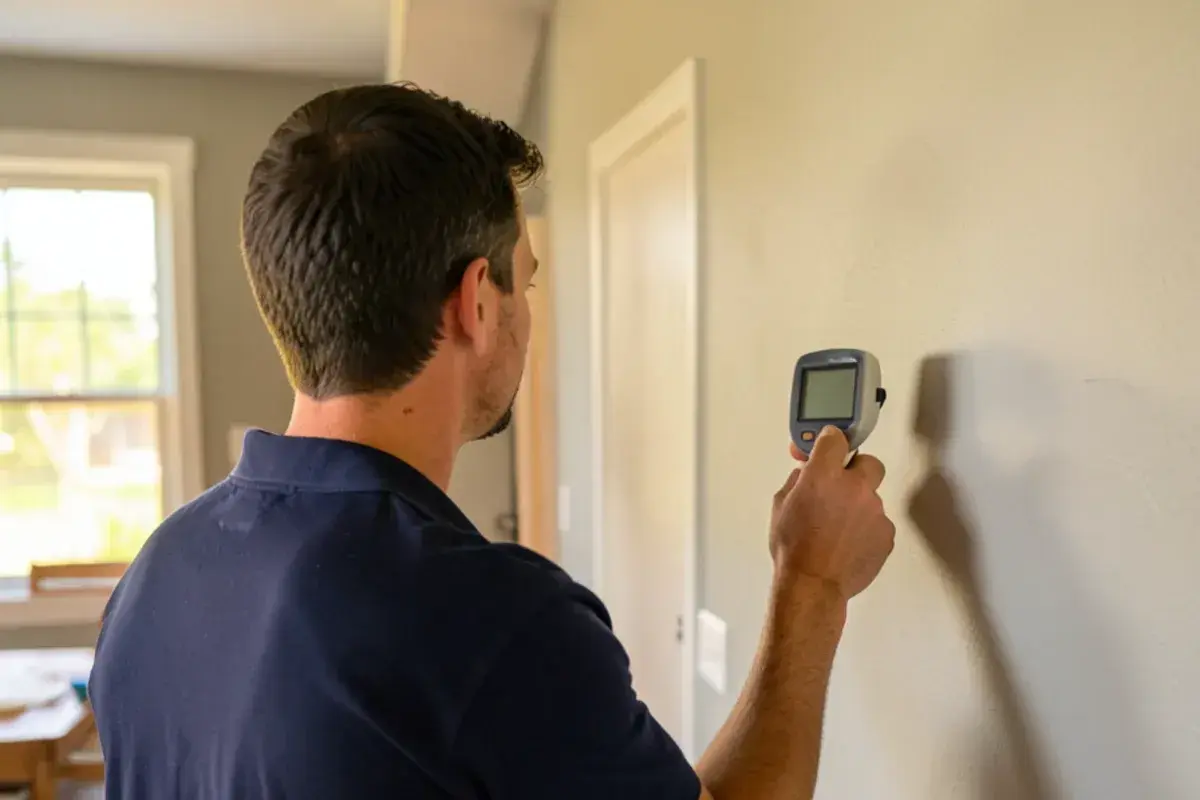
- Take reference readings from unaffected materials, then map the moisture in every affected room with meters and thermal imaging.
- Decide with you what dries in place and what comes out.
- Set containment where it is needed and close off outdoor air.
- Place air movers and LGR dehumidifiers for your layout.
- Return daily to log readings on the same points, moving or removing equipment as each area passes.
- Hand over the final log, then plan the next step.
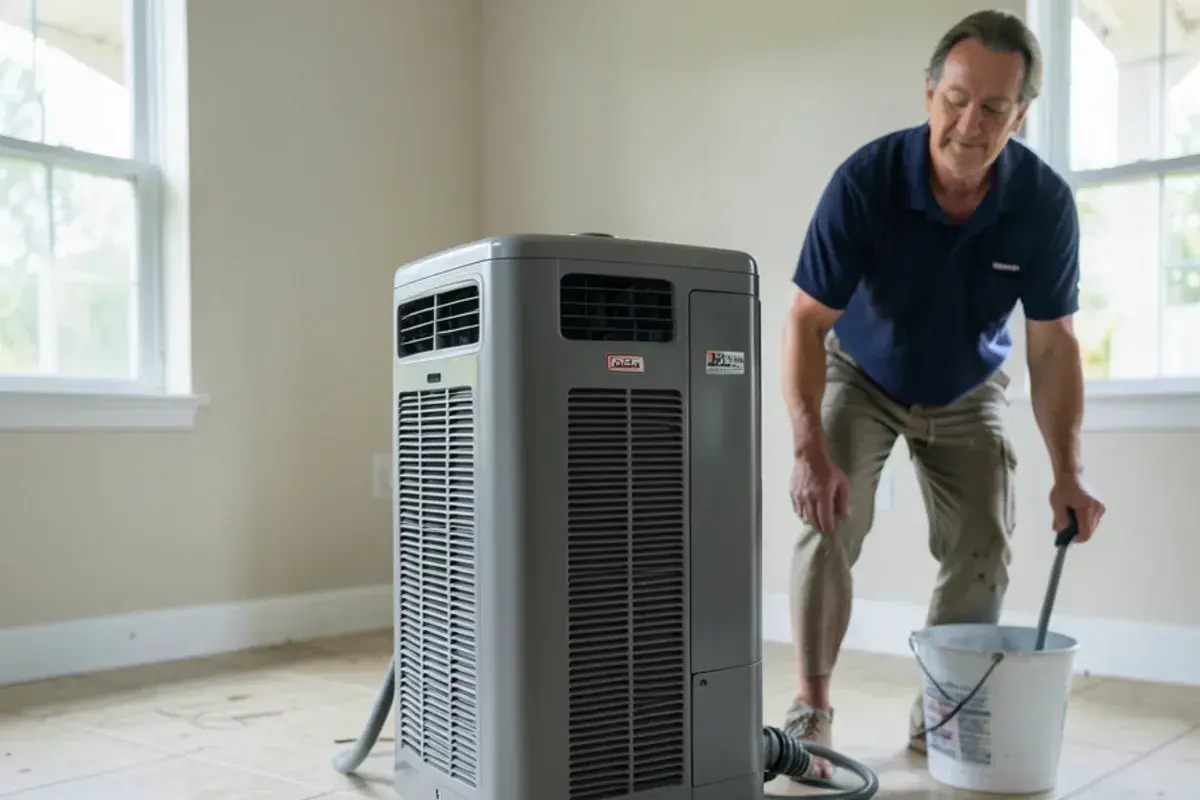
How Long Does Structural Drying Take?
There is no honest day count before the first readings. The time depends on what got wet, how long it stayed wet and how humid that week is. A slab with a thin film of water finishes sooner than a wall cavity soaked for days in August.
Ask us for a projection after the first day of readings, and hold us to explaining any change. The EPA's window for drying wet items is 24 to 48 hours, and it also notes mold may still develop even when drying is on time. If we find growth, we scope what we can see. Remediation beyond 10 square feet is licensed work in Florida, per F.S. 468.8411, and any sampling or formal assessment should come from an independent licensed mold assessor. Our mold after water damage page shows how that path works.
Once the area passes, we scope the put-back, starting with drywall and paint.
Pricing Structural Drying: The Line Items
Equipment days are the main cost, so the honest question is how many machines for how long. Assessments and estimates are free, and your estimate is written so you can compare it line by line.
- Equipment days: each machine, each day it runs
- Zones: one room or a whole wing
- Containment: plastic and setup where needed
- Demolition: flood cuts, removed insulation or trim
- Monitoring: the daily visits and readings
Local conditions change those lines. A block wall or slab gives up water slowly, so it can add equipment days. So can an August week, when the air outside keeps rooms hard to hold dry. Plaster and coquina dry slower by design, because rushing them risks the wall. Ask what each extra day is for, and the readings should answer you.
Does Florida Regulate How Dry Is Dry?
Not by statute that we could find. ANSI/IICRC S500 is the industry's reference and the EPA publishes the humidity target, so ask any crew what goal it dries to and how it proves it.
Florida's rules sit at the edges of the job. The City of St. Augustine's storm recovery guide lists removing wet material as no-permit work and drywall repairs as permit work, and the department has the final say. Outside the city, your county or town building office decides. DBPR licenses mold remediation of more than 10 square feet.
Ask any company for its license number and check it on the DBPR site, ours included.
Why Homeowners Trust Our Drying Numbers
We show the readings. That is the whole approach, and it suits a small family business that wants you able to check the work.
- A family business Dal Beggs started in 2020 and runs with his son
- Readings every visit, shown to you on the same marked points
- We pull equipment when an area passes, rather than letting days add up
- No high-pressure sales: we assess, then give you an estimate
We reach Crescent Beach, St. Augustine Beach and inland World Golf Village, and the same drying approach applies across all six counties we serve. A beachfront home with doors opening to salt air and a tightly sealed inland townhome need different setups, and we plan each one on site.
What customers say
5.0 stars on Google from 8 reviews. Quoted as written.
“I needed a second opinion on my water damage cleanup but about 5 minutes after Dal showed up I realized I should have contacted 1 Call FIRST. They immediately got to work drying out my house and explained everything so well which helped relieve so much of the anxiety I was feeling. The communication and work was all top notch. HIGHLY RECOMMEND!”
“Dal and his son are so compassionate and truly care about the human and do everything in their power to help your house back to normal. They were punctual and even showed back up to the house with any questions etc, I was very pleased with them and would recommend them to anyone who wants someone honest in this industry that unfortunately doesn’t have many honest companies in it. Dal and his crew have a customer life with us anytime we need their services.”
Frequently asked questions
Should I leave the air conditioning on during drying?
Yes on most clean water losses, but follow what we set for your job, because it depends on the water and on the rooms. On a clean water loss the AC usually stays on at a steady setting. On a contaminated loss it may need to be off so air does not carry debris through the ducts. Either way, we keep outside air out so the dehumidifiers are not fighting the Florida humidity.
Can I just rent a dehumidifier and a fan?
Yes, but only for a small clean spot in a room with open surfaces. It cannot tell you when the wall cavity behind it is dry, and that is the risk. Renting a machine buys air movement, not a moisture map. If you try it, get a reading before you close anything up, because trapped water is what costs money later.
How loud is the drying equipment, and can it be turned off at night?
It is about as loud as a few box fans in a hallway, and it needs to run around the clock. Turning it off overnight lets the room climb back toward outdoor humidity, which in St. Augustine undoes part of the day's work. Tell us about bedrooms and sleeping babies, and we can usually place units to cut the noise.
Why did you remove equipment from one room but not another?
Each room is pulled when it hits the dry standard, not when the whole house does. Equipment days are a cost to you, so a machine that has finished its job should not stay. Our daily log shows which spot passed and which did not. You can ask to see the numbers behind any move we make.
Can you dry plaster or coquina walls?
Yes, but we read them differently from drywall. Plaster and coquina hold water in other ways, so a standard meter scale does not translate well. We take a reference reading from the same material in an unaffected part of the home. Older walls also need slower, gentler drying, and a flood cut is rarely the first answer in a historic home.
Dry it to a number you can see on paper.
Open 24 hours for emergencies. Non-emergency calls are best between 7am and 7pm.
- 5.0 on Google, 8 reviews
- Family owned since 2020
- Calls go straight to the owner
- Free assessments and estimates
1 Call Restoration, Saint Augustine, FL. (208) 464-4194.
Related services
Worth reading
Where we handle structural drying
See all of our service areas.