
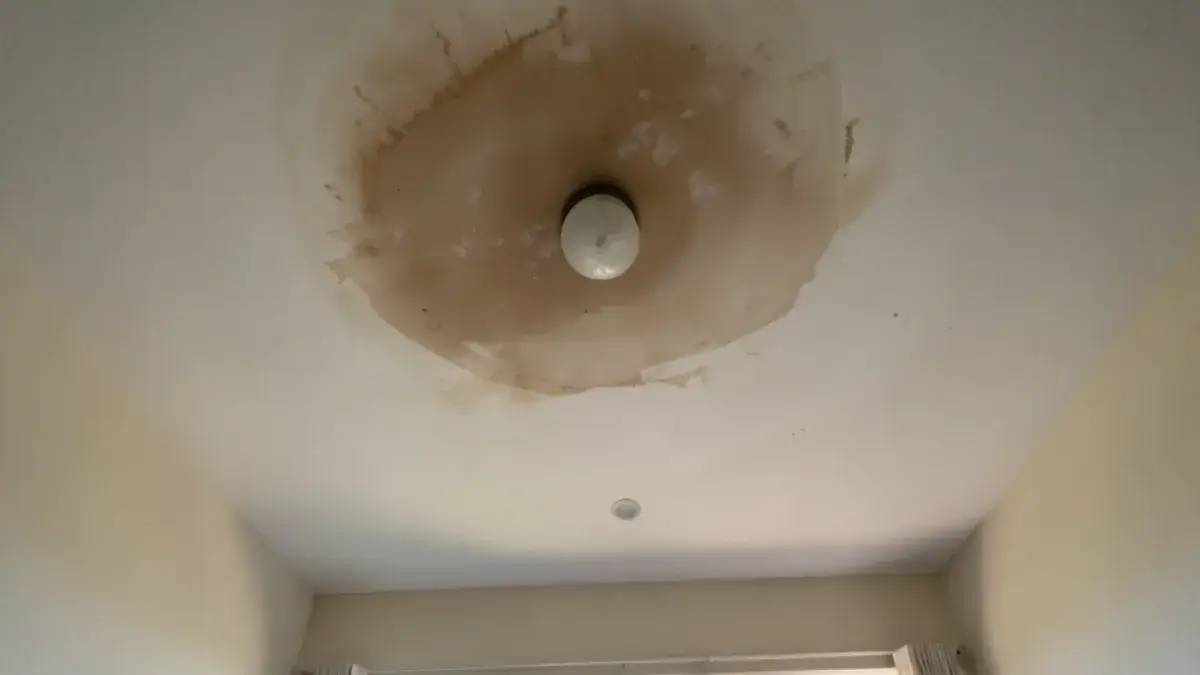
Is It Safe to Stay in This Room?
Ask this before anything else, and move people out if the answer is unclear. Wet drywall gains a lot of weight and gives little warning. A stain is a repair, but a sag is a safety issue.
| What you see | What it means | What to do |
|---|---|---|
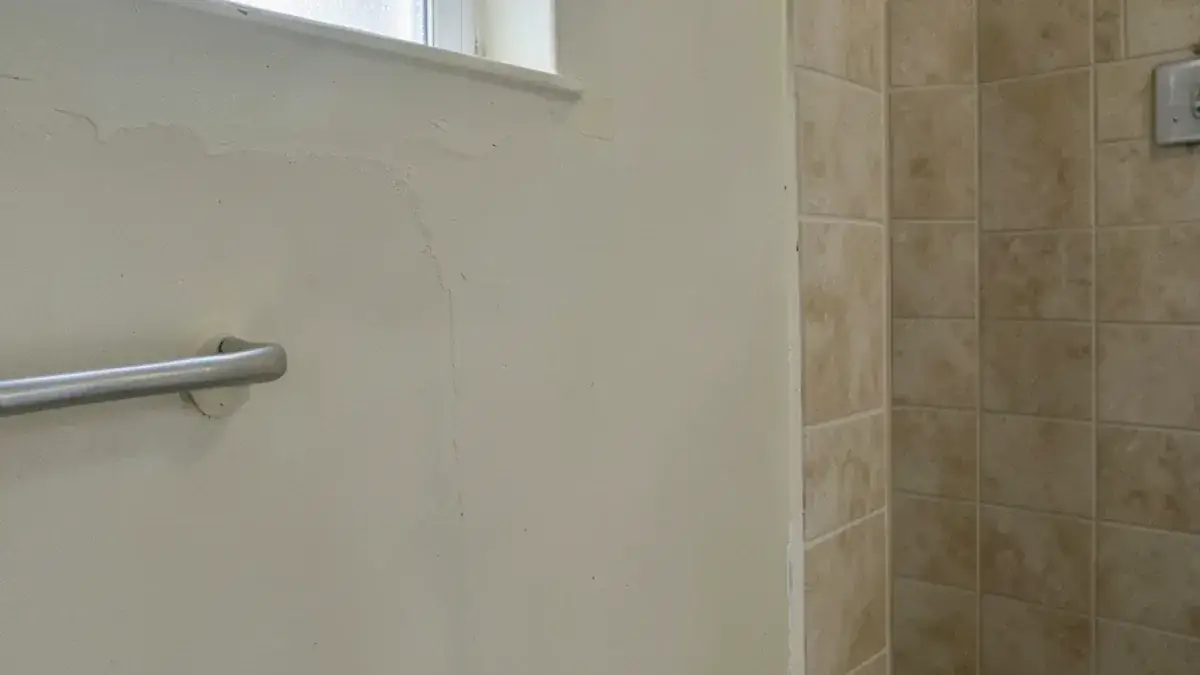
| Dry brown ring | An old or slow leak, may be active | Mark the edge, check it again tomorrow |
| Stain that is growing | Active water above | Find the source, call us |
| Bubbling or peeling paint | Water trapped behind the paint | Keep clear, do not pop it near a fixture |
| Sag or bulge | Water pooled on the drywall | Clear the room, move furniture if safe |
| Drip from a light fixture | Water near wiring | Cut that breaker from a dry spot |
Keep hands away from wet switches. The CDC advises never turning power on or off while standing in water, and to bring in an electrician if you cannot reach the switch from a dry place.
Where Is the Water Coming From?
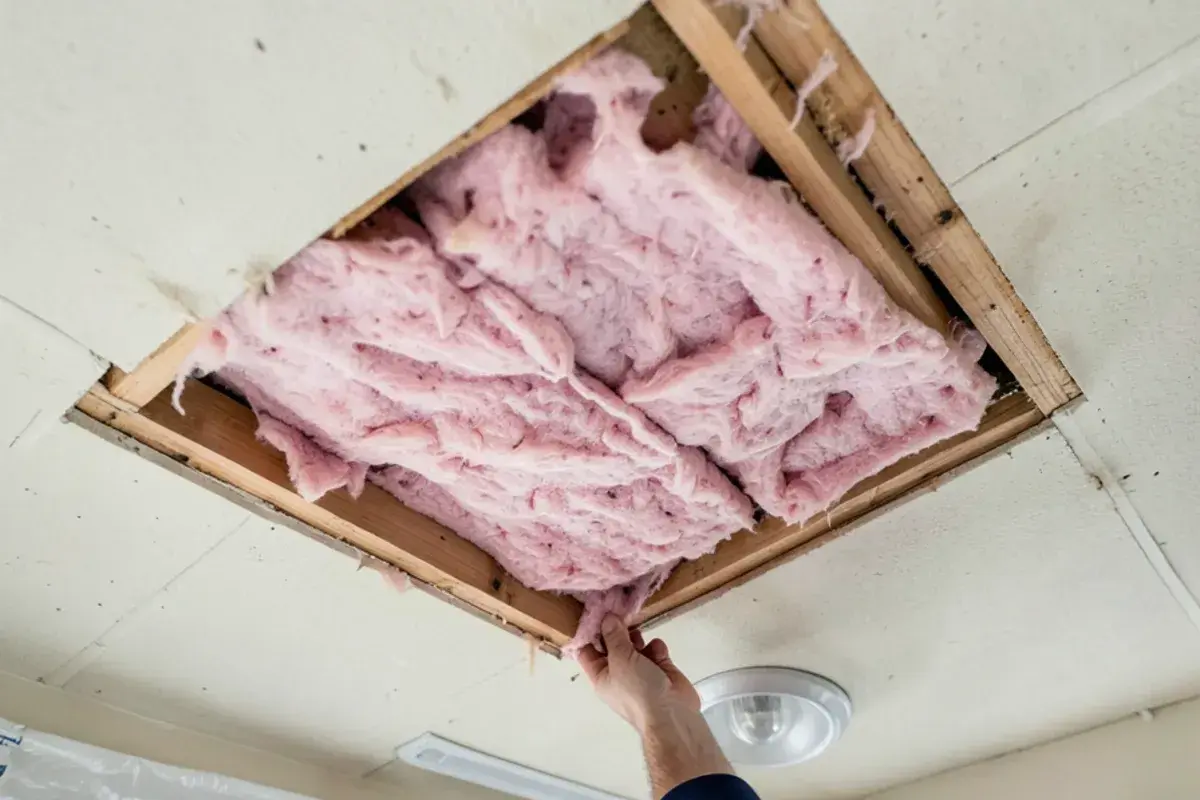
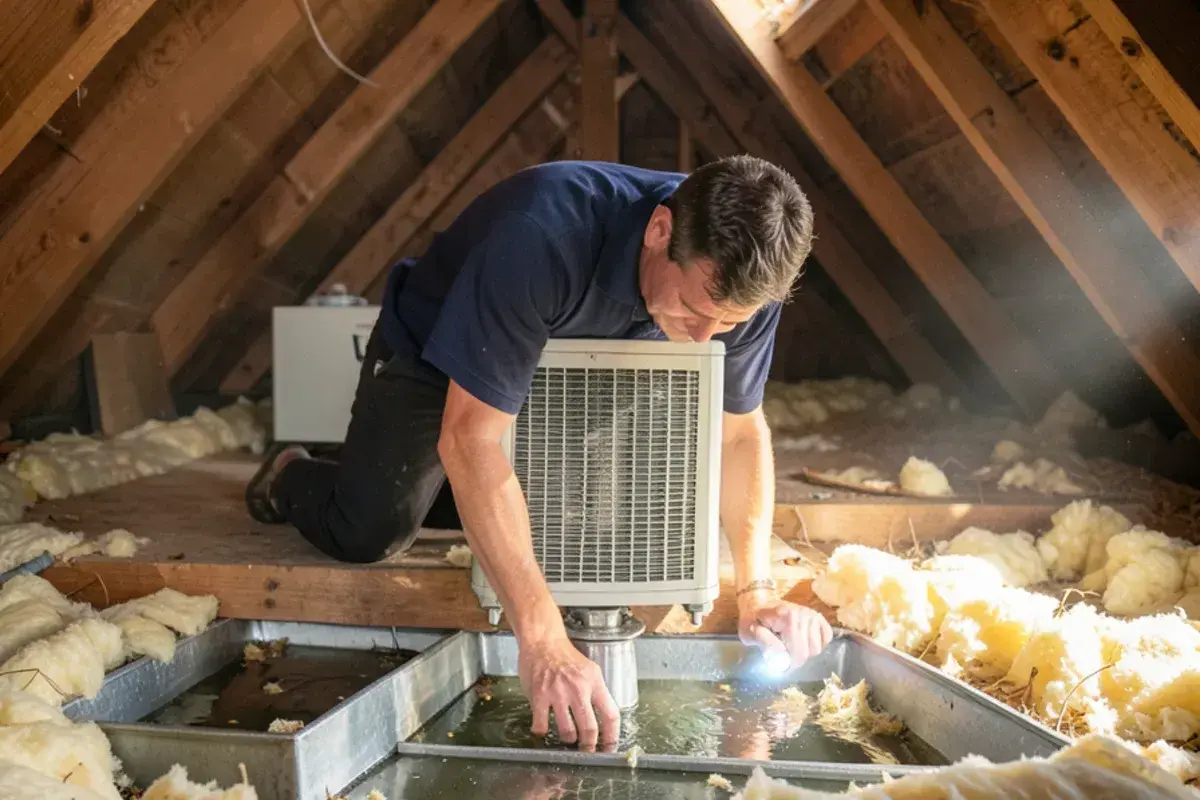
The stain rarely sits directly under the leak. Water runs along joists and pipes and drops where it finds a low spot, so we trace it instead of guessing. The usual sources here fall into a few groups.
- Upstairs bath or laundry: a shower pan, toilet seal or washer above
- Attic air handler: a clogged condensate drain overflowing the pan onto the ceiling
- Pipes in the ceiling: see our page on burst pipe water damage
- The unit above you: a condo or HOA leak with its own process
- Storm-driven rain: water pushed in during a nor'easter or tropical system
If rain is the source, we work on the inside of your home: drying, wet insulation and the ceiling itself. Repairs above the ceiling belong with a roofer, and if an opening needs covering in the meantime, see emergency board up and tarping. Any decision about a claim is yours, and your insurer is the place to ask.
Two local patterns put ceilings at risk. Air conditioners run much of the year here, so an attic drain has plenty of time to clog. Rain adds to it, at about 50 inches a year with August the wettest month.
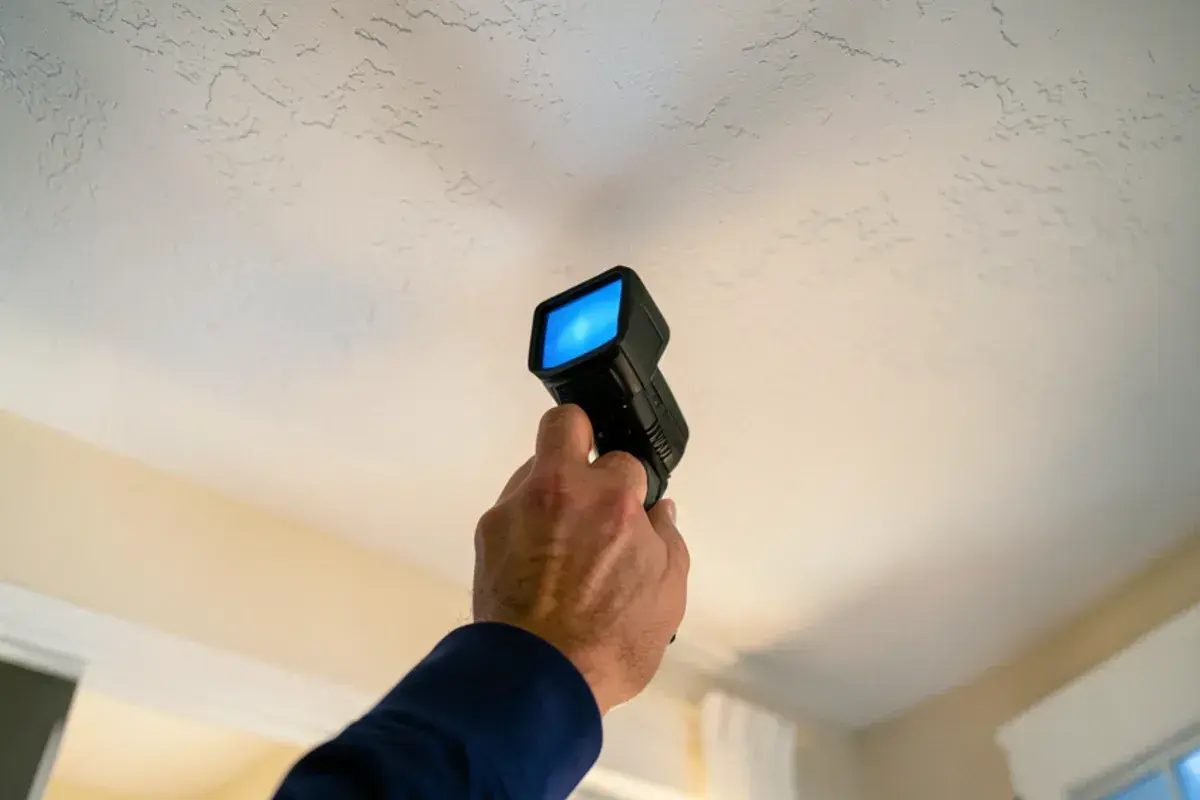
How We Inspect a Wet Ceiling
Readings tell us where the wet area really ends. Thermal imaging shows temperature patterns across the whole ceiling, and a moisture meter confirms them, because a cool spot on a thermal image is not proof of water by itself. Where we can, we also check above: the attic, the insulation and the joists.
We then mark the wet area and photograph it. That map tells you if we are looking at a small patch or a full room, and it becomes the record for any later conversation about the work.
Ceiling sagging or dripping? Stay clear and call us.
Open 24 hours for emergencies. Non-emergency calls are best between 7am and 7pm.
- 5.0 on Google, 8 reviews
- Family owned since 2020
- Calls go straight to the owner
- Free assessments and estimates
Request a free estimate
Not an emergency? Send the details and we will call you back. If water is still moving, call instead.
What We Do Above and Below the Ceiling
We work the whole cavity, not just the patch you can see. A ceiling is a thin layer with wet insulation and joists above it and a room full of belongings below, so the job covers all three. Drywall and paint come at the end, once readings say the space is dry.
- Protecting the floor and contents in the room below
- Moisture mapping across the ceiling, with thermal imaging
- Controlled opening at the low point to release trapped water
- Removing wet insulation and failed drywall
- Drying the cavity and joists with air movers and LGR dehumidifiers
- Scoping the drywall, texture and paint for the put-back
The source itself may belong to someone else. A plumber, AC company or roofer fixes what is above, and we work around that schedule. If water is still arriving, a dry ceiling will not stay dry, so we confirm the source first.
Dry in Place or Cut It Out?
Sound drywall can stay and damaged drywall cannot. The EPA says wallboard can be dried in place if there is no obvious swelling and the seams are intact, otherwise it should be removed and replaced. That line works well for ceilings, with one extra concern: gravity.
| Situation | Our usual call | Trade-off |
|---|---|---|
| Light wetting, seams tight, no sag | Dry in place from above and below | Least repair, may need texture touch-up |
| Sag, soft spots or open seams | Cut out to sound material | Safer, adds drywall and paint |
| Wet insulation above | Remove it | The EPA says to discard and replace wet fiberglass or cellulose |
| Dirty water from above | Remove porous material | The clean-water guidance no longer applies |
| Original plaster | Check its bond, then dry slowly | Slower, keeps historic material |
Insulation is the part homeowners miss. It stays wet long after the drywall below reads dry, and it can keep feeding the cavity. Once it comes out, the joists can dry.
Ceiling leak cleanup, in order
- Confirm the source has stopped, or that it can be held off.
- Isolate the power for that area, protect the floor below, then photograph the ceiling and map the wet area with a moisture meter and thermal camera.
- Review the written scope with you before any heavy work.
- Set containment if material is coming down, then open the ceiling at the low point and let water out in a controlled way.
- Remove wet insulation and any drywall that failed.
- Dry the cavity with air movers and LGR dehumidifiers, then log the readings.
How Long Before the Ceiling Is Finished?
Expect the cavity to be dried and read first, then the put-back. A soaked ceiling rarely dries through the drywall inside the EPA's 24 to 48 hour window, so opening it quickly usually beats waiting.
Once readings match the dry part of your ceiling, we scope the drywall and paint repair. Texture and paint usually extend past the patch, because a patched spot shows under raking light from a window. If growth has appeared, see mold after water damage.
Permits and rules on ceiling repairs
Check before the patch goes up. The City of St. Augustine's storm guide lists drywall in storm repairs as permit work and removing wet material as no-permit work, and the department has the final say. Its permit page allows an exemption for some single-family work under $7,500, but you must apply first, and electrical, structural and flood hazard work is excluded. Other offices set their own rules.
In a condo, F.S. 718.111(11)(f) keeps ceiling coverings out of the association's policy. How that applies to your unit comes down to your declaration, your policy wording and your adjuster.
Ask any company for its license number and check it on the DBPR site, ours included.
What Determines Ceiling Water Damage Repair Cost?
The area above is often the larger part of the cost. Your assessment and estimate are free on any water damage project, and we keep the sales pressure out of it.
- Wet area: a patch, a room or several rooms
- Insulation: how much must be removed and replaced
- Height and access: vaulted ceilings, stairwells and tight attics
- Finish: smooth, textured or original plaster
- Rooms below: contents to protect and floors to cover
St. Augustine housing adds its own variables. Original plaster takes slower drying and more care than drywall. Older textured ceilings need testing before anyone cuts them. A condo adds association access and a neighbor's unit to work around. An attic in a Florida summer also limits how long anyone can work up there, which affects how the job is scheduled.
Why Call 1 Call for a Wet Ceiling?
You get someone who looks above the stain and tells you plainly what is there.
- Owner-run: Dal Beggs and his son, with calls straight to the owner
- We dry the interior and explain which items belong to another trade
- We show you the readings before anything is cut out
- Locally owned since 2020, with no high-pressure sales
Stacked units make ceilings a particular worry in the condos of Jacksonville Beach and the townhomes of World Golf Village, and storm-driven rain is the concern at St. Augustine Beach. We also cover the rest of St. Johns County and all of Flagler, Putnam, Duval, Clay and Volusia.
What customers say
5.0 stars on Google from 8 reviews. Quoted as written.
“I needed a second opinion on my water damage cleanup but about 5 minutes after Dal showed up I realized I should have contacted 1 Call FIRST. They immediately got to work drying out my house and explained everything so well which helped relieve so much of the anxiety I was feeling. The communication and work was all top notch. HIGHLY RECOMMEND!”
“Dal and his son are so compassionate and truly care about the human and do everything in their power to help your house back to normal. They were punctual and even showed back up to the house with any questions etc, I was very pleased with them and would recommend them to anyone who wants someone honest in this industry that unfortunately doesn’t have many honest companies in it. Dal and his crew have a customer life with us anytime we need their services.”
“I recently had the pleasure of working with 1 Call Restoration, led by owner Dal, and I couldn’t be more impressed. Dal’s expertise in restoration services is evident from the moment you engage with him; he possesses a deep understanding of the industry and provides practical solutions tailored to individual needs. His professionalism shines through in every interaction, as he maintains clear communication, sets realistic expectations, and follows through on commitments. What truly sets Dal apart is his unwavering trustworthiness—he approaches each project with integrity and transparency, ensuring that clients feel valued and informed throughout the process. I highly recommend 1 Call Restoration for anyone seeking reliable and skilled restoration services.”
Frequently asked questions
Water is dripping from my light fixture. What do I do?
Turn off the breaker for that circuit from a dry spot, and do not touch the fixture or the wall switch with wet hands. Water in a fixture means water is sitting in the ceiling cavity near wiring. Keep the room empty. If you cannot reach the panel without crossing water, the CDC says to use an electrician. Then call us.
Can I just paint over a ceiling stain?
No, not until the ceiling is dry and the source is fixed. Paint hides the record of the leak and traps moisture, and a stain-blocking primer does nothing for wet drywall or insulation above it. Meter it first. If the readings match a dry part of the same ceiling, it may be a simple paint job. If they do not, paint is wasted.
Should I poke a hole to drain a bulging ceiling?
No, leave it to us if you can, because wet drywall is heavy and can fall without warning. If a bulge is growing and water is close to reaching a fixture, clear the room and call. A bucket below a controlled opening is sometimes the right move, but only with the power off, the area cleared and someone who knows the ceiling.
Do you handle ceilings with popcorn texture?
Yes, but old textured ceilings need testing before anyone cuts them. Popcorn texture in older homes can contain asbestos, so ask before disturbing it, and we plan the scope around the result. Once dry, a repair patch rarely blends perfectly, so we scope texture and paint to the whole ceiling plane when that gives you the cleaner finish.
The leak came from the condo above mine. What do I do first?
Tell your association and the upstairs owner right away, then photograph the ceiling. Do not wait for them to agree on who is responsible before someone dries it. We can document the moisture in your unit and work with the association's process. Questions about who pays go to your association documents, your insurer or an attorney, not to us.
Can a plaster ceiling be saved after a leak?
Yes, often, if the keys holding it to the lath are still sound. Plaster dries slower than drywall, and it can let go without much warning, so we check for a hollow sound and any sagging before anyone works below it. In a historic home we dry gently, and we would rather keep original plaster than cut it out.
Find out what is wet above that ceiling stain.
Open 24 hours for emergencies. Non-emergency calls are best between 7am and 7pm.
- 5.0 on Google, 8 reviews
- Family owned since 2020
- Calls go straight to the owner
- Free assessments and estimates
1 Call Restoration, Saint Augustine, FL. (208) 464-4194.
Related services
Worth reading
Where we handle ceiling water damage
See all of our service areas.