
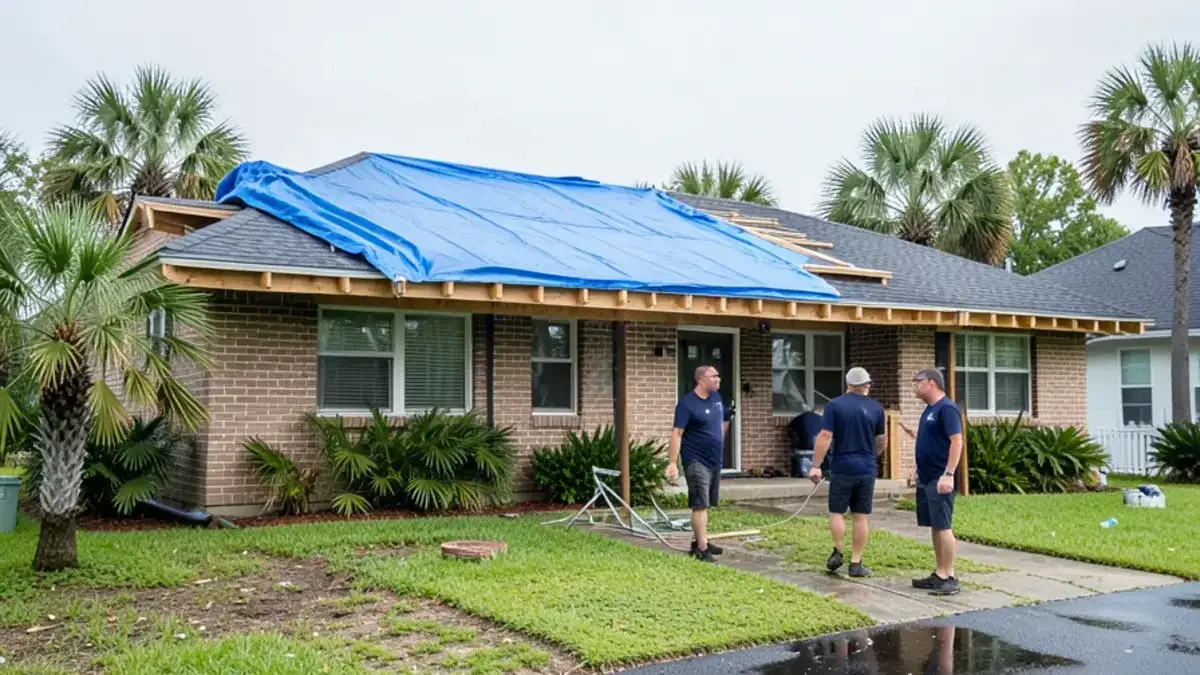
When does an opening need to be secured right away?
Cover it now if rain, wind or people can get through. Every hour an opening stays open, more water lands on drywall, insulation and floors. These count as emergencies:
- A broken window or sliding door
- An exterior door forced out of its frame
- A section of roof covering missing with water coming through a ceiling
- Tree or debris impact on a wall or roof
- A hole that leaves the home unsecured
If the opening only needs a cosmetic fix and the forecast is dry, it can wait for normal hours between 7am and 7pm.
What opens a home up on this coast
Wind does most of it, and not only in hurricane season. Nor'easters push rain sideways at sliders and window corners, and the one in April 2023 cut a stretch of A1A to a single lane. Tropical systems add branches, tree limbs and flying debris.
Salt air does the slow work first. It wears fasteners, flashing and sealants, so a frame that held last season can let go in the next blow. With about 50 inches of rain a year here, an open gap rarely stays dry for long.
Emergency board up and tarping: what we secure
We cover openings in the building, not just the glass. The aim is simple: keep rain and intruders out until permanent repairs are made.
- Board up: plywood over windows, sliders and doors, sized to the opening
- Tarping: a tarp fastened over the wet section of roof, where it can be done safely
- Inside protection: moving belongings and catching drips
- Securing: a door or slider that will not lock, closed off so you can leave the home
- Records: photos of the opening before and after
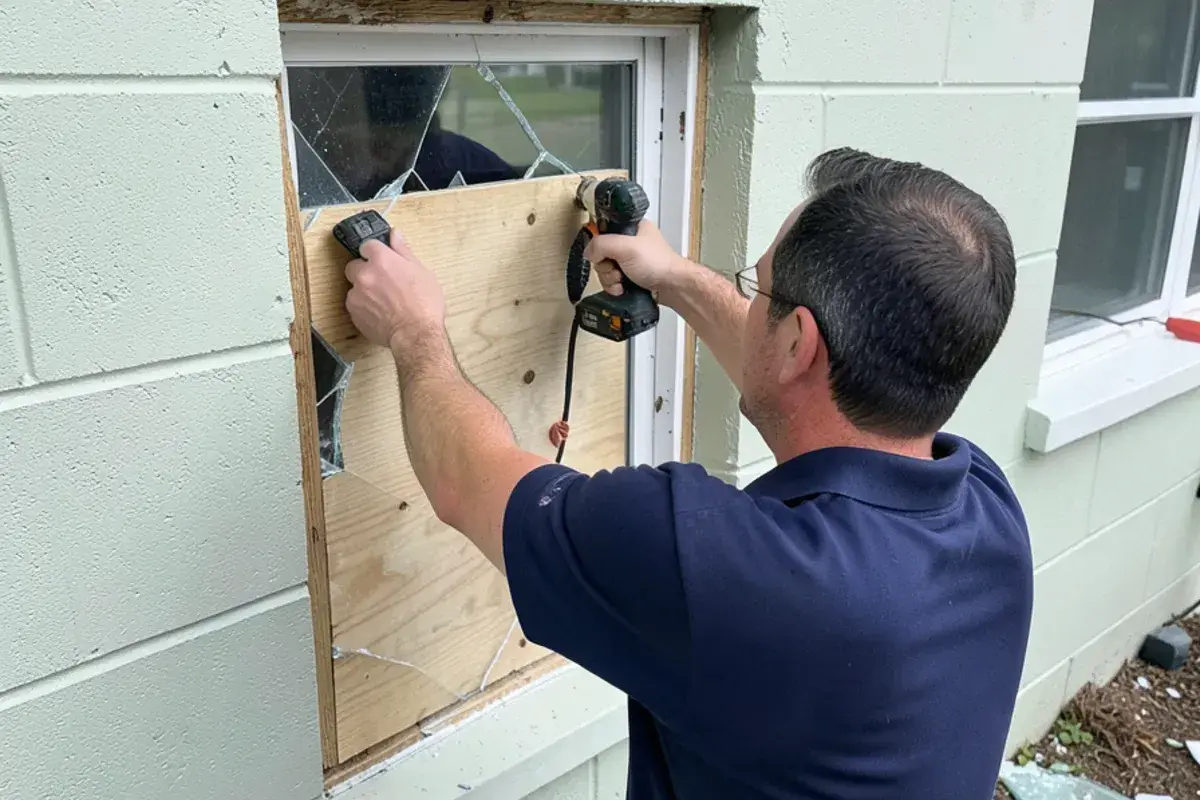
A board up is cut to the opening and fastened to the frame around it, because glass and failed trim hold nothing. A tarp has to reach past the damaged section and lap over the ridge where possible, so rain runs across it instead of under it. Wood battens then hold the edges flat against the wind.
Then we turn to the inside. Water that already got through needs emergency water damage work, and a wet ceiling needs ceiling water damage work.
Until the opening is covered
Stay safe first and protect the home second. Most of what you can do happens inside.
- Stay out from under any sagging ceiling or damaged section.
- Keep clear of broken glass, and wear closed shoes.
- Shut off the circuit if water reaches a light or outlet, only from a dry place.
- Set buckets under drips and move belongings away.
- Take photos from a safe distance.
- Stay off the roof. OSHA lists falls from roofs among the hazards of cleanup work.
If you smell gas or see wires down, leave and call the utility or 911. The City of St. Augustine says to treat all downed lines as live.
Rain coming through an opening? Call and get it covered
Open 24 hours for emergencies. Non-emergency calls are best between 7am and 7pm.
- 5.0 on Google, 8 reviews
- Family owned since 2020
- Calls go straight to the owner
- Free assessments and estimates
Request a free estimate
Not an emergency? Send the details and we will call you back. If water is still moving, call instead.
How we set boards and tarps, in order
We work from the ground up, and only when the weather and the structure let us do it safely. High winds or lightning mean we wait, and we tell you so.
- Check the opening and the structure around it from the ground, and photograph it before we touch it.
- Clear glass and loose debris from the work area.
- Give you the estimate before the work starts.
- Cut plywood to fit, or lay out a tarp that reaches past the damaged section.
- Fasten boards to the frame with a driver and screws, or hold tarp edges with wood battens.
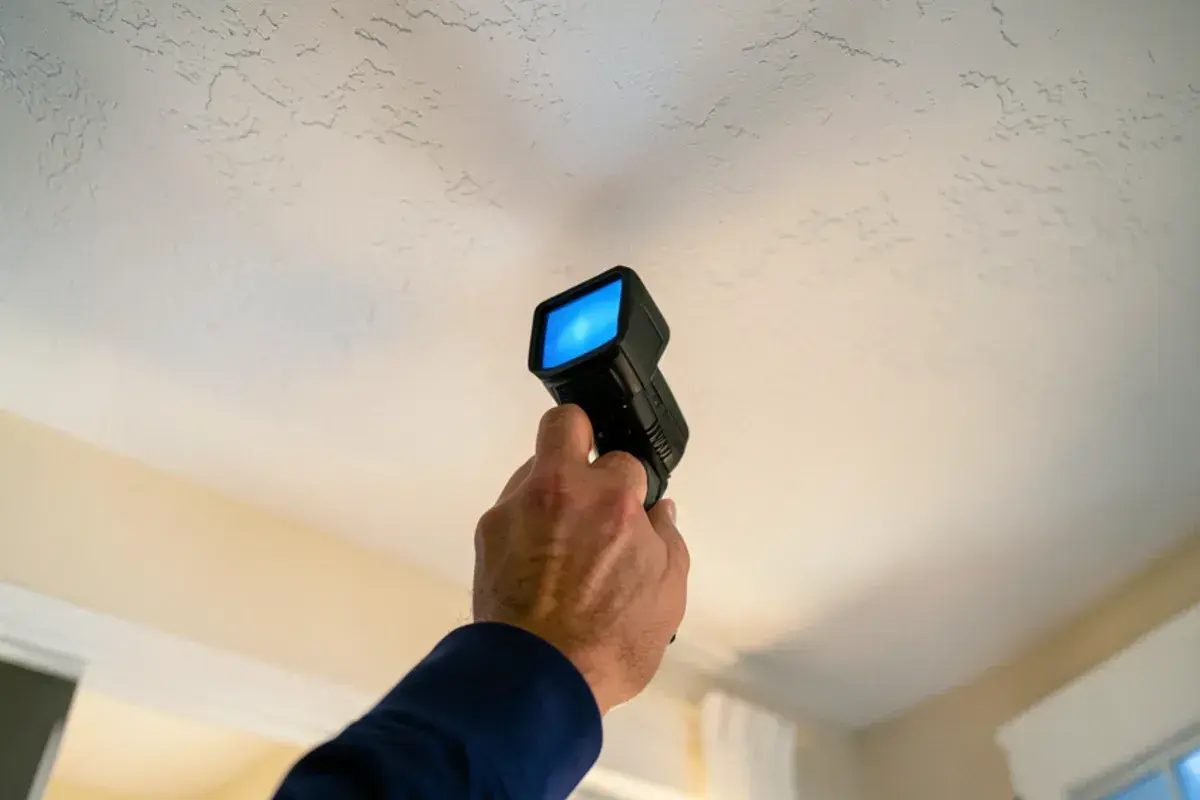
- Check inside for new drips, read the wet areas with a moisture meter and thermal camera, and photograph the finished cover.
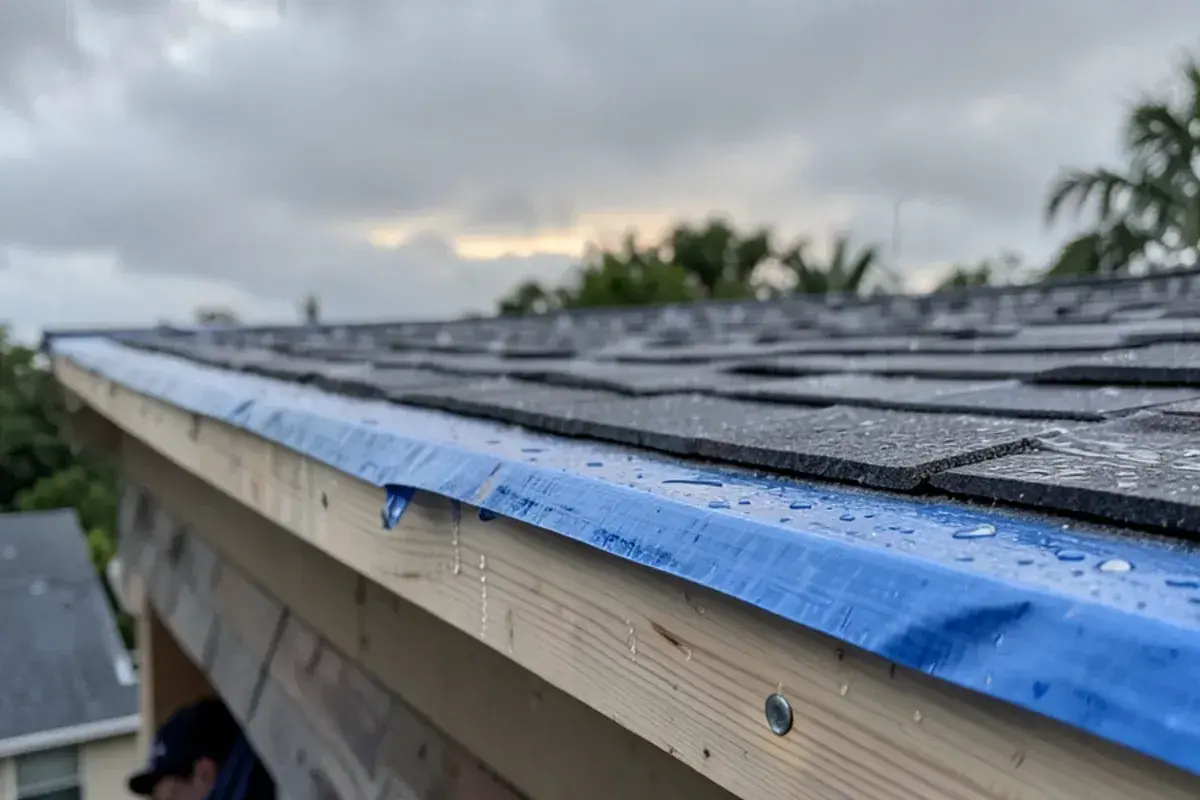
Board or tarp? The right cover depends on the opening.
| Cover | Good for | The trade-off |
|---|---|---|
| Plywood board up | Windows, sliders, doors | Fastener marks, and the room goes dark |
| Roof tarp with battens | Wet sections of shingle or similar roofs | Temporary, and wind works on it |
| Interior plastic | Protecting rooms from a slow drip | Does nothing to stop water at the source |
A tarp is not a roof repair, and it is not a claim
A tarp keeps rain out for now. Permanent roof work belongs to a roofing contractor, and Florida requires a license for that work. We do not assess roofs for insurance claims, and we do not tell you whether to file one. Ask any company for its license number and check it on the DBPR site, ours included.
Florida's F.S. 489.147 restricts how contractors can advertise roof damage claims, and we stay out of that. Any claim question belongs with your insurer. The City's After a Storm page gives one more check: call the state Insurance Consumer Helpline before signing any contract tied to storm damage or repairs.
Inside city limits, the storm recovery guide treats a temporary tarp or safety boarding as no-permit work, and it requires a permit for re-roofing and substantial roof repairs. Tear-off and rebuild decisions belong to you and your roofer. The department has the final say, so confirm with it.
After a declared disaster, the Army Corps of Engineers may also run Operation Blue Roof, a federal program with no cost to eligible homeowners. Eligibility rules change by storm, and many roof types are excluded, so check its current status.
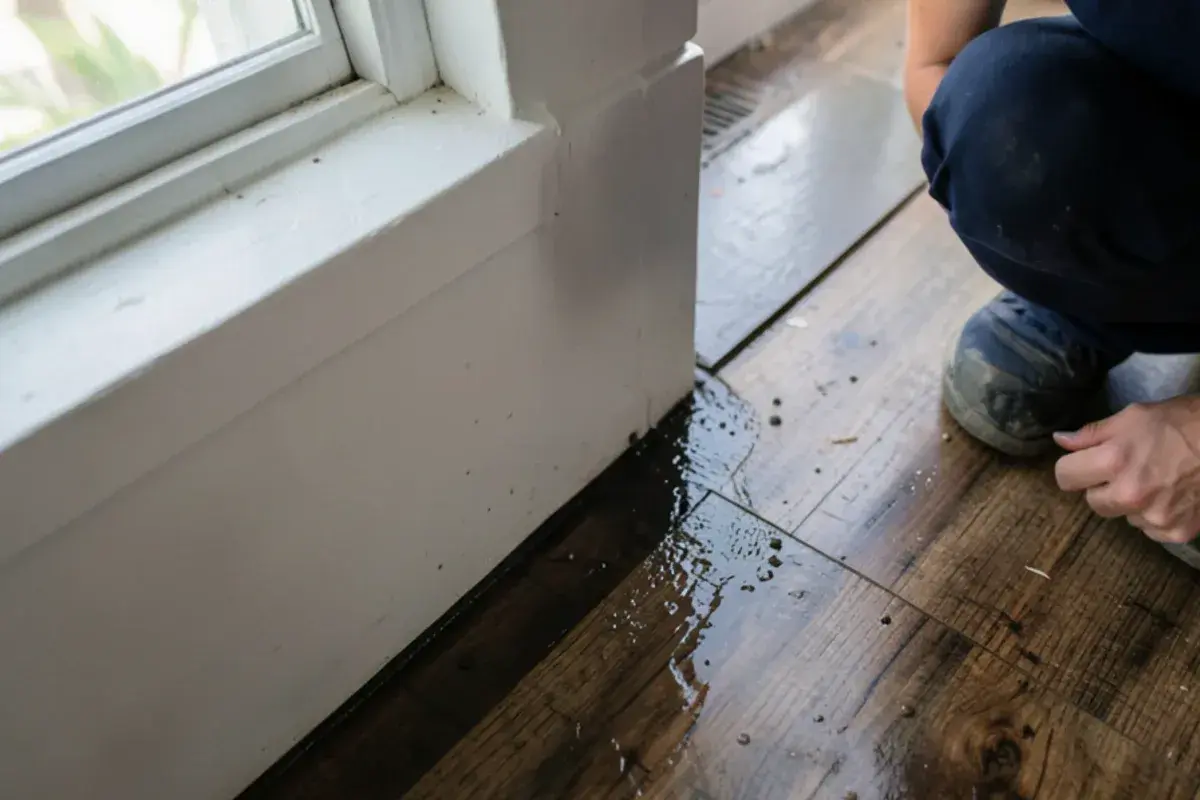
Where we cover storm openings
Our service area takes in Putnam, Clay, Duval, St. Johns, Flagler and Volusia counties. Homes on the coast at Vilano Beach, Crescent Beach and Flagler Beach take the first wind, and salt air then works on anything loose. After a major storm, closed roads may set the timing, and we tell you that plainly on the phone.
Water inside after a storm? See hurricane damage cleanup for how we set the order of work.
Is the price set before the work starts?
Yes. The estimate comes first, at any hour. A board up or tarp is quoted on its own, and the price depends on height, access, the size of the opening, materials and debris.
Here is how each one moves the number:
- Height and pitch: a second story or steep slope takes more setup and fall protection
- Opening size: a slider takes more plywood and fastening than a bedroom window
- Materials: the wall or frame decides the fasteners, and block and stucco may need anchors
- Access: fences, landscaping, a tree in the way or a closed road
- Debris: broken glass or storm debris that has to clear before we can work
An exterior cover is its own priced line, whatever the interior work turns out to be.
Our free assessments and estimates are for water damage inside the home, and there is no high-pressure sale. We keep the photos and the job record for you.
Why 1 Call for an emergency cover
An opening in the house is a fast decision. Here is what you can count on:
- Calls go straight to the owner, any time with an emergency
- Locally owned by one family since 2020
- A clear line between what we do and what a roofer does
- Interior drying from the same people who covered the opening
Dal Beggs founded the company in 2020 and runs it with his son, so you hear from the owner what can be done and when. A cover only helps if someone then deals with the water inside, and we handle both. When wind or lightning means we have to wait, we say so. Permanent repairs and any decision about them stay with you and your roofer.
What customers say
5.0 stars on Google from 8 reviews. Quoted as written.
“Very impressive service. Dal and his team responded to our call immediately and were out the same day to begin the remediation process. Would highly recommend 1Call Restoration.”
“Dal and his son are so compassionate and truly care about the human and do everything in their power to help your house back to normal. They were punctual and even showed back up to the house with any questions etc, I was very pleased with them and would recommend them to anyone who wants someone honest in this industry that unfortunately doesn’t have many honest companies in it. Dal and his crew have a customer life with us anytime we need their services.”
“I recently had the pleasure of working with 1 Call Restoration, led by owner Dal, and I couldn’t be more impressed. Dal’s expertise in restoration services is evident from the moment you engage with him; he possesses a deep understanding of the industry and provides practical solutions tailored to individual needs. His professionalism shines through in every interaction, as he maintains clear communication, sets realistic expectations, and follows through on commitments. What truly sets Dal apart is his unwavering trustworthiness—he approaches each project with integrity and transparency, ensuring that clients feel valued and informed throughout the process. I highly recommend 1 Call Restoration for anyone seeking reliable and skilled restoration services.”
Frequently asked questions
How long will an emergency tarp last?
Treat it as a short-term cover. Sun and wind wear tarps and their fasteners, and coastal winds work at any loose edge. It buys time for a roofer to schedule permanent work. Check it after every storm, and tell us if an edge lifts or water returns inside. Do not walk on the roof to check it.
Can boards go over stucco or block without damaging it?
Yes, though some marks are likely, so we choose the fastening with the wall in mind. Wood frames take screws easily. Block and stucco may need anchors or a brace set inside the opening. We show you the plan first. On a historic home, tell us before we start, because the fix for a small hole later may need more care.
What if a tree is on the house?
Stay out of that part of the home and assume any wires touching it are live. A tree company removes the tree, and the utility handles lines. We cover the opening once that is safe. Do not go under a damaged section. Call us anyway, so the rooms below can be protected and dried as soon as access opens up.
Can I put up a tarp myself?
Not on a roof. On the ground floor, a window or door opening is often a fair DIY job with care. Stay off the roof. OSHA lists falls from roofs among the main hazards of storm cleanup, and wet slopes are worse than they look. Put a bucket under the drip, move belongings, and let someone with fall protection go up.
What is Operation Blue Roof?
It is a federal program run by the Army Corps of Engineers for FEMA, offered at no cost when activated after a major disaster. After Milton in 2024, it covered primary homes and occupied rentals in listed counties, on roofs that can take a nailed tarp. Check the current status before relying on it, as it does not run after every storm.
Do storm shutters or panels still need boards after a storm?
No, not where they are intact and closed. They do the same job. We look at each opening, since a failed track or a cracked panel may need a cover or a brace. If shutters are holding, leave them closed until the weather clears, and check the rooms behind them for water that came in around the frame.
Broken glass or a hole in the house? Call the owner
Open 24 hours for emergencies. Non-emergency calls are best between 7am and 7pm.
- 5.0 on Google, 8 reviews
- Family owned since 2020
- Calls go straight to the owner
- Free assessments and estimates
1 Call Restoration, Saint Augustine, FL. (208) 464-4194.
Related services
Worth reading
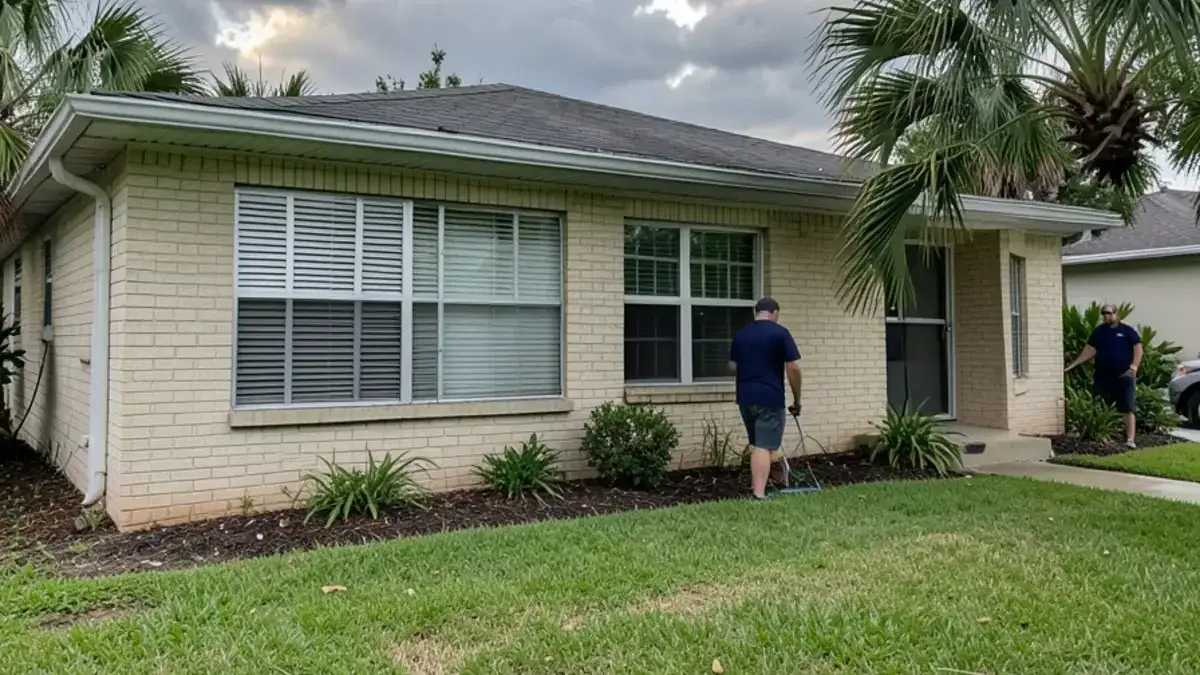
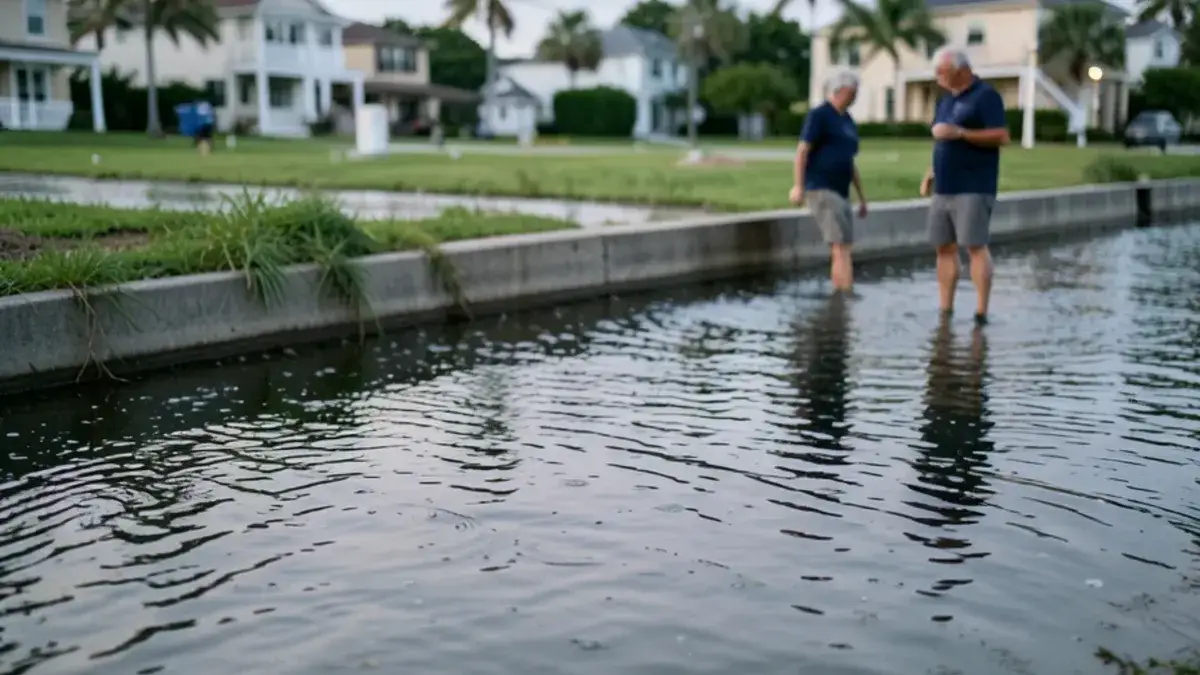
Where we handle emergency board up and tarping
See all of our service areas.