
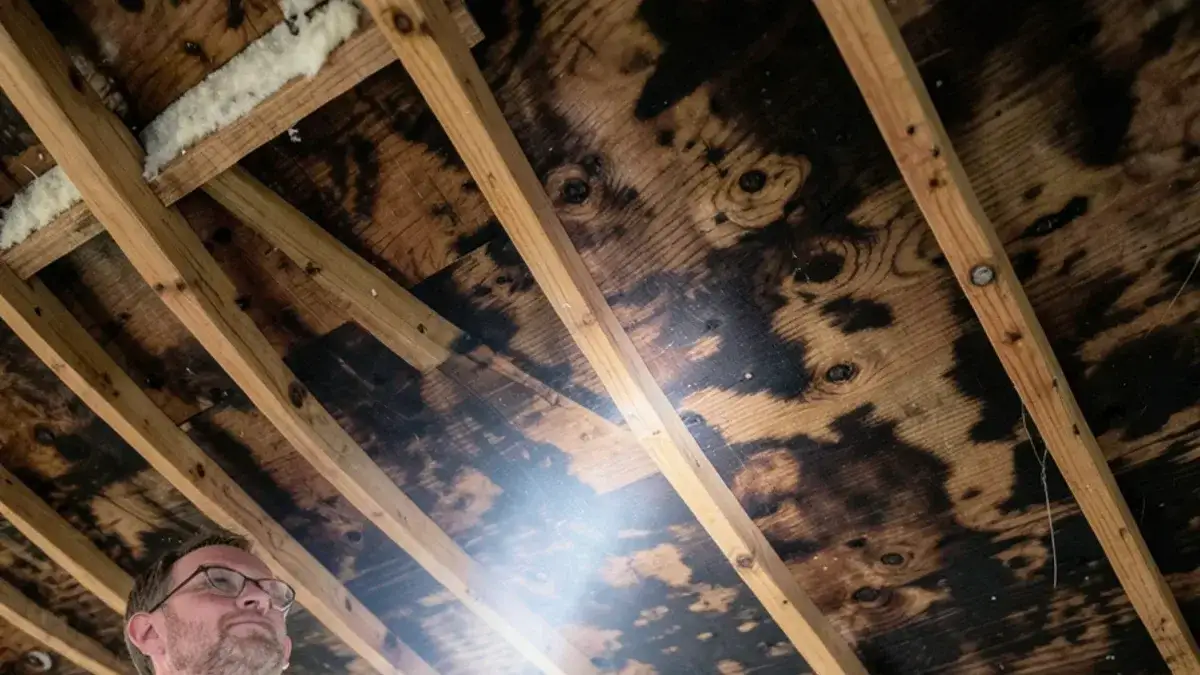
Attic Mold: What You Usually Notice First
Most people find attic mold by accident, often during an AC service or while storing holiday boxes. Look for these signs before you assume the worst, and do not stir up the insulation.
- Blotchy dark staining on the underside of roof sheathing
- Damp, matted or discolored insulation
- A musty smell at the attic hatch
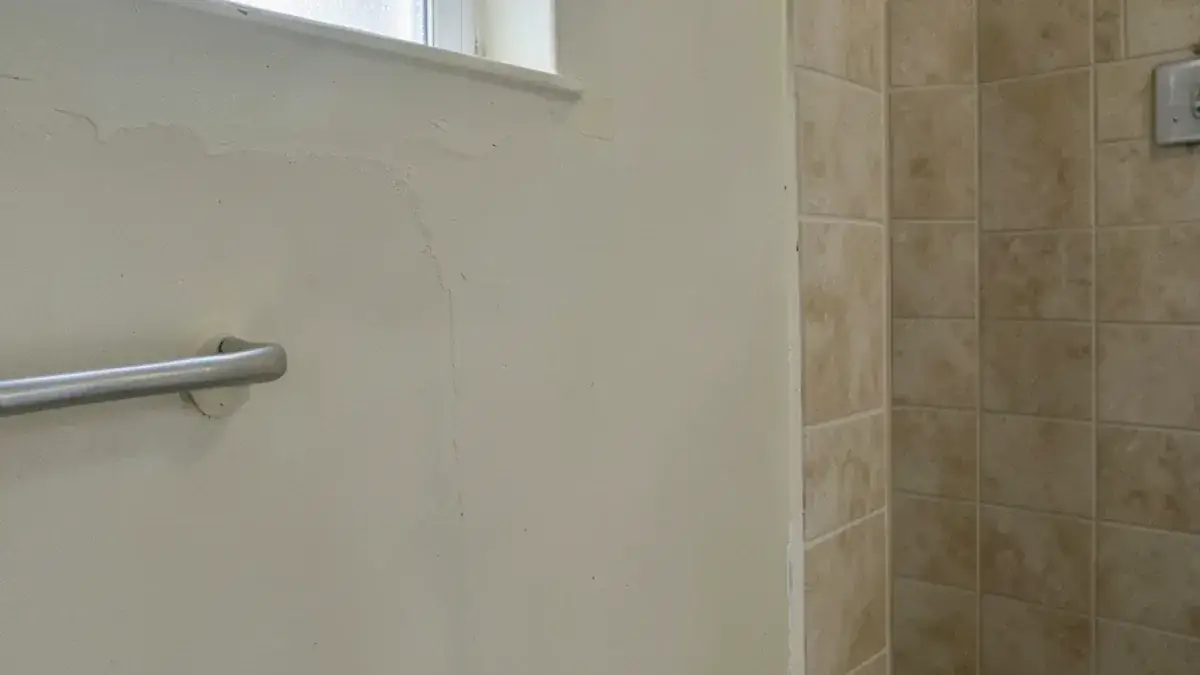
- Ceiling stains in the rooms below
- Rusty nail tips or drips around the air handler
Dark wood is not always active mold. Old stains can sit from a leak fixed years ago, which is why we take moisture readings before deciding anything.
Crawl Space Mold: Why the Ground Keeps Feeding It
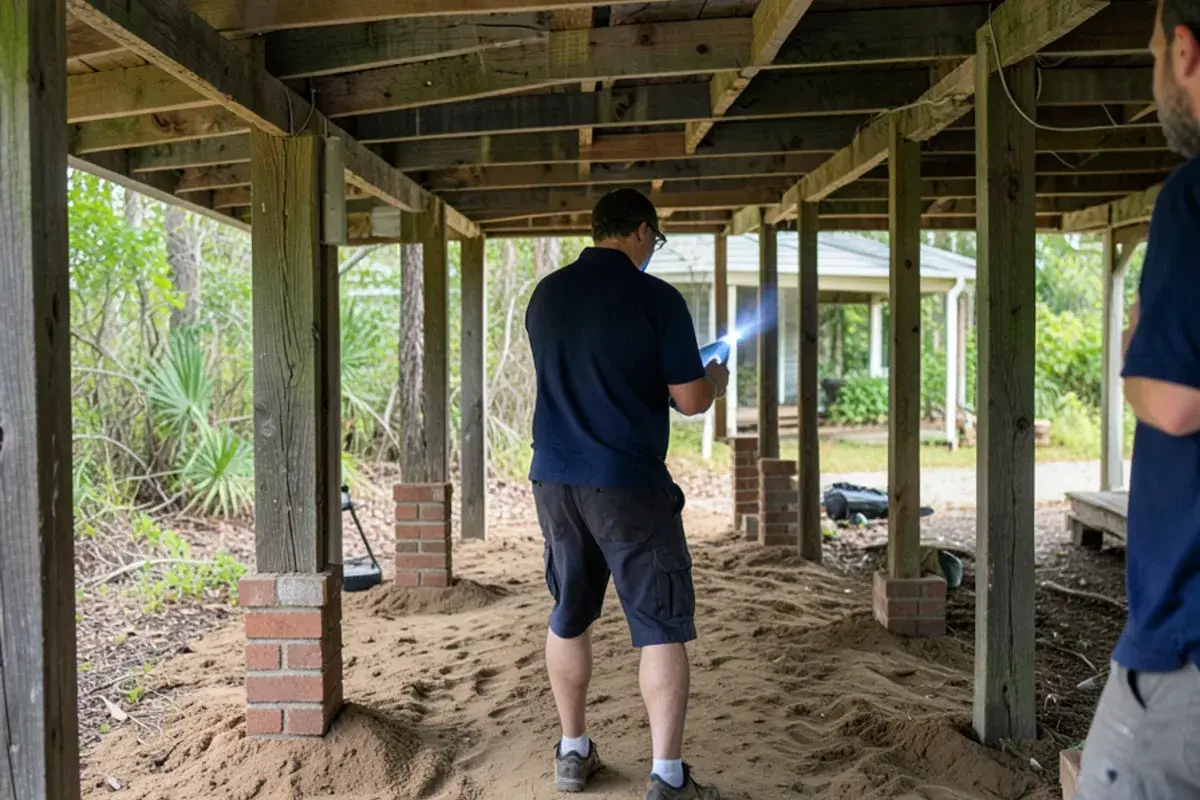
Crawl space moisture often comes up from below. EPA notes that bare soil wicks water upward and warm air carries it into the space, then through gaps into the house above.
This matters most in older raised homes on piers or stem walls, and in low riverfront lots. If you smell mustiness at floor registers or see soft, stained joists, the crawl space is likely part of the story. Tidal flooding near the Matanzas River and San Sebastian River can also leave sand and silt under a raised home that stays wet long after the water drops.
Where the Moisture Comes From in St. Augustine Homes
Finding the real source decides the whole scope. Cleaning without fixing it means paying twice.
| Source | Where it shows | Who fixes the source |
|---|---|---|
| Wind-driven rain | Around vents, flashing, ridge lines | Roofer |
| Condensate pan overflow | Around the air handler | AC technician |
| Sweating ducts | Along uninsulated duct runs | AC technician |
| Bath fan venting into the attic | Sheathing near the fan | Qualified installer |
| Plumbing drip below a floor | Joists under kitchens and baths | Plumber |
| Bare soil | Whole crawl space | Scoped into the cleanup |
Nor'easters and summer storms push rain sideways at coastal homes, so a roof that handles straight-down rain can still let water in. EPA also points to condensation on uninsulated ducts and to drain pans that do not slope to a clear drain.
How Do You Treat Attic and Crawl Space Mold?
The treatment depends on what the mold is growing on and how wet it is. Each option has a trade-off.
- HEPA cleaning of framing. Keeps wood in place, but takes careful labor in tight spaces.
- Removing insulation. Clears a moisture trap, and adds a replacement line to the estimate.
- Replacing sheathing or joists. Needed for rot, not for surface growth, and goes to a suitable licensed contractor.
- Ground cover in a crawl space. Slows soil moisture, but needs a clean, dry space first.
- Vent or seal decision. Depends on measured humidity, and sealing means the space needs its own humidity control.
Antimicrobial goes on where needed, after removal rather than in place of it. Fogging an attic without cleaning does not remove the mold.
What the work covers
We start with the reason the space got wet, because cleaning sheathing above a dripping pan only buys time. Once someone owns the source repair, we seal the hatch or access door, run HEPA air scrubbers and clean the affected framing by hand. Wet insulation leaves double-bagged in 6-mil polyethylene, the method EPA describes, so it does not shed through the house on the way out.
These spaces share air with the rooms around them, so the scope reaches past the hatch. We read the ceilings under an attic and the floor registers over a crawl space, then mark what stays and what goes on the moisture map.
Our part ends at the mold and the wet material. Rotten wood goes to a suitable licensed contractor, and the roof and AC go to those trades. We sequence the insulation and ceiling put-back after readings pass.
- Moisture readings on framing, sheathing and insulation
- The measured area of visible growth, with photos
- Containment at the hatch or access door
- HEPA cleaning of affected framing
- Bagged removal of wet insulation
- Ground cover in a clean, dry crawl space where it fits
The Visit, Step by Step
- Check access and safety. We confirm a safe path, and attic heat limits working hours in summer.
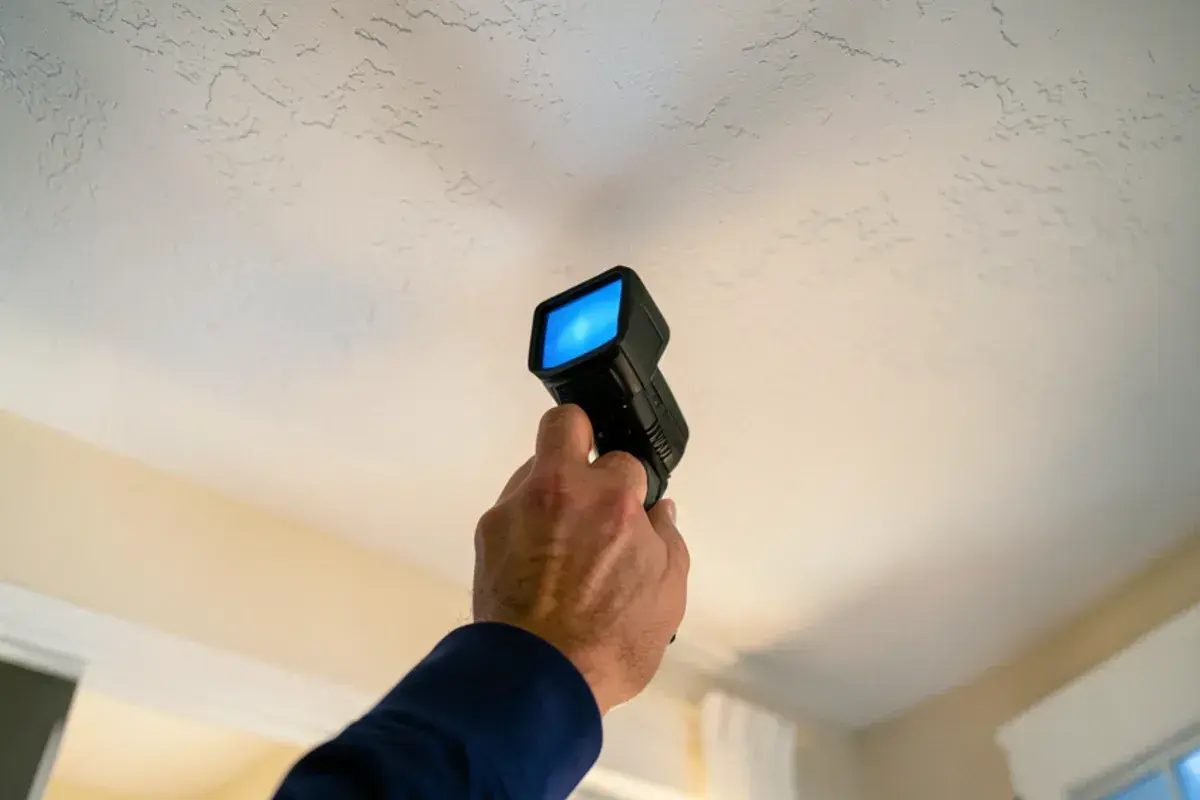
- Trace moisture. Meters and thermal imaging show where it is wet now, not just stained.
- Measure and photograph. Growth is measured, because a roof plane can pass 10 square feet quickly.
- Write the scope. You see what comes out, what stays and who fixes the source.
- Contain, clean and remove. Plastic at the hatch or access door protects the rooms below, and HEPA air scrubbers run while we work.
- Dry and verify. An LGR dehumidifier handles what remains, and readings must match unaffected wood in the same home.
Rules for mold above the ceiling and below the floor
Mold work above 10 square feet requires a Florida DBPR license, and we use ANSI/IICRC S520 as our reference standard. S520 is a consensus document, not a law. Ask any company for its license number and check it on the DBPR site, ours included.
EPA's guide scales containment by size, with limited containment at about 10 to 100 square feet and full containment above that. Other trades keep their own rules. The City of St. Augustine lists re-roofing and mechanical work as permitted work, and its under-$7,500 exemption does not reach mechanical or structural projects.
We do not sell lab testing or formal assessment on a job we would remediate. Sampling comes from an independent licensed mold assessor, as our mold inspection page explains.
Dark stains above or musty air below? Talk to the owner.
Open 24 hours for emergencies. Non-emergency calls are best between 7am and 7pm.
- 5.0 on Google, 8 reviews
- Family owned since 2020
- Calls go straight to the owner
- Free assessments and estimates
Request a free estimate
Not an emergency? Send the details and we will call you back. If water is still moving, call instead.
What Drives the Cost in a Tight Space?
Access is the biggest variable in these jobs. Crawling under a floor or working on trusses in summer heat takes longer than the same square footage in a room.
- Crawl space height and hatch size
- Attic pitch, walk boards and heat
- Volume of insulation to bag and remove
- Soil cover area and pier count
- Containment needed at the opening
St. Augustine homes add their own lines. A raised older house can mean a low hatch and brick piers to work around, and a low riverfront lot can leave sand and silt that has to come out first. A wet attic over finished rooms takes more time, because the ceiling below needs protecting from every step.
Source repairs are priced by the trade doing them. If the roofer or AC technician works in the same stretch, the order of trades can add return visits.
Our assessment and estimate for the mold work cost nothing, and you get the estimate in writing before any heavy work begins.
Keeping Both Spaces Dry Between Storms
Take a look twice a year, and after any named storm. Five minutes with a flashlight catches most problems early.
- Check the AC drain line and pan before summer
- Confirm bath fans vent outdoors
- Look for damp insulation around roof penetrations
- Keep crawl space vents clear of mulch and plant growth
- Report any new musty smell in the house
Why Call 1 Call for Hidden Spaces
Dal Beggs founded this family company in 2020 and runs it with his son. Your call goes straight to Dal, and we explain what we find with photos you can see for yourself, since few people want to climb into an attic to check.
We serve Butler Beach, Crescent Beach and inland homes around Hastings from our base in St. Johns County, and we go as far as Palatka in Putnam County. If mold has reached finished rooms too, see our main mold remediation page.
We also tell you when a dark stain is old and dry, so you do not pay to clean a problem that ended years ago.
What customers say
5.0 stars on Google from 8 reviews. Quoted as written.
“Very impressive service. Dal and his team responded to our call immediately and were out the same day to begin the remediation process. Would highly recommend 1Call Restoration.”
“I recently had the pleasure of working with 1 Call Restoration, led by owner Dal, and I couldn’t be more impressed. Dal’s expertise in restoration services is evident from the moment you engage with him; he possesses a deep understanding of the industry and provides practical solutions tailored to individual needs. His professionalism shines through in every interaction, as he maintains clear communication, sets realistic expectations, and follows through on commitments. What truly sets Dal apart is his unwavering trustworthiness—he approaches each project with integrity and transparency, ensuring that clients feel valued and informed throughout the process. I highly recommend 1 Call Restoration for anyone seeking reliable and skilled restoration services.”
“Dal and his son are so compassionate and truly care about the human and do everything in their power to help your house back to normal. They were punctual and even showed back up to the house with any questions etc, I was very pleased with them and would recommend them to anyone who wants someone honest in this industry that unfortunately doesn’t have many honest companies in it. Dal and his crew have a customer life with us anytime we need their services.”
Frequently asked questions
Is attic mold always caused by a roof leak?
No. A leak is one cause, but an attic can also collect moisture from a bath fan that vents into the space, a sweating duct, or a condensate pan that overflows. The pattern helps us tell them apart. A patch under a roof penetration points to rain, while staining around an air handler points to the AC system.
Do I need to replace my attic insulation?
Only if it got wet or carries growth. Wet insulation holds moisture against the wood and loses its value, so it usually gets bagged and removed. Dry, clean insulation outside the affected area can stay. We mark the boundary on the photos and moisture map so the estimate shows exactly which sections come out.
Should crawl space vents stay open in Florida?
There is no single answer, and neutral guidance is thin. Open vents let humid summer air into a cool space, while sealing a crawl space means it then needs its own humidity control. We start by stopping ground moisture and plumbing drips, then measure humidity under the home before suggesting any change to the vents.
Does a vapor barrier stop crawl space mold?
It helps, but it does not remove existing growth. EPA notes that bare earth wicks moisture up into crawl spaces, and a ground cover slows that. Existing growth on joists or subfloor still needs cleaning, and any leak or standing water must be dealt with first. The cover goes in after the space is clean and dry.
My home is on a slab. Could I still have this problem?
Your attic, yes. A slab home has no crawl space, but it still has roof sheathing, insulation and often an air handler overhead. Slab homes have other hidden spots too, such as wall cavities and under flooring. If you see ceiling stains or smell mustiness near the attic hatch, the attic is the first place to look.
Have the hidden spaces checked. Call 1 Call Restoration.
Open 24 hours for emergencies. Non-emergency calls are best between 7am and 7pm.
- 5.0 on Google, 8 reviews
- Family owned since 2020
- Calls go straight to the owner
- Free assessments and estimates
1 Call Restoration, Saint Augustine, FL. (208) 464-4194.
Related services
Worth reading
Where we handle attic and crawl space mold
See all of our service areas.